Otorhinolaryngology
Latest news
123 articles · 20 / page

Ergonomic Strain Is Common in Otolaryngology Surgery, With Pain Rising as Cases Become More Difficult and Prolonged
A prospective study found frequent medium-to-high ergonomic risk and measurable postoperative pain among otolaryngology surgeons, highlighting modifiable occupational hazards in routine head and neck surgery.

Immunotherapy Prescribing Patterns and Immune-Related Adverse Events in Head and Neck Cancer
A large claims-based study reveals pembrolizumab dominates immunotherapy prescribing for head and neck cancer, with minimal usage growth since FDA approval. Immune-related adverse events occurred in 41.2% of patients, linked to specific com

Radiation-Induced OME: Bacterial Colonization Elevates Early Recurrence Risk Yet Lacks Long-Term Prognostic Value
Radiation-induced otitis media with effusion (RI-OME) shows heightened bacterial colonization with opportunistic pathogens. Although microbial presence predicts early recurrence (≤4 weeks post-tympanocentesis), it does not independently inf

Post-Thyroidectomy Calcium Strategies: Routine vs. PTH-Guided Supplementation Show Similar Efficacy
A randomized trial comparing routine calcium supplementation with PTH-guided selective supplementation found no significant difference in preventing post-thyroidectomy hypocalcemia, offering flexibility in clinical practice.

RAI Outperforms mFI-5 in Predicting Post-UPPP Complications: A Frailty Stratification Breakthrough
The Risk Analysis Index (RAI) significantly outperforms the modified frailty index-5 (mFI-5) in predicting mortality and major complications after uvulopalatopharyngoplasty, supporting its adoption for preoperative risk assessment in sleep

Amivantamab Falls Short of Tumor Shrinkage in Recurrent or Metastatic Adenoid Cystic Carcinoma, but Disease Stabilization Was Common
In a phase 2 trial, amivantamab did not meet its primary response endpoint in recurrent/metastatic adenoid cystic carcinoma, but most patients achieved stable disease and toxicity was generally manageable.

Cartilage Ear Piercings Carry Nearly Double the Complication Risk of Lobule Piercings in a Large Adult Survey
In a large survey of adult ear piercings, auricular cartilage piercings had higher complication and removal rates than lobule piercings, reinforcing the need for careful counseling and informed consent.

Upper Airway Fat Volume Predicts Patient Discomfort During Office-Based Laryngeal Surgery, Study Finds
A retrospective analysis of 40 patients undergoing transnasal office-based laryngeal surgery reveals that increased parapharyngeal fat at the palatal level is significantly associated with reduced procedural tolerance. The findings highligh

More Fat in the Upper Airway Means Less Tolerance for Awake Laryngeal Surgery, Study Finds
Research reveals that increased parapharyngeal fat volume at the palatal level correlates with reduced patient tolerance during transnasal office-based laryngeal surgery, suggesting anatomical factors play a significant role in procedural c

Determinants of Circulating Tumor HPV DNA in Surgically Treated Oropharyngeal Cancer
This study identifies clinicopathologic factors linked to pre- and postoperative levels of circulating tumor HPV DNA (ctHPVDNA) in HPV-mediated oropharyngeal cancer patients treated with upfront surgery, offering insights for disease monito

Beyond Binary: A 4-Stage Risk Stratification Tool Transforms Cochlear Implant Candidacy Assessment
Researchers developed a novel 4-level classification system using routine audiometric data to estimate cochlear implant candidacy likelihood, moving beyond traditional binary screening approaches to support personalized shared decision-maki

Celecoxib Cuts Opioid Use Nearly in Half After Throat Surgery—Without Increasing Pain
A retrospective cohort study of 80 patients undergoing tonsillectomy, adenoidectomy, or uvulopalatopharyngoplasty found that adding celecoxib to multimodal analgesia reduced mean opioid consumption by 44%, while maintaining comparable pain

Liquid Biopsy Predicts Recurrence in HPV-Independent Head and Neck Cancer Months Before Imaging
A prospective study demonstrates that tumor-informed ctDNA-based minimal residual disease (MRD) testing significantly predicts recurrence and survival in HPV-independent HNSCC, offering a median five-month lead time over clinical detection

In-Lab vs. At-Home Sleep Studies: Determining Minimum Recording Time and the Role of Positional Sleep Apnea
This study compares in-lab and home sleep tests, revealing that in-lab polysomnography requires at least 6 hours of recording for accuracy, while home tests need only 3 hours, particularly due to the variables introduced by positional obstr

Long-Term Survival Milestones in Metastatic Nasopharyngeal Carcinoma: A Comprehensive Review of the 5-Year CAPTAIN-1st Data
This review analyzes the 5-year overall survival outcomes of the CAPTAIN-1st trial, establishing camrelizumab plus chemotherapy as a long-term standard of care for recurrent or metastatic nasopharyngeal carcinoma.

Sentinel Lymph Node Biopsy in Head and Neck Merkel Cell Carcinoma: Why High False-Negative Rates Demand Clinical Vigilance
A comprehensive cohort study reveals that sentinel lymph node biopsy (SLNB) in head and neck Merkel cell carcinoma has a sensitivity of only 52.6% and a high failure rate. The findings suggest that clinicians must reconsider management stra

Head and Neck Metastases From Infraclavicular Primary Tumors: Analysis of 136 Cases
This clinical analysis of 136 patients highlights that head and neck metastases often serve as the primary manifestation of infraclavicular cancers, emphasizing the diagnostic value of cervical lymph nodes.

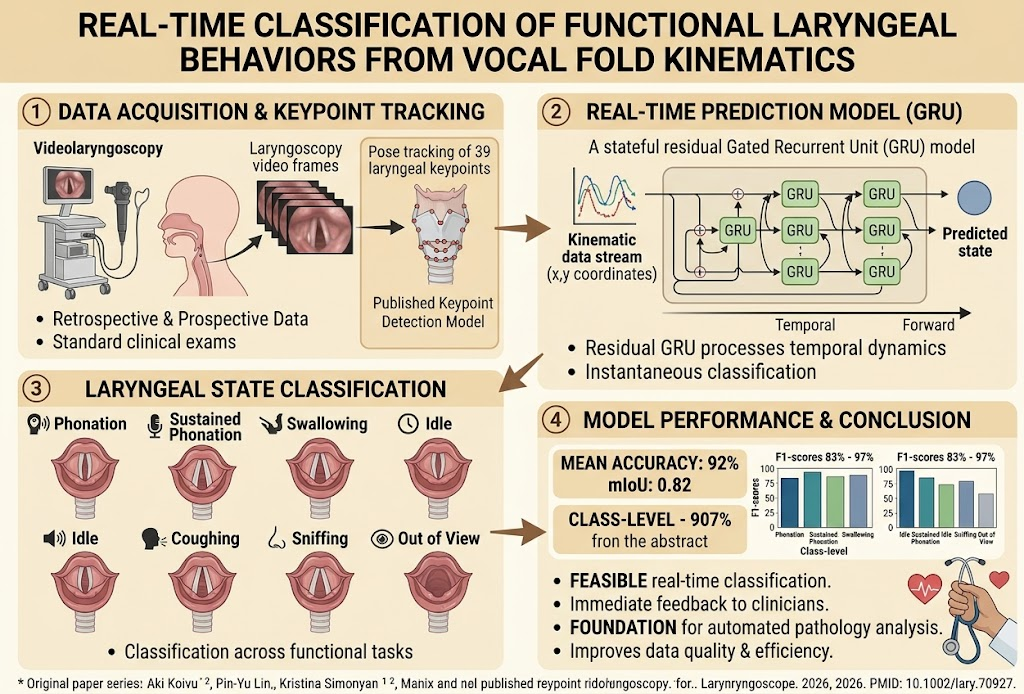
Molecular Profiling of Benign Vocal Fold Lesions: Differential Gene Expression in Polyps versus Reinke’s Edema
This review explores the transcriptomic distinctions between vocal fold polyps and Reinke’s edema, focusing on the upregulation of COL1A1, FN1, and MMP-9 in polyps as key diagnostic and mechanistic markers.

A New Standard for Pediatric Vocal Fold Immobility After Cardiac Surgery: Improving Outcomes Through Injection Laryngoplasty
Recent research highlights a standardized multidisciplinary protocol for managing unilateral vocal fold immobility in infants after cardiothoracic surgery, showing that injection laryngoplasty significantly improves oral feeding advancement

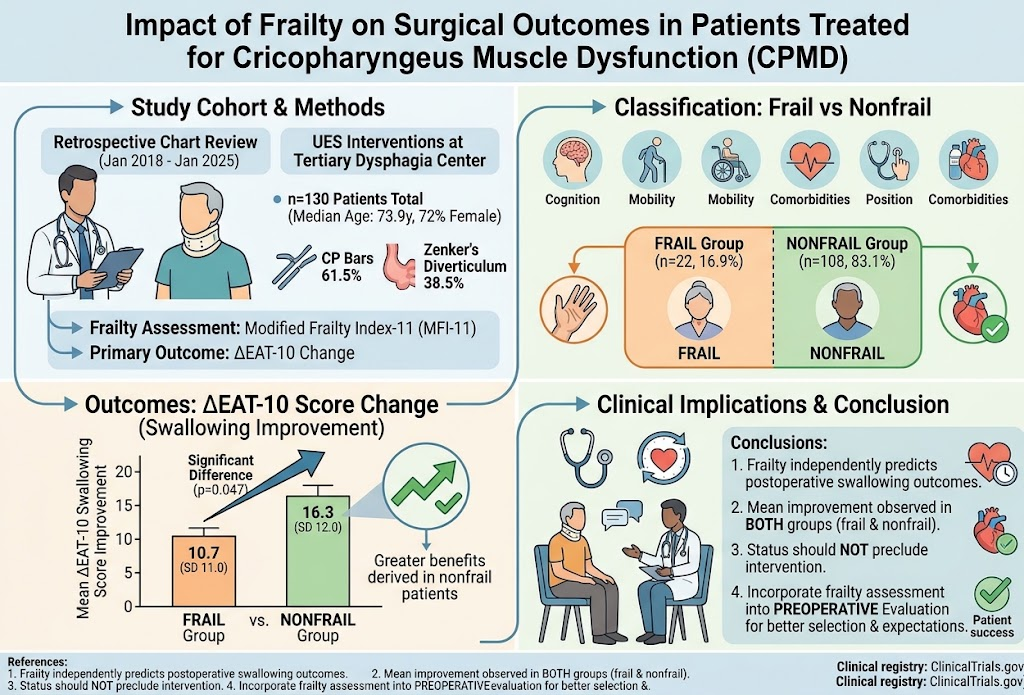
Beyond the Bloat: Addressing the Neuropsychiatric Burden of Retrograde Cricopharyngeus Dysfunction through Targeted Botulinum Toxin Intervention
This review analyzes the high prevalence of anxiety and depression in patients with Retrograde Cricopharyngeus Dysfunction (RCPD) and evaluates the significant, sustained mental health improvements following cricopharyngeal botulinum toxin
Browse by specialty
Open language-specific specialty feeds and department pages.