Postoperative Oral Dexamethasone Reduces Pain and Opioid Use in Pediatric Tonsillectomy
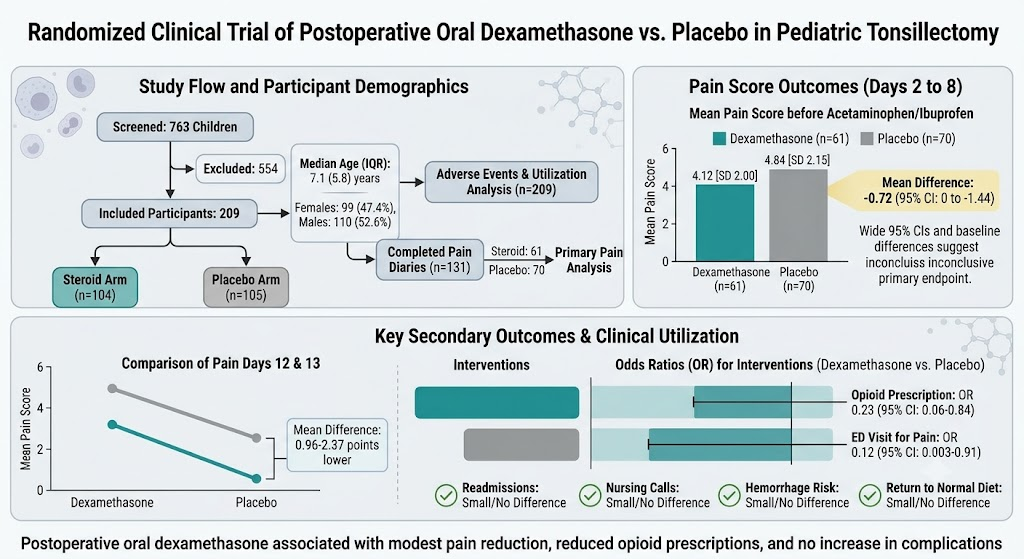
In a quadruple-blinded RCT, oral dexamethasone (0.5 mg/kg, max 20 mg) on postoperative days 2, 4, and 6 was associated with a mean 0.72-point reduction in pain score (95% CI, 0–1.44) compared with placebo, but wide confidence intervals and baseline differences limit definitive conclusions.
The dexamethasone group had significantly lower odds of receiving an opioid prescription (OR 0.23; 95% CI, 0.06–0.84) and of having an emergency department visit for pain (OR 0.12; 95% CI, 0.003–0.91), though estimates were imprecise.
No differences were observed in readmissions, posttonsillectomy hemorrhage, or return to normal diet; adverse event profiles were similar between groups.
Study Snapshot
Design: Parallel-design, quadruple-blinded, placebo-controlled randomized clinical trial.
Setting: Single tertiary academic center in the United States.
Population: 209 children aged 3–17 years undergoing adenotonsillectomy (August 2021–May 2023); 131 completed pain diaries for primary analysis.
Intervention: Oral dexamethasone 0.5 mg/kg (maximum 20 mg) or placebo on postoperative days 2, 4, and 6.
Primary Outcome: Mean pain score (0–10 scale) before scheduled analgesic medication on postoperative days 2 through 8.
Primary Result: Dexamethasone group mean pain 4.12 vs placebo 4.84; adjusted mean difference −0.72 (95% CI, −1.44 to 0); p-value not reported as definitive.
Secondary Highlights: Lower pain scores on days 12–13; reduced opioid prescriptions (OR 0.23); fewer ED visits for pain (OR 0.12).
Limitations: Single center, high attrition in pain diary cohort, imprecise estimates for secondary outcomes, baseline imbalances in pre-analgesic pain.
Funding/Registration: Not explicitly stated in abstract; ClinicalTrials.gov NCT04879823.
A Closer Look at the Trial
Tonsillectomy remains one of the most painful otolaryngologic procedures in children, and current analgesic regimens often rely on opioids despite growing concern over their risks. Whether a short postoperative course of oral steroids can meaningfully reduce pain and related morbidity has been unclear. In a recent quadruple-blinded randomized clinical trial published in JAMA Otolaryngology–Head & Neck Surgery, Shaffer and colleagues tested oral dexamethasone (0.5 mg/kg, maximum 20 mg) given on postoperative days 2, 4, and 6 against placebo in children undergoing adenotonsillectomy.
The study enrolled 209 participants (median age 7.1 years; 52.6% male) from a single tertiary academic center between August 2021 and May 2023. One hundred four children were randomized to dexamethasone and 105 to placebo. The primary outcome was mean pain score (0–10 scale) recorded before the first scheduled dose of acetaminophen or ibuprofen on days 2 through 8 postoperatively. Only 131 children (61 dexamethasone, 70 placebo) completed pain diaries and were included in the primary analysis, reflecting a 37% dropout rate for this endpoint.
Primary Endpoint: Modest Pain Reduction with Wide Confidence Intervals
The dexamethasone group reported a mean (SD) pain score of 4.12 (2.00) compared with 4.84 (2.15) in the placebo group. The adjusted mean difference was −0.72 points (95% CI, −1.44 to 0). While this suggests a modest reduction favoring dexamethasone, the confidence interval is wide and includes zero, and the authors note that baseline differences in pain prior to taking study medication prevented making definitive conclusions. The absolute reduction of roughly 0.7 points on a 10-point scale may be of limited clinical significance for individual patients, especially when balanced against the uncertainty in the estimate.
Secondary Benefits: Less Pain Later, Fewer Opioid Prescriptions
Although the primary endpoint did not provide clear evidence, several secondary analyses pointed to potential benefits. On postoperative days 12 and 13—well after the study drug had been discontinued—the dexamethasone group experienced significantly lower pain scores both before and after analgesic use, with mean differences ranging from 0.96 to 2.37 points. This late effect could reflect a reduction in rebound pain or improved overall recovery trajectory, but the finding is exploratory.
More striking was the reduction in opioid prescribing. Children in the dexamethasone group had considerably lower odds of receiving an opioid prescription (OR 0.23; 95% CI, 0.06–0.84) and of having an emergency department visit for pain (OR 0.12; 95% CI, 0.003–0.91). However, the precision of these estimates is limited by small numbers of events and wide confidence intervals, so the true effect size remains uncertain. No differences were found in nurse telephone calls, emergency department visits for other reasons, or return to normal diet.
Safety: No Increase in Complications
Importantly, the dexamethasone group did not show an increase in adverse events. Rates of posttonsillectomy hemorrhage, readmission, and other complications were similar between groups and clinically insignificant. This safety profile supports dexamethasone as a potentially useful adjunct, provided efficacy can be better confirmed. The trial followed participants for 5 to 9 weeks for adverse events, offering reassurance about lack of late harms.
Clinical Implications and Limitations
The results suggest that a short course of oral dexamethasone after pediatric tonsillectomy may modestly reduce pain and meaningfully decrease reliance on opioids, without added safety concerns. However, several limitations temper confidence: the single-center design, high attrition in the pain diary cohort, imprecise secondary effect estimates, and baseline imbalances in pain scores before study medication. Moreover, the primary endpoint did not reach conventional statistical significance when accounting for these issues, so the findings should be considered supportive rather than confirmatory.
Clinicians may weigh these data when discussing postoperative pain management options with families. The potential for opioid sparing is particularly relevant given the ongoing opioid epidemic. Larger, multicenter trials with more complete pain data collection and prespecified multiplicity control would help solidify the evidence base.
References
Shaffer AD, Omar M, Maguire RC, et al. Postoperative Oral Dexamethasone and Pediatric Tonsillectomy Morbidity: A Randomized Clinical Trial. JAMA Otolaryngol Head Neck Surg. Published online July 23, 2026. PMID: 42490074. https://pubmed.ncbi.nlm.nih.gov/42490074/
This article was created using several editorial tools, including AI, as part of the process. Human editors reviewed this content before publication.