Neurology
Latest news
579 articles · 20 / page

Normative Modeling Exposes Hidden Individual Variability in Traumatic Brain Injury: A New Frontier for Personalized Neuroimaging Assessment
A landmark study of 631 participants reveals that normative modeling uncovers substantial individual heterogeneity in brain morphology following traumatic brain injury that conventional group-based analyses miss, with every patient exhibiti

Timing Extubation After Thrombectomy: Evidence from the EDESTROKE Trial and Advanced Post-Reperfusion Management
The EDESTROKE trial finds no significant difference in 90-day functional outcomes between early (

Sex-Specific Disparities in Syncope Management: Evidence from Clinical Trials and Real-World Outcomes
This review synthesizes evidence on sex differences in syncope management, highlighting that while men face higher admission rates and adverse events, these disparities are largely driven by baseline clinical risk factors rather than gender

Beyond Communication: Language Barriers Linked to Higher Hospital Utilization at End-of-Life in Dementia
A retrospective cohort study reveals that dementia patients with preferred language other than English are more likely to have documented goals-of-care discussions yet experience significantly higher hospital-based healthcare utilization ne

Decoding Dementia in Lewy Body Disease: The Interplay of Quantitative Pathology, APOE Genotype, and Disease Heterogeneity
Recent advances in digital pathology and machine learning reveal that APOE ε4 promotes proteinopathy and modifies dementia thresholds, while multi-modal trajectories suggest distinct pathways for disease progression in Lewy body disease.

Eptinezumab Combined with Patient Education for Chronic Migraine and Medication-Overuse Headache: Insights from the RESOLUTION Trial
The Phase 4 RESOLUTION trial demonstrates that eptinezumab 100 mg IV, combined with standardized patient education, significantly reduces migraine frequency and acute medication reliance in adults with comorbid chronic migraine and medicati

Iatrogenic Alzheimer Pathology Can Mirror Severe Sporadic Disease After Cadaveric Growth Hormone Exposure
Four men exposed in childhood to cadaveric pituitary-derived human growth hormone developed dementia decades later; one autopsied case showed severe Alzheimer-type pathology, including tauopathy, supporting a transmissible iatrogenic Alzhei

Why the New MS Diagnostic Criteria Require Caution: High Frequency of MOGAD and NMOSD in Optic Neuritis Patients
A retrospective study reveals that 24% of patients meeting the latest MS criteria following optic neuritis actually have MOGAD or NMOSD, emphasizing the need for antibody testing to prevent misdiagnosis.

Hidden Triggers: Recent Infections Linked to a 2.6-Fold Increase in Cryptogenic Stroke Risk in Young Adults
The SECRETO study reveals that infections within the preceding week significantly increase the risk of cryptogenic ischemic stroke in patients aged 18–49, with elevated von Willebrand Factor and Factor VIII levels serving as critical biomar

PrimeC Combination Therapy Shows Potential to Slow Functional Decline in Amyotrophic Lateral Sclerosis: Insights from the PARADIGM Trial
The Phase 2b PARADIGM trial demonstrates that PrimeC—a novel combination of celecoxib and ciprofloxacin—is safe and significantly slows functional decline in ALS patients over 18 months, offering new hope for multi-target neuroprotective st

The Hidden Driver of Chronic Pain: How Macrophages Fuel Neuropathic Symptoms
Researchers using human stem cell models have discovered that macrophages actively amplify the electrical signals of damaged nerves, driving the spontaneous pain characteristic of neuropathy, offering a new target for non-opioid pain relief

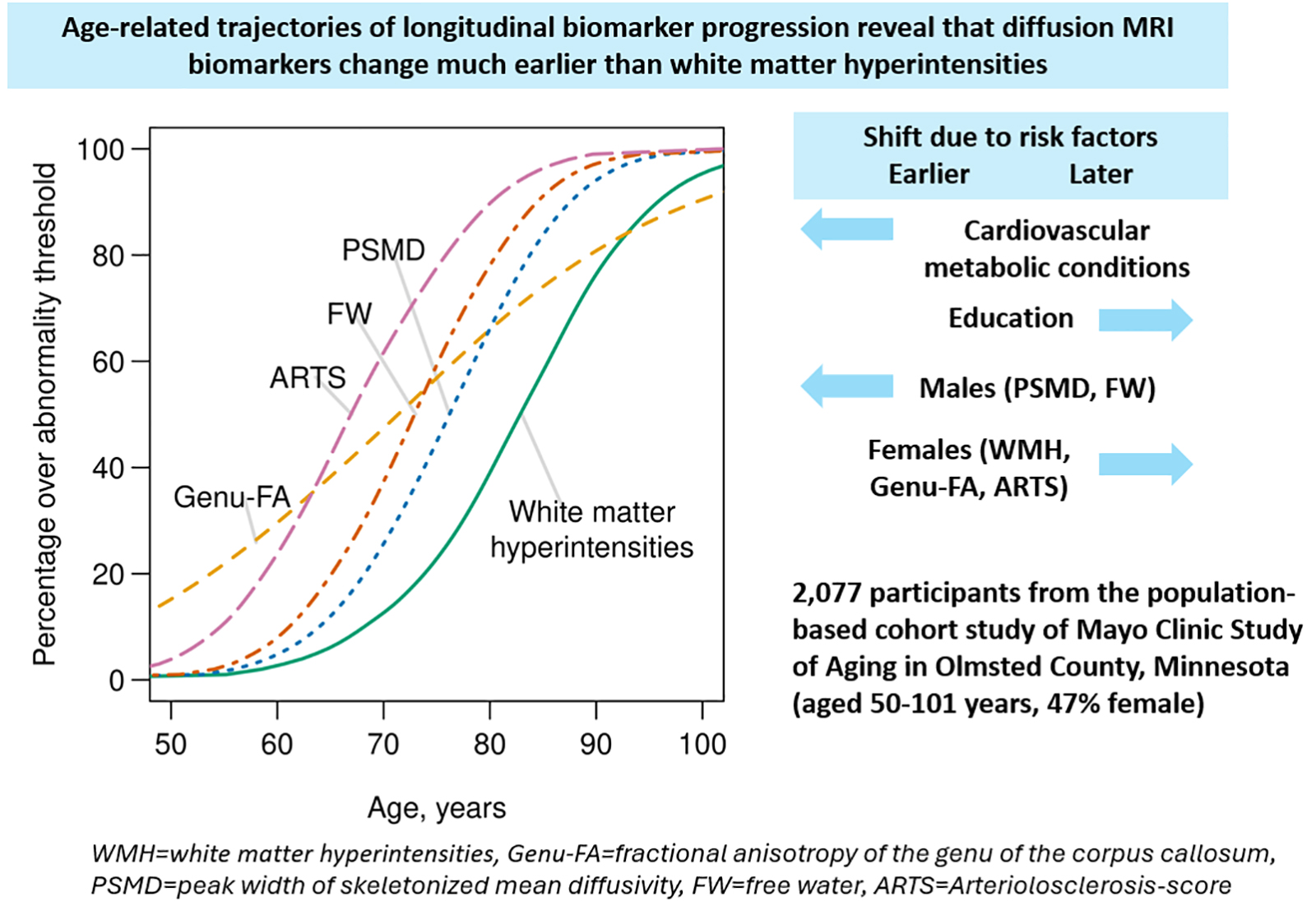
Basal Ganglia Perivascular Spaces: A Dual-Risk Biomarker for Ischemic Stroke and Major Bleeding in Antithrombotic Therapy
A large-scale prospective study identifies high basal ganglia perivascular space (BGPVS) burden as a significant predictor of both major bleeding and ischemic stroke in patients on antithrombotic regimens, offering a new imaging biomarker f

Selective D1/D5 Receptor Agonism in Parkinson Disease: Insights from the TEMPO-3 Phase 3 Trial of Tavapadon
The Phase 3 TEMPO-3 trial demonstrates that tavapadon, a novel selective D1/D5 agonist, significantly improves daily ‘good-on-time’ and reduces ‘off-time’ in Parkinson’s disease patients with motor fluctuations, presenting a potential shift

Beyond Immersion: Why Combining Action Observation with Virtual Reality is a Game-Changer for Post-Stroke Hand Recovery
A multicenter randomized controlled trial reveals that integrating action observation with virtual reality significantly improves paretic hand dexterity in stroke patients, with benefits persisting six months post-intervention, offering a s

Neuro-Immune Crosstalk: Macrophages Directly Amplify Spontaneous Activity in Damaged Human Sensory Neurons
A groundbreaking human iPSC-derived co-culture study reveals that macrophages respond to neuronal injury by adopting a pro-algesic state, directly intensifying spontaneous neuronal firing—a key driver of chronic neuropathic pain and a novel

High Basal Ganglia Perivascular Space Burden Predicts Both Ischemic Stroke and Major Bleeding in Antithrombotic Users
A large prospective study reveals that a high burden of basal ganglia enlarged perivascular spaces (BGPVSs) significantly increases the risk of both ischemic stroke and major bleeding in patients on antithrombotic therapy, positioning BGPVS

Selective D1/D5 Agonism: TEMPO-3 Trial Positions Tavapadon as a Significant Advancement for Parkinson’s Motor Fluctuations
The Phase 3 TEMPO-3 trial demonstrates that tavapadon, a selective D1/D5 agonist, significantly increases ‘good-on-time’ and reduces ‘off-time’ in Parkinson’s patients with motor fluctuations, offering a favorable safety profile compared to

Beyond the Motor Cortex: Functional Network Mapping Redefines Cerebral Palsy Prediction After Neonatal Stroke
A landmark study using lesion network mapping reveals that cerebral palsy after neonatal stroke is driven by disruptions in extensive functional networks, including the thalamus and cerebellum, rather than just localized motor cortex damage

Rethinking the Amygdala’s Role in Social Cognition: Preserved Empathy Motivation Despite Focal Lesions
This review analyzes evidence that amygdala damage, while impairing emotional recognition accuracy, does not diminish the intrinsic motivation to engage empathically, challenging traditional neurological models of psychopathy.

Beyond the Target: Why SBP Trajectories Predict Functional Recovery in Acute Intracerebral Hemorrhage
A pooled analysis of 11,269 patients from the INTERACT and ATACH-II trials reveals that 24-hour systolic blood pressure trajectories, rather than just single targets, significantly influence functional outcomes after intracerebral hemorrhag
Browse by specialty
Open language-specific specialty feeds and department pages.