Neurology
Latest news
579 articles · 20 / page

Combination Antiviral Therapy Improves Survival in HHV-6B Encephalitis Post-Cord Blood Transplant
A real-world study reveals FCN/GCV combination therapy enhances 1-year survival in HHV-6B encephalitis post-CBT, particularly after neutrophil engraftment, compared to monotherapy. Findings underscore the need for tailored antiviral strateg

Protein Misfolding in the Gut: A Window into Future Neurodegeneration
GI biopsies reveal misfolded proteins years before neurological symptoms appear, offering a new biomarker for early neurodegenerative disease prediction and intervention.

Inflammatory Biomarkers in Cerebral Venous Thrombosis: Prognostic Insights from the CLOT-VENUS Substudy and Meta-Analyses
High admission levels of NLR, PLR, MLR, and SII are independently associated with poor functional outcomes and mortality in acute cerebral venous thrombosis, offering a low-cost tool for early risk stratification.

Statistical Inconsistency in ALS Trials: How Analysis Methods Skew Treatment Efficacy
A study reveals significant variability in ALSFRS-R analysis methods across 45 ALS trials, impacting treatment effect estimates and increasing false-positive risks, with implications for clinical decision-making and drug development.

Five-Year Ublituximab Treatment Shows Sustained Benefits in Relapsing Multiple Sclerosis: ULTIMATE Extension Study
Long-term data from the ULTIMATE open-label extension study demonstrates sustained efficacy and safety of ublituximab in relapsing multiple sclerosis over five years, with significant reductions in relapse rates and disability progression c

Language Barriers and Delirium Detection: Study Reveals Critical Disparities in ICU Care for Spanish-Speaking Patients
A new study highlights significant disparities in delirium detection for Spanish-speaking ICU patients, with usual-care methods missing 72% of cases. Caregiver-administered tools improved detection by 47%, offering a potential solution to l

Even the Largest Stroke Cores May Benefit from Thrombectomy, LASTE Ancillary Analysis Suggests
In patients aged under 80 with ASPECTS 0-2, endovascular thrombectomy improved disability outcomes and reduced mortality versus medical care alone, challenging the idea that very large infarcts should automatically exclude treatment.

Corticostriatal Connectivity Reorganizes Before and After Motor Decline in Parkinson Disease
Resting-state MRI and PET data suggest that corticostriatal networks remodel across nigrostriatal degeneration in Parkinson disease, with posterior caudate hyperconnectivity preceding major motor decline and posterior putaminal disconnectio

DASH and Other Healthy Diets Linked to Lower Cognitive Decline Risk in Large U.S. Cohorts
In two large U.S. cohorts, greater adherence to healthy dietary patterns—especially DASH—was associated with less subjective cognitive decline and slightly better objective cognition.

Testosterone-Augmented Exercise Shows Promise for Muscle Mass and Anemia in Spinal Cord Injury Patients
A 16-week home-based trial combining testosterone with functional electrical stimulation and arm ergometry improved lean mass and corrected anemia in spinal cord injury patients, though aerobic capacity gains were not statistically signific

Even ‘Elevated’ Blood Pressure Raises Dementia Risk: Insights from 2.8 Million Adults Over 8 Years
A landmark South Korean study of 2.8 million adults reveals that both elevated blood pressure and hypertension significantly increase dementia risk, particularly vascular dementia, with stronger effects observed in midlife adults and women.

Real-Time fMRI Neurofeedback Shows Promise for Reading Rehabilitation in Post-Stroke Aphasia
This feasibility RCT demonstrates that contingent fMRI neurofeedback targeting the left supramarginal gyrus can improve reading comprehension in stroke survivors with aphasia, outperforming both healthy controls and non-contingent neurofeed

Biological Age Outpaces Chronological Age in Predicting Cerebral Small Vessel Disease Progression
This longitudinal cohort study reveals that biomarker-based biological age, particularly KDMAge and PhenoAge residuals, significantly predicts progression of cerebral small vessel disease, including new lacunes and microbleeds, offering pot

Why Women Show Higher Amyloid Burden: New Evidence on Sex, Race, and APOE ε4 Interactions in Alzheimer’s Pathology
A Brazilian autopsy study of 2,268 individuals reveals that female sex, APOE ε4 status, and African ancestry jointly influence amyloid pathology. Women showed 65% higher adjusted odds of neuritic plaques, and protective effects against amyl

Mobile Health Intervention Achieves 24% Better Blood Pressure Control in Stroke Survivors: PINGS Trial Results from Ghana
The PINGS trial demonstrates that a 12-month nurse-led mobile health intervention significantly improves blood pressure control among Ghanaian stroke survivors, with 67% achieving target BP versus 43% in usual care. This pragmatic approach

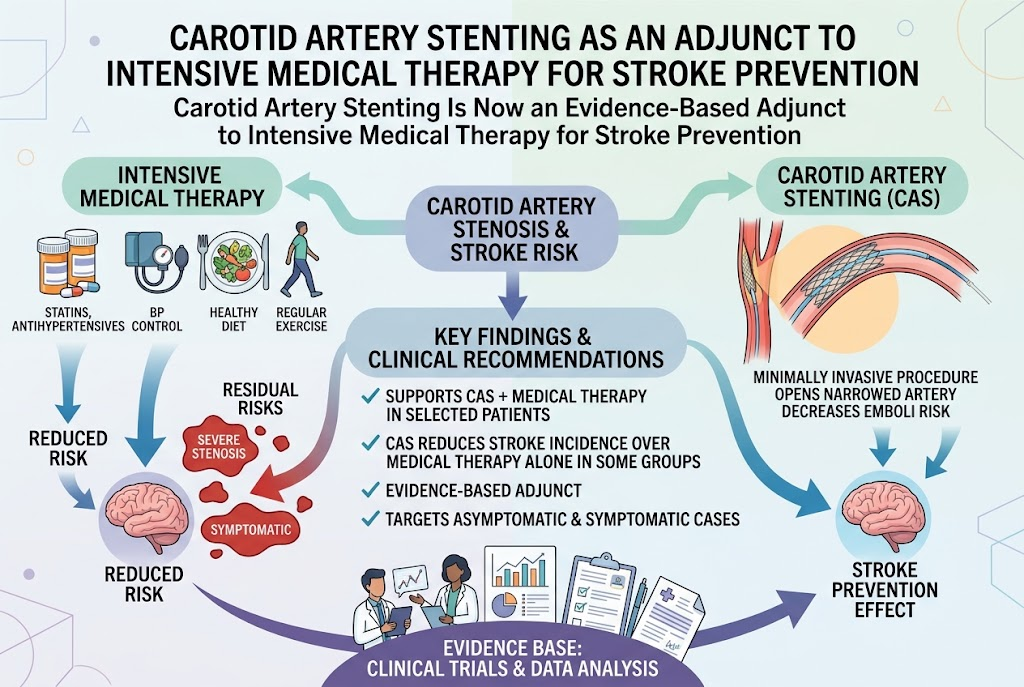
Integrated Strategies for Stroke Prevention and Management: From Evidence-Based Dietary Patterns to Systemic Adherence
This review synthesizes recent evidence on the neuroprotective effects of healthy dietary patterns (Mediterranean, MIND), the synergistic impact of lifestyle and pharmacotherapy (GLP-1), and systemic advances in acute stroke care and second

Money Talks: How Pharmaceutical Industry Payments Influence MS Doctors to Prescribe Costlier Brand-Name Drugs Over Generics
A new study reveals that neurologists receiving $1,000 or more from drug manufacturers were over 4 times more likely to prescribe expensive brand-name MS medications when generics were available, driving up costs for patients and the health

Teleneurological Ward Rounds Outperform On-Site Consultations in Subacute Stroke Care: A Prospective Multicenter Study
A prospective multicenter study demonstrates that teleneurological ward rounds achieve 92% guideline adherence versus 54% for on-site consultations in subacute stroke care, with superiority across all quality domains and most pronounced ben

Precision Blood-Based Diagnostics for Alzheimer’s Disease: The Synergistic Role of Plasma p-tau217 and eMTBR-tau243
This review synthesizes recent clinical evidence on the integration of plasma p-tau217 and eMTBR-tau243, highlighting how sequential biomarker testing improves the diagnosis of symptomatic Alzheimer’s disease and predicts longitudinal cogni

Timing of Atrial Fibrillation Diagnosis Does Not Alter Early Anticoagulation Benefits in Stroke Patients: Insights from the OPTIMAS Trial
Subgroup analysis of the OPTIMAS trial reveals that neither the timing of atrial fibrillation diagnosis nor AF subtype modifies the treatment effect of early versus delayed direct oral anticoagulant initiation in acute ischemic stroke. Pers
Browse by specialty
Open language-specific specialty feeds and department pages.