Infectious Diseases
Latest news
266 articles · 20 / page

Impact of Appropriate Antimicrobial Therapy on ICU Patient Outcomes: Subanalysis of the DIANA Study Dataset
In critically ill ICU patients with confirmed bacterial infections, appropriate empiric antimicrobial therapy was common and independently linked to lower 28-day mortality and more antimicrobial-free days.

Digital Shared Decision Support Increased STI Testing for Adolescents and Young Adults in the Emergency Department
In a randomized controlled trial, the STIckER smartphone-based decision aid increased gonorrhea/chlamydia and pharyngeal STI testing in emergency department patients aged 14 to 24 years, while improving decisional clarity, satisfaction, and

Large-Scale Meta-Analysis Finds Higher Influenza and Shingles Risk with JAK-STAT Inhibitors
A large meta-analysis found JAK-STAT inhibitors slightly increased influenza, bronchitis, and herpes zoster risk, especially in atopic dermatitis, while serious and opportunistic infections were not significantly increased.

Rapid Respiratory Point-of-Care Testing and Antibiotic Use in Primary Care: A Randomized Clinical Trial
A randomized trial found that rapid respiratory point-of-care testing did not reduce same-day antibiotic prescribing in primary care, though it was safe and may help when a virus is detected.

Diabetes, Male Sex, and Low HBsAg, HDV RNA, and ALT Predict Spontaneous HDV Suppression in Chronic Hepatitis D
In 1,610 untreated chronic hepatitis D patients, spontaneous HDV suppression was uncommon but increased over time. Diabetes, male sex, and lower baseline HBsAg, HDV RNA, and ALT predicted suppression and fewer liver-related events.

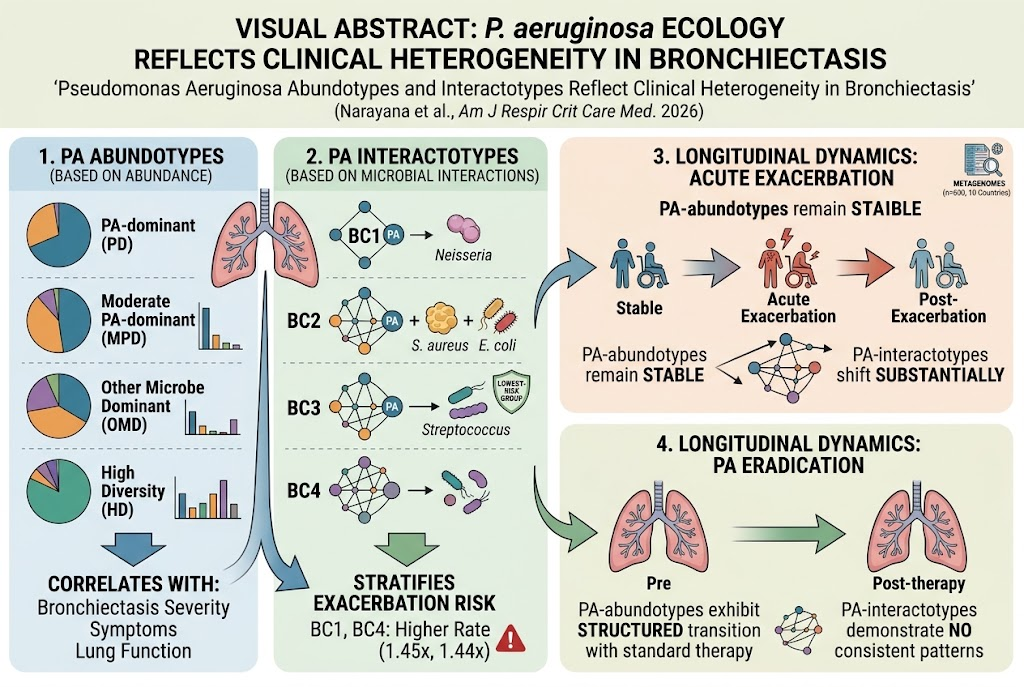
Lower Airway Dysbiosis in NTM-Positive Bronchiectasis Is Linked to NET-Dominant Severe Phenotypes
In NTM-positive bronchiectasis, lower airway dysbiosis involving Mycobacterium and oral bacteria is linked to higher NET levels and more severe disease phenotypes, suggesting that the broader airway microbiome may shape inflammation and out

New SCCM–ESICM Consensus Defines Refractory Septic Shock
A new SCCM–ESICM Delphi consensus standardizes clinical criteria for refractory septic shock, focusing on persistent hypoperfusion, fluid unresponsiveness, high vasopressor needs, and bedside ultrasound when mixed shock is suspected.

First-Trimester Maternal CMV Infection Concentrates the Risk of Fetal Brain Injury, Hearing Loss, and Autism Spectrum Disorder
A large prospective cohort suggests that long-term sequelae of congenital CMV after primary maternal infection are confined to first-trimester exposure, with autism spectrum disorder linked to temporal lobe white matter abnormalities.

Bone Marrow Immune Profiling Identifies a Practical Infection Risk Score in Multiple Myeloma
A large multicenter study links specific bone marrow immune cell patterns to infection risk in multiple myeloma and proposes a clinically relevant immune score that may support minimally invasive monitoring.

Whole-Genome Sequencing Suggests Casual Community Contact Drives Much of Drug-Resistant Tuberculosis Transmission in Durban
A molecular epidemiology study in Durban found that casual community contact, not only household or named contacts, accounted for a substantial share of drug-resistant tuberculosis transmission.

“Never More Than 15 Feet From the Respirator”: Housestaff Research During the 1955 Boston Polio Epidemic
During Boston’s devastating 1955 polio epidemic, Massachusetts General Hospital trainees conducted groundbreaking patient research while providing round-the-clock care in iron lung wards – a striking contrast to trainee roles during COVID-1

Pairing HDV RNA With Anti-HDV Levels May Sharpen Staging and Treatment Monitoring in HBV/HDV Coinfection
In HBsAg-positive, anti-HDV-positive patients, combined measurement of HDV RNA and anti-HDV titers distinguished inactive from active disease and tracked interferon response more effectively than either marker alone.

Elevated Heart Failure Risk in People With HIV: Insights from the REPRIEVE Trial
The REPRIEVE trial reveals higher heart failure incidence in people with HIV, particularly among women, Black participants in high-income regions, and those with hypertension or obesity. Traditional risk factors, not HIV-specific markers, w

Biomarker Signatures in Sepsis: Linking Host Response to Clinical Outcomes
A prospective cohort study identifies biomarker signatures for host resistance, disease tolerance, and damage in sepsis, revealing associations with mortality and sepsis subtypes.

Fecal Microbiota Transplant Fails to Decolonize Multidrug-Resistant Organisms in GI Patients: A Randomized Trial Analysis
A randomized clinical trial found that FMT did not significantly decolonize MDROs or reduce AMR genes in GI disease patients, though it modulated gut microbiome composition.

CD16+ γδ T Cells: A Novel Player in HBV Viral Control Through Antibody-Dependent Cytotoxicity
A study reveals CD16+ γδ T cells as key mediators of antibody-dependent cellular cytotoxicity in HBV infection, correlating with reduced viral replication and offering new therapeutic targets.

Cultural Diversity in ICU: A Protective Factor Against Sepsis Mortality
A multicenter study reveals that culturally and linguistically diverse patients with sepsis had lower in-hospital mortality and shorter ICU stays compared to non-CaLD patients, challenging prior assumptions about healthcare disparities.

Combination Antiviral Therapy Improves Survival in HHV-6B Encephalitis Post-Cord Blood Transplant
A real-world study reveals FCN/GCV combination therapy enhances 1-year survival in HHV-6B encephalitis post-CBT, particularly after neutrophil engraftment, compared to monotherapy. Findings underscore the need for tailored antiviral strateg

Antifungal Therapy Slashes Mortality in COVID-19-Associated Pulmonary Aspergillosis: European Data Confirms
A multicenter European cohort study demonstrates that antifungal treatment significantly reduces 60-day mortality in COVID-19-associated pulmonary aspergillosis (CAPA), particularly in immunocompromised patients. Key findings underscore the

Nine-Valent HPV Vaccine Cuts Cancer Risk Nearly in Half for Males: Landmark Study Supports Sex-Neutral Immunization
A large-scale retrospective cohort study demonstrates that 9-valent HPV vaccination in males aged 9-26 years is associated with a 46% reduction in HPV-related cancer risk. The findings support sex-neutral HPV vaccination strategies and high
Browse by specialty
Open language-specific specialty feeds and department pages.