Unraveling the Diarrheal Outbreaks: Understanding Cyclospora and Cryptosporidiosis in the United States
Introduction
Acute diarrheal illnesses are a frequent cause of morbidity worldwide, often caused by a wide array of pathogens, including bacteria, viruses, and parasites. In the United States, 2026 has seen a notable surge of two parasitic infections causing watery diarrhea: Cyclospora cayetanensis and Cryptosporidium species. Both parasites are protozoans that infect the gastrointestinal tract, leading to significant illness across varied populations. This article delves into recent epidemiological trends, clinical features, diagnostic challenges, treatment strategies, and preventive measures relating to these outbreaks.
Understanding Cyclospora cayetanensis and the 2026 Outbreak
Cyclospora cayetanensis is a coccidian parasite transmitted primarily through ingestion of contaminated food or water containing its oocysts. As of mid-July 2026, the Centers for Disease Control and Prevention (CDC) confirmed 1,645 cases nationwide, with over 5,100 under investigation across 34 states—marking this as one of the largest outbreaks in recent history.
Transmission and Sources:
The parasite is typically acquired via the fecal-oral route by consuming fresh produce contaminated with oocysts. High-risk foods include cilantro, parsley, mint, green onions, snow peas, raspberries, and bagged salad mixes, often originating from Mexico and Central America. Unlike Cryptosporidium, Cyclospora oocysts require one to two weeks outside the human host to sporulate and become infectious, making direct person-to-person transmission exceedingly rare. There is no known animal reservoir for Cyclospora.
Clinical Features and Diagnosis of Cyclospora Infection
Symptoms generally appear after an incubation period of approximately seven days (2–14 days range) and present as explosive watery diarrhea, abdominal cramps, anorexia, fatigue, and weight loss without blood in stools. Immunocompromised individuals, including those with HIV/AIDS or undergoing immunosuppressive therapy, experience more severe and prolonged illnesses.
Diagnostic testing is challenging because routine stool examinations often miss Cyclospora. Specific tests like acid-fast oocyst staining or polymerase chain reaction (PCR) assays must be requested explicitly.
Treatment and Management of Cyclospora
The treatment of choice for immunocompetent patients is trimethoprim-sulfamethoxazole (TMP-SMX) 160/800 mg orally twice daily for 7 to 10 days. For patients with sulfonamide allergies, alternative options lack robust evidence; ciprofloxacin is sometimes used but with uncertain efficacy. Immunocompromised patients require prolonged TMP-SMX therapy extending beyond four weeks and concurrent antiretroviral therapy for HIV-positive individuals to facilitate immune recovery. Adequate hydration and electrolyte replacement remain essential supportive measures.
Cryptosporidiosis: A Parallel Threat
Cryptosporidiosis, caused by Cryptosporidium species, particularly C. hominis and C. parvum, is another protozoal infection responsible for watery diarrhea and gastrointestinal symptoms. It is endemic with over 800,000 cases annually in the U.S., especially affecting young children and immunocompromised hosts. Its spread involves multiple fecal-oral pathways including contaminated water sources (swimming pools, untreated drinking water), food, surfaces, and contact with infected animals.
Unlike Cyclospora, Cryptosporidium oocysts are immediately infectious at excretion, facilitating person-to-person transmission and outbreaks, especially in communal settings such as childcare centers and swimming facilities.
Clinical Presentation and Diagnosis of Cryptosporidiosis
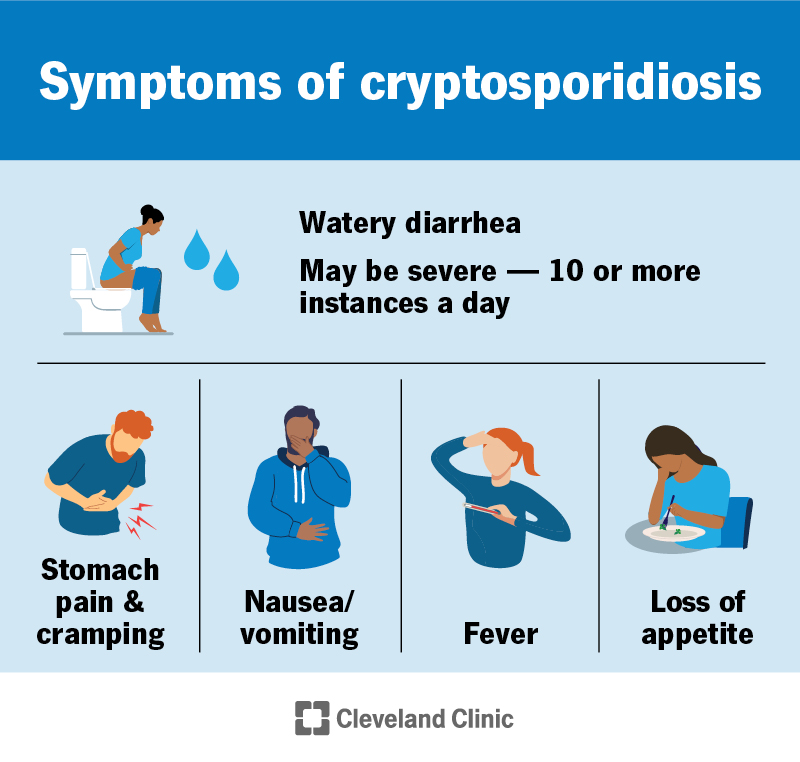
Symptoms encompass profuse watery diarrhea (often >10 episodes per day), abdominal cramps, nausea, vomiting, fever, and malaise, although asymptomatic infections can occur. Prolonged and severe illness with life-threatening dehydration can develop in immunocompromised individuals, notably those with HIV/AIDS.
Diagnosis involves stool examinations using acid-fast staining or PCR. Multiple stool samples over several days may be necessary due to variable shedding.
Treatment and Prognosis of Cryptosporidiosis
In immunocompetent hosts, cryptosporidiosis is usually self-limited, resolving within two to three weeks with hydration being the cornerstone of management. Antiprotozoal medication nitazoxanide may accelerate recovery. Immunocompromised patients, particularly those with HIV, require antiretroviral therapy to restore immunity, as pharmacological treatments alone are insufficient.
Comparing Cyclospora and Cryptosporidium: Key Differences
| Feature | Cyclospora cayetanensis | Cryptosporidium spp. |
|—————————————|———————————————-|———————————————-|
| Infectious stage | Oocysts require 1–2 weeks outside host | Oocysts immediately infectious upon excretion |
| Person-to-person transmission | Extremely rare | Common, especially in communal settings |
| Reservoir hosts | No known animal reservoir | Animals (livestock, pets) act as reservoirs |
| Diagnostic challenges | Requires specific staining or PCR | Also requires specialized stool testing |
| Treatment | TMP-SMX; alternatives limited | Nitazoxanide; supportive hydration |
| Seasonality | Peaks May–August | Occurs year-round |
Public Health Impact and Response
The 2026 Cyclospora outbreak centered primarily in Michigan has resulted in nearly 1,000 confirmed cases and approximately 40 hospitalizations, with no deaths reported. Neighboring states, including Ohio, West Virginia, and Kentucky, have epidemiological links to this cluster. The origins of contaminated produce remain under investigation by the FDA and CDC.
Criticism has arisen concerning the scaling back of the Foodborne Diseases Active Surveillance Network under leadership of Robert F. Kennedy Jr., impeding pathogen reporting and outbreak monitoring.
Prevention Strategies and Correct Health Practices
Preventive measures focus on interrupting fecal-oral transmission:
– Thorough washing of fresh produce with potable water.
– Avoidance of high-risk foods during outbreaks.
– Proper hand hygiene after toileting and before eating.
– Avoidance of swallowing water from swimming pools, lakes, or untreated sources.
– Educating at-risk populations, particularly immunocompromised individuals, on avoiding contaminated food and water.
Patient Scenario: Meet Sarah
Sarah, a 35-year-old healthy woman living in Michigan, developed watery diarrhea accompanied by abdominal cramps and fatigue over a week after attending a community picnic where she consumed various salads and fresh herbs. She reported no blood in stool but experienced multiple episodes daily. Initial routine stool tests were negative, but a targeted PCR test later confirmed Cyclospora infection. She was treated with TMP-SMX with resolution of symptoms over 10 days.
This case highlights the importance of tailored diagnostic approaches and awareness of foodborne parasitic infections.
Conclusion
Cyclospora and Cryptosporidium remain significant causes of waterborne and foodborne diarrheal illnesses in the United States, with notable outbreaks challenging public health resources. Comprehensive understanding of their transmission, clinical presentation, and management strategies is essential for clinicians and public health professionals. Enhanced surveillance, rapid diagnostic modalities, and preventive education are pivotal to controlling and mitigating future outbreaks.
References
– Centers for Disease Control and Prevention. Cyclospora Infection (Cyclosporiasis). CDC.gov. 2026.
– Centers for Disease Control and Prevention. Cryptosporidium Infection (Cryptosporidiosis). CDC.gov. 2026.
– Ortega YR, et al. Cyclospora and cryptosporidium: food- and waterborne parasites. Clinics in Laboratory Medicine. 2020; 40(2):241-255.
– Arrowood MJ. Cryptosporidium and Cyclospora. In: Mandell, Douglas, and Bennett’s Principles and Practice of Infectious Diseases, 9th Ed. 2020.
This article was created using several editorial tools, including AI, as part of the process. Human editors reviewed this content before publication.