Pediatrics
Latest news
375 articles · 20 / page

Twice-Yearly Inclisiran Transforms LDL-C Management in Adolescents with HeFH: Insights from ORION-16
The ORION-16 trial demonstrates that inclisiran, a twice-yearly siRNA therapy, significantly and safely reduces LDL cholesterol in adolescents with heterozygous familial hypercholesterolaemia, offering a promising solution for long-term adh

Misaligned Urgency: Why Status Exceptions May Be Paradoxically Lowering Priority for the Sickest Children in Heart Transplantation
A large-scale analysis of 6,026 pediatric heart transplant candidates reveals that status exceptions often prioritize patients with lower mortality risk than those meeting standard criteria, highlighting a significant misalignment in the U.

Leveling the Playing Field: New Trans-Ancestry Polygenic Risk Score Transforms Type 1 Diabetes Screening
Researchers have developed a trans-ancestry polygenic risk score (TA-PS) that significantly improves the accuracy of type 1 diabetes prediction across diverse ethnic groups, addressing the long-standing European bias in genetic risk assessm

Fordadistrogene Movaparvovec Fails to Improve Functional Outcomes in Duchenne Muscular Dystrophy: Insights from the Phase 3 CIFFREO Trial
The Phase 3 CIFFREO trial found that the gene therapy fordadistrogene movaparvovec did not significantly improve motor function in boys with Duchenne muscular dystrophy compared to placebo, leading to the discontinuation of its clinical dev

Deciphering ZnT8A: Why Not All Islet Autoantibodies Predict Type 1 Diabetes Risk
The ENDIA cohort study reveals that persistent single ZnT8 autoantibodies detected only via ELISA after age 4 do not significantly increase Type 1 Diabetes risk, whereas earlier detection across multiple assay formats signals higher progres

24-Weekly vs. 12-Weekly Triptorelin: Clinical Equivalence and Enhanced Adherence in Central Precocious Puberty
A UK multicentre study demonstrates that 24-weekly Decapeptyl SR is as effective and well-tolerated as the 12-weekly regimen for central precocious puberty, offering improved patient satisfaction and reduced clinical burden.

Genetic Breakthrough: How SNUPN Gene Variants Lead to Spinocerebellar Atrophy
Researchers have discovered that mutations in the SNUPN gene cause spinocerebellar atrophy by disrupting RNA splicing in Purkinje cells, expanding the understanding of neurodevelopmental disorders beyond muscular conditions.

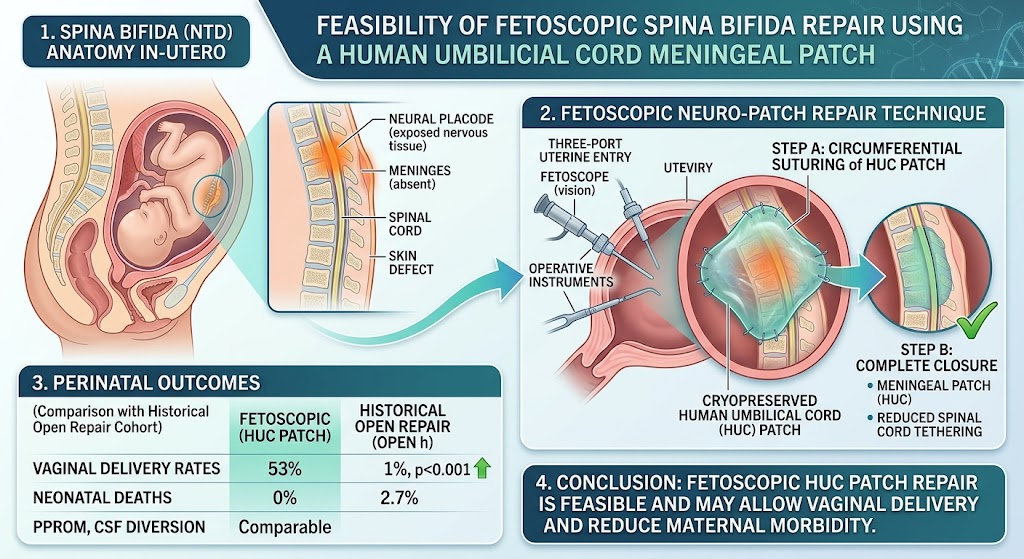
Cellular Therapy for In-Utero Myelomeningocele Repair: Results from the CuRe Phase 1 Trial
This phase 1 study evaluates the safety of placenta-derived mesenchymal stem cells (PMSCs) seeded on an extracellular matrix for in-utero repair of myelomeningocele, demonstrating successful surgical outcomes and no cell-related adverse eve

Topical Botanical Solution Cinainu Shows Sustained Efficacy and Safety in Paediatric Alopecia Areata: Insights from the RAAINBOW Trial
The RAAINBOW phase II/III trial demonstrates that Cinainu, a topical botanical solution, significantly improves hair regrowth and quality of life in paediatric patients with moderate-to-severe alopecia areata, offering a well-tolerated alte

Unorthodox JAK Inhibitor Dosing in Pediatric Moderate-to-Severe Alopecia Areata: A Comparative Evaluation of Tofacitinib and Baricitinib
This study of 100 pediatric patients with moderate-to-severe alopecia areata demonstrates that unorthodox dosing regimens of tofacitinib and baricitinib provide comparable efficacy and high tolerability over 24 weeks.

Plasma GFAP and NfL Levels Predict Acute Brain Injury and Poor Outcomes in Pediatric ECMO
This multi-center study demonstrates that serial monitoring of plasma GFAP and NfL biomarkers can detect acute brain injury in pediatric ECMO patients before imaging diagnosis, significantly correlating with long-term survival and functiona

Plasma GFAP and NfL as Real-Time Predictors of Brain Injury and Long-Term Disability in Pediatric ECMO
A prospective study demonstrates that rising levels of plasma GFAP and NfL precede neuroimaging-confirmed brain injury in children on ECMO. These biomarkers are also strongly associated with mortality and long-term functional impairment, of

Optimizing Pediatric Outcomes: Evidence-Based Advancements in Respiratory Delivery, Neonatal Support, and Precision Therapeutics
This review synthesizes practice-changing pediatric research, highlighting how device selection in acute wheezing, automated oxygen titration in neonates, and novel siRNA therapies for hypercholesterolemia are redefining clinical standards

Fractional Yellow Fever Vaccination Fails Non-Inferiority in Infants: Why Adult Data Cannot Be Extrapolated to Pediatric Populations
A randomized, double-blind trial in Kenya and Uganda reveals that a 500 IU fractional dose of yellow fever vaccine is not non-inferior to the standard dose in infants, suggesting that lower dose requirements in adults are not generalizable

Cyclic Exclusive Enteral Nutrition: A New Paradigm for Drug-Free Remission in Pediatric Crohn’s Disease
The CD-HOPE trial reveals that cyclic exclusive enteral nutrition (C-EEN) is superior to daily partial enteral nutrition (PEN) for maintaining drug-free remission in children with Crohn’s disease, providing a critical alternative to long-te

Twice-Yearly Inclisiran Successfully Lowers LDL-C in Adolescents with Heterozygous Familial Hypercholesterolaemia: Insights from ORION-16
The ORION-16 trial demonstrates that inclisiran, a twice-yearly siRNA therapy, significantly and safely reduces LDL cholesterol in adolescents with HeFH, offering a potent new tool for early cardiovascular risk management in high-risk pedia

CIFFREO Trial Results: Fordadistrogene Movaparvovec Fails Primary Efficacy Endpoint in Duchenne Muscular Dystrophy
The Phase 3 CIFFREO trial for the gene therapy fordadistrogene movaparvovec failed to meet its primary efficacy endpoint in boys with Duchenne muscular dystrophy, showing no significant functional improvement over placebo and leading to the

Giving Kids a Voice: How Patient-Reported Outcome Measures are Transforming Pediatric Specialty Care
Explore how standardized health questionnaires empower children and parents to share their priorities in medical settings, leading to more personalized and effective treatment plans.

AAV9 Gene Therapy Shows Clinical Promise in Stabilizing Type II GM1 Gangliosidosis
A Phase 1-2 trial of AAV9-GLB1 gene therapy in children with Type II GM1 gangliosidosis demonstrates significant biochemical improvements and stabilization of neurodevelopmental decline, marking a pivotal step toward treating this fatal lys

Kangaroo Care Attenuates Pain and Systemic Inflammatory Markers During Retinopathy of Prematurity Screening
A randomized clinical trial demonstrates that Kangaroo care significantly reduces pain-related stress and systemic inflammatory responses in preterm infants undergoing retinopathy screening, suggesting a simple, non-pharmacological interven
Browse by specialty
Open language-specific specialty feeds and department pages.