Pediatrics
Latest news
375 articles · 20 / page

A New Steroid Option for Duchenne Muscular Dystrophy? What the Latest Vamorolone Study Means for Families
A new study suggests vamorolone may preserve motor benefits seen with standard steroids in Duchenne muscular dystrophy while better protecting growth, though weight gain remains a concern.

Higher-Fidelity Enhanced Recovery Shortened Stay and Reduced Complications in Children Undergoing GI Surgery, Even Though the Overall Trial Was Neutral
In a stepped-wedge trial across 18 US centers, a pediatric GI surgery enhanced recovery protocol did not improve length of stay overall, but patients receiving at least 13 protocol elements had shorter stays, fewer complications, faster die

Children Born SGA Receiving Growth Hormone Have Similarly Impaired Glucose-Insulin Metabolism as Children With Obesity
Children born SGA receiving growth hormone showed insulin resistance and prediabetes rates similar to obesity, suggesting the need for careful glucose monitoring during and after treatment.

Identifying High-Risk Children Safe for Same-Day Discharge After Tonsillectomy
Children with obesity and severe OSA usually stay overnight after tonsillectomy, but this study found most had no major complications. Oxygen nadir and AHI may help identify very low-risk patients who could be considered for same-day discha

Poverty Exposure in Standard-Risk Pediatric B-ALL Is Linked to Steroid-Resistance Programs and an Immunologically Suppressed Leukemia Microenvironment
Single-cell RNA sequencing suggests that childhood poverty exposure is associated with steroid-resistance signatures in leukemic blasts and adverse immune remodeling at diagnosis in standard-risk B-ALL.

Persistent Challenges in Managing Monocular Deprivation Amblyopia: A Three-Decade Trend Analysis of Infant Unilateral Cataract Outcomes
This review evaluates 30 years of clinical outcomes for monocular congenital cataracts, revealing stagnant visual acuity results, high surgical burdens, and significant rates of secondary glaucoma and nystagmus despite surgical advances.

Web-Based Amblyopia Decision Support Tool
The Amblyopia Navigator offers evidence-based guidance for eye care professionals to improve early detection and treatment of childhood amblyopia, addressing specialist shortages through accessible digital tools.

Glucocorticoid Reduction After Starting Crinecerfont in Pediatric Patients With Classic CAH: Practical Perspectives
New expert recommendations guide glucocorticoid dose reduction in pediatric classic CAH patients using crinecerfont, prioritizing normal growth while minimizing long-term steroid complications.

Pediatric Type 1 Diabetes Care Still Misses LDL Targets Despite Clear Indications for Lipid-Lowering Therapy
Registry data from 55,028 youths with type 1 diabetes show common LDL hypercholesterolemia, infrequent lipid-lowering therapy, and poor attainment of recommended LDL targets.

A New Pediatric VAD Driver Shows High Reliability and Preserves Mobility Without Major Device Malfunctions
In a prospective multicenter evaluation, the EXCOR Active Driver supported pediatric VAD care with no major device malfunctions and excellent short-term survival, while addressing a major unmet need in mobility and day-to-day function.

Reduced-Intensity Thiotepa Plus Post-Transplant Cyclophosphamide Delivers Near-Universal Engraftment and Minimal GVHD in Matched Sibling Transplantation for Adolescents and Adults With Sickle Cell Disease
A prospective multicenter study reports excellent survival, no graft failure, and very low GVHD with a thiotepa-based reduced-intensity matched sibling transplant platform for severe sickle cell disease.

No Clear Winner in Severe Congenital Ptosis Repair: AAO Review Finds Overlapping Efficacy but Distinct Surgical Risks in Children
An American Academy of Ophthalmology review found that frontalis flap, frontalis suspension, and maximal levator resection show overlapping success and exposure rates in severe congenital ptosis, with surgical choice often guided more by co

Pediatric Ischemic Stroke in Switzerland Is Still Diagnosed Too Late for Reperfusion in Most Cases
A 24-year Swiss registry study shows modest improvement in pediatric stroke recognition, but most children are still diagnosed beyond thrombolysis and thrombectomy windows.

Combined Nicotinamide Riboside and Home-Based Exercise Improved Peak VO2 Safely in Friedreich’s Ataxia
In a phase 2 factorial trial, 12 weeks of nicotinamide riboside plus individualized exercise improved cardiopulmonary fitness in Friedreich’s ataxia, with mild-to-moderate adverse events and no signal of major safety concerns.

Endocrine Profile in Pediatric Bardet-Biedl Syndrome: Insights from a Large Multidisciplinary Cohort
A retrospective study of 135 pediatric BBS patients reveals high prevalence of obesity (77.6%) and short stature (21.1%), with low rates of hypogonadism, hypothyroidism, and glucose metabolism disorders compared to adult populations.

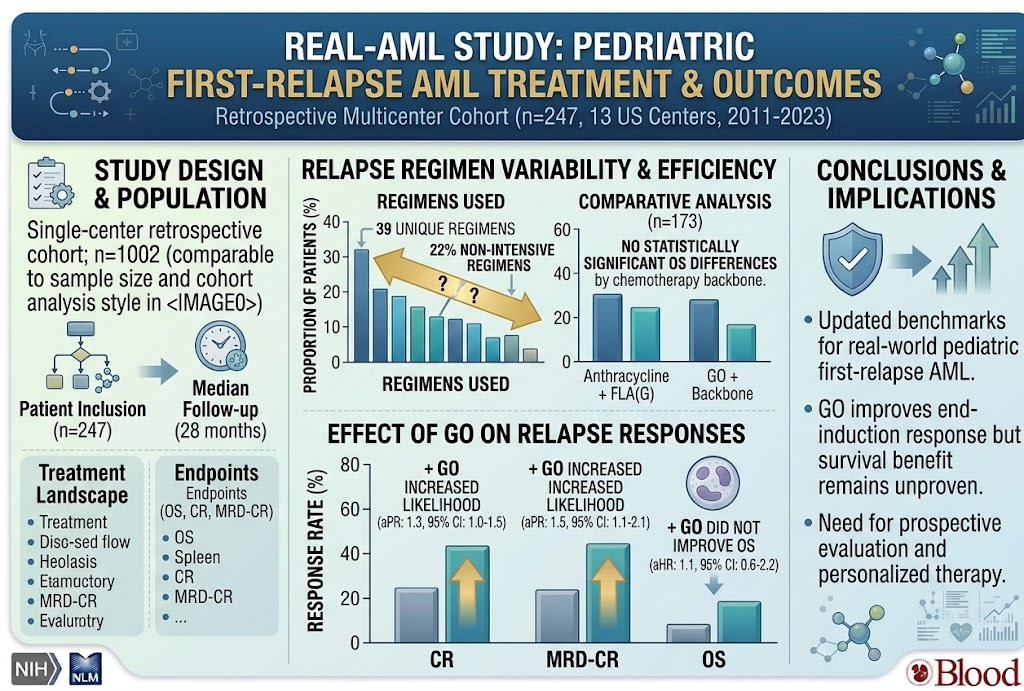
Allogeneic Stem Cell Transplantation Improves Survival in High-Risk t(6;9) AML, Especially in Younger Patients and Those Achieving CR1
A large EBMT study shows allo-HSCT provides favorable 2-year survival (65.7%) in high-risk t(6;9) AML, with superior outcomes in CR1 and pediatric/AYA patients. FLT3-ITD positivity triples relapse risk but doesn’t impact overall survival.

DSDO Lenses Show Superior Axial Length Control in Pediatric Myopia Management: A Real-World Multicenter Study
DSDO lenses demonstrated significant efficacy in slowing axial elongation in myopic and non-myopic children, with pronounced effects in younger age groups and low myopia subgroups during the first 6 months of intervention.

Pediatric Hypertrophic Cardiomyopathy: The High-Risk Profile of Massive Left Ventricular Hypertrophy
A multiregistry analysis reveals that massive LVH in pediatric HCM is linked to early diagnosis, sarcomeric mutations, and heightened risks of arrhythmias, heart failure, and mortality. Nearly 25% of patients show significant LVH regression

Genomic Fusion Breakpoints: A Breakthrough in Pediatric ALL MRD Monitoring
A novel genomic fusion breakpoint (GFB)-based MRD monitoring approach demonstrates superior sensitivity and specificity in pediatric ALL, addressing limitations of current IG/TCR-based methods, particularly in ETV6::RUNX1- and MEF2D-rearran

Whole Genome Sequencing Outperforms Gene Panels in Diagnosing Congenital Cataracts
Whole genome sequencing (WGS) increases diagnostic yield by 10% compared to gene panels in congenital cataracts, aiding in prognosis, reproductive counseling, and management.
Browse by specialty
Open language-specific specialty feeds and department pages.