Nephrology
Latest news
142 articles · 20 / page

SLA-DR–Deleted Donor Pigs Show Durable Kidney Xenograft Function and a Favorable Safety Profile in Rhesus Monkeys
CRISPR-engineered GGTA1/B4GALNT2/SLA-DR knockout pigs remained healthy, screened negative for 55 zoonotic pathogens, and supported long-term renal xenograft function in rhesus monkeys when preformed anti-SLA antibodies were absent.

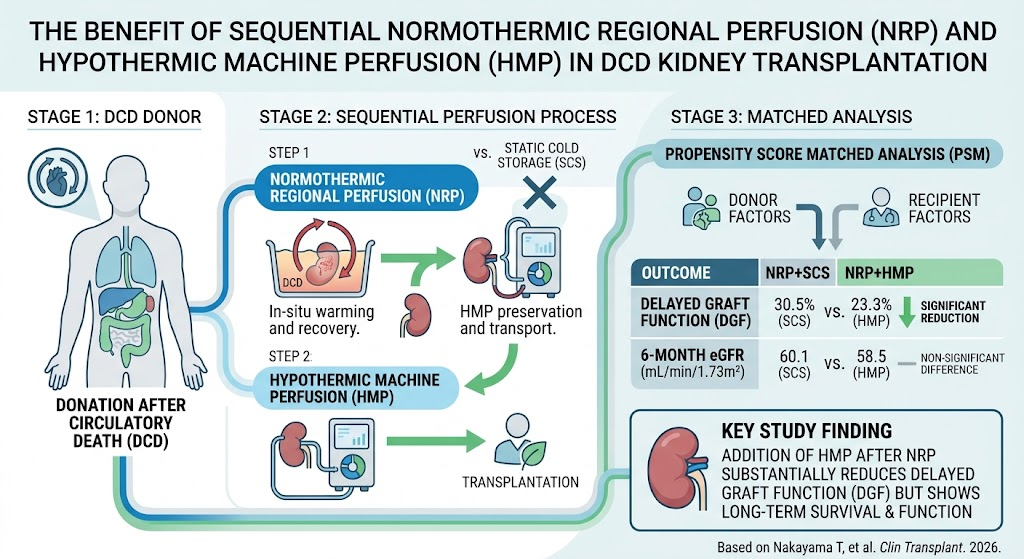
Impact of Normothermic Regional Perfusion on Outcomes in Kidney Transplantation From Donors After Circulatory Death
In a nationwide U.S. analysis of 21,010 adult DCD kidney transplants, normothermic regional perfusion lowered delayed graft function, shortened hospital stay, and improved graft and patient survival, with the greatest benefit in higher-risk

Proteinuria in Preeclampsia and Long-Term Risk of Maternal Kidney and Cardiovascular Disease
Higher proteinuria in preeclampsia was linked to greater long-term risk of maternal hypertension and chronic kidney disease, with overall increased risk of cardiovascular disease as well.

Tirzepatide vs dulaglutide: kidney outcomes in type 2 diabetes from SURPASS-CVOT
In a pre-specified exploratory analysis of SURPASS-CVOT, tirzepatide reduced major kidney events versus dulaglutide in people with type 2 diabetes and cardiovascular disease, mainly by lowering new macroalbuminuria and slowing eGFR decline.

Exploring the Link Between Cardiovascular-Kidney-Metabolic Syndrome and Heart Failure Risk in Older Adults
Higher CKM syndrome stages correlate with adverse cardiac remodeling and increased heart failure risk in older adults, as shown in the ARIC Study.

Low-Calorie, Low-Protein Feeding in Shock: No Harm to Kidneys, NUTRIREA-3 Analysis Confirms
Early low-calorie and low-protein nutrition in critically ill patients with shock does not worsen renal outcomes compared to standard feeding, per NUTRIREA-3 post hoc analysis.

OCE-205 Signals a Potential New Direction for Hepatorenal Syndrome-AKI, with Tolerability at the Center
In a phase 2 randomized trial, OCE-205 improved HRS-AKI in more patients than placebo and showed no excess ischemic or respiratory toxicity, but the study was underpowered after early termination.

Blood Pressure Variability Emerges as Independent Predictor of Kidney Disease Progression in Type 1 Diabetes, with African Caribbean Ethnicity as Key Risk Factor
A 14-year cohort study of 3,079 individuals with type 1 diabetes reveals that visit-to-visit blood pressure variability, particularly systolic blood pressure variability measured by average real variability, significantly predicts diabetic

The Cardiovascular-Kidney-Metabolic (CKM) Syndrome Revolution: Mapping Medication Eligibility and Multi-Systemic Benefits
This review synthesizes recent evidence on the massive scale of CKM medication eligibility in the US, the synergistic effects of pharmacotherapy with lifestyle, and emerging neuropsychiatric benefits of GLP-1 receptor agonists.

Deciphering Healthcare Costs in Type 2 Diabetes and Incident CKD: A Latent Class Trajectory Analysis in Hong Kong
A longitudinal study using Latent Class Analysis identifies four distinct phenotypes of T2D patients developing CKD, highlighting young-onset and middle-aged low-comorbidity groups as primary drivers of healthcare costs.

Healthcare Economic Trajectories in Type 2 Diabetes and Incident CKD: Insights from a Latent Class Analysis in Hong Kong
This review analyzes a latent class trajectory study identifying four clinical phenotypes of T2D-related CKD, revealing that young-onset patients incur the highest longitudinal healthcare costs.

SGLT2 Inhibitors vs GLP-1 Receptor Agonists for Kidney Outcomes in Individuals With Type 2 Diabetes: A Comparative Effectiveness Review
This review synthesizes evidence comparing SGLT2 inhibitors and GLP-1 receptor agonists, highlighting a significant reduction in chronic kidney disease and acute kidney injury risks associated with SGLT2i initiation.

Lower Mortality and Complication Rates for Solid-Organ Transplant Patients Treated at Specialized Transplant Centers for Emergency General Surgery
A large-scale retrospective study in Ontario indicates that solid-organ transplant recipients, particularly kidney transplant patients, experience significantly better outcomes for emergency general surgery conditions when treated at specia

Decoding Glycemic Control in Dialysis: Why HbA1c and Glycated Albumin Require a Nuanced Approach
This study evaluates HbA1c, glycated albumin, and fructosamine against CGM in dialysis patients. While HbA1c and glycated albumin show strong correlations with mean glucose, significant clinical biases from ESA use, BMI, and dialysis modali

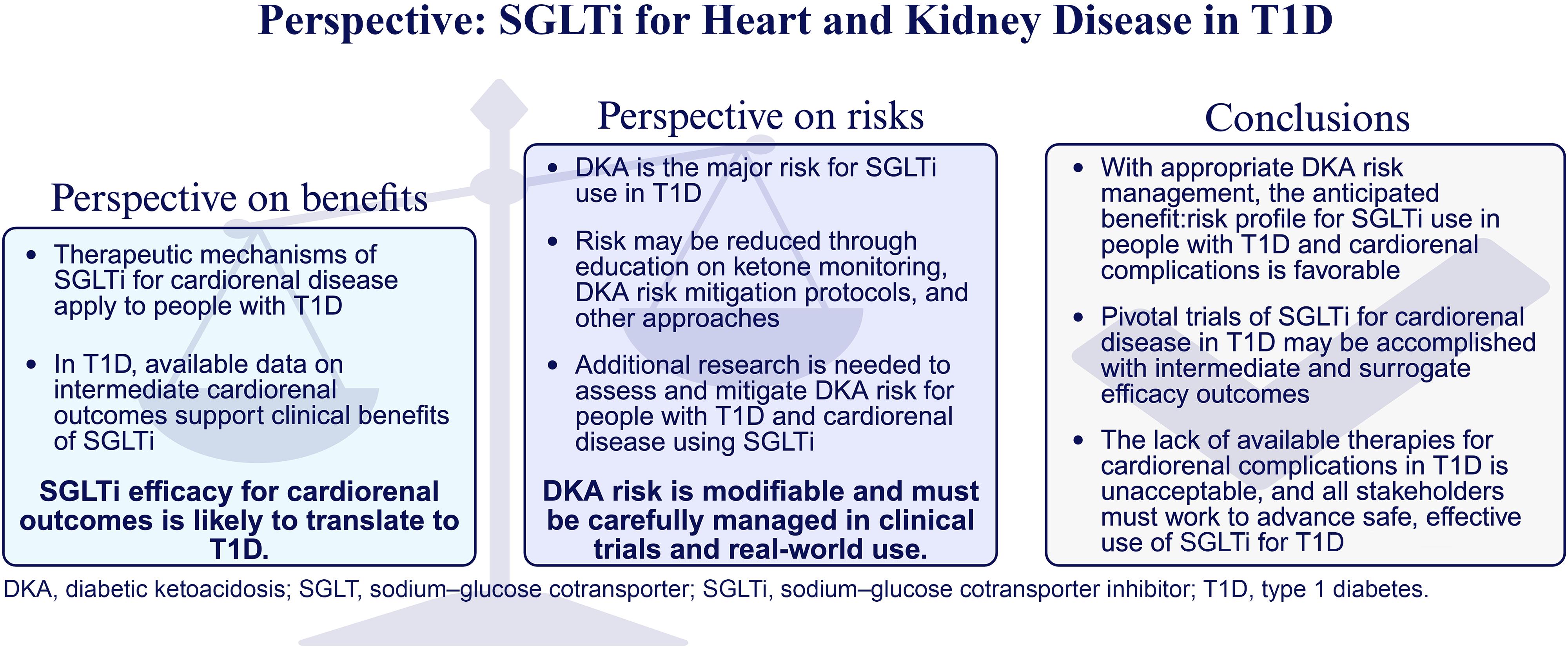
Renal Function and Metabolic Risk: Reduced eGFR Does Not Independently Increase DKA Risk in Type 1 Diabetes
A landmark 35-year analysis of DCCT/EDIC data demonstrates that a reduced estimated glomerular filtration rate (30–90 mL/min/1.73 m2) is not an independent risk factor for diabetic ketoacidosis, providing a clearer safety framework for the

Predicting Cardiovascular Outcomes in Fabry Disease: Identifying High-Risk Markers in the Modern Therapeutic Era
A multicenter study of 680 Fabry disease patients reveals that age, renal function, QRS duration, and left ventricular mass are critical independent predictors of major adverse cardiovascular events, highlighting persistent unmet needs desp

Intensive Blood Pressure Targets Below 130/80 mmHg Benefit Patients Across the Cardiovascular-Kidney-Metabolic Syndrome Spectrum
A post hoc analysis of the CRHCP trial demonstrates that intensive blood pressure control ( **Confirming JSON Structure** I’m now fully focused on creating the JSON object. I’ve re-reviewed both schemas, and am following the most up-to-date

Sibeprenlimab Achieves 51% Reduction in Proteinuria for IgA Nephropathy: Key Interim Insights from the Phase 3 VISIONARY Trial
The Phase 3 VISIONARY trial interim analysis demonstrates that sibeprenlimab, a monoclonal antibody targeting APRIL, significantly reduces proteinuria and pathogenic IgA1 in patients with IgA nephropathy, offering a promising upstream thera

Breaking the Cystine Barrier: Long-term Safety and Efficacy of CTNS-RD-04 Gene Therapy in Cystinosis
A phase 1-2 trial shows that autologous hematopoietic stem-cell gene therapy (CTNS-RD-04) safely reduces lysosomal cystine levels in patients with cystinosis, potentially offering a definitive alternative to lifelong cysteamine therapy.
Browse by specialty
Open language-specific specialty feeds and department pages.