Hematology-Oncology
Latest news
316 articles · 20 / page

Beyond the Clot: Novel Proteomic Markers Redefine Venous Thromboembolism Risk
This large-scale proteomic analysis identifies 15 novel protein markers for venous thromboembolism, offering new insights into the roles of immunity and extracellular matrix regulation in VTE pathogenesis beyond traditional coagulation path

Targeting the Sugar Coat: Oncofetal Chondroitin Sulfate Emerges as a Precision ADC Target in AML
Researchers have identified oncofetal chondroitin sulfate (ofCS) as a novel target for antibody-drug conjugates in AML. Unlike traditional targets, ofCS is absent in healthy tissues, potentially reducing hematotoxicity and expanding treatme

Predictive Value of Sex Chromosome Loss in Sex-Mismatched Stem Cell Transplantation
This study identifies late-onset sex chromosome loss as a critical biomarker for predicting relapse and survival outcomes in patients following sex-mismatched stem cell transplantation.

Beyond Genetics: Targeting BMP and TAZ/TEAD Mechanotransduction to Reverse Chemoresistance in Acute Myeloid Leukemia
Recent research identifies BMPR1B and TAZ/TEAD as critical mechanotransduction drivers in relapsed AML. By targeting these pathways, clinicians may overcome the protective effects of bone marrow stiffening and intramedullary pressure, offer

Dose-Dense Stanford V Strategy Safely Spares Radiation in Most Pediatric Patients with Low-Risk Hodgkin Lymphoma
The PHC HOD08 study demonstrates that an 8-week dose-dense modified Stanford V regimen achieves high complete response rates, allowing over 75% of low-risk pediatric Hodgkin lymphoma patients to avoid radiotherapy while maintaining an excep

Ph+ Status and Hyperleukocytosis: Redefining CNS Relapse Risk in Adult ALL Post-Transplant
A large-scale retrospective study identifies Philadelphia chromosome positivity and high initial white blood cell counts as critical risk factors for central nervous system relapse in adult ALL patients following allogeneic HCT, suggesting

Improving Survival in Advanced Proliferative CMML: The Prognostic Impact of Stringent Cytoreduction and Novel Flow Cytometric Biomarkers
This review examines the impact of myeloproliferative control on survival in advanced CMML, highlighting the prognostic value of stringent cytoreduction and novel flow cytometric biomarkers such as classical monocytes and immature granulocy

Precision T-Cell Engineering in AlloHSCT: The Orca-T Revolution and the Precision-T Phase 3 Results
This review analyzes the Phase 3 Precision-T trial, demonstrating that Orca-T, a high-precision T-cell therapy, significantly improves chronic GVHD-free survival and reduces non-relapse mortality compared to standard-of-care prophylaxis in

Tuberculosis Post-Allogeneic Hematopoietic Stem Cell Transplantation: Insights from a Decade-Long Nationwide Study in a Low-Incidence Setting
This nationwide retrospective study in France highlights the rare but severe incidence of tuberculosis (TB) in Allo-HSCT recipients, identifying birth in high-prevalence countries as a primary risk factor and emphasizing the need for target

The NSUN2-FOSB Feedforward Loop: Unlocking m5C-Mediated Survival in Acute Myeloid Leukemia
Researchers identify a novel NSUN2-FOSB-BCL2L1 regulatory axis in AML that drives leukemia stem cell self-renewal through m5C RNA methylation. This pathway offers a potential therapeutic target that spares normal hematopoiesis, suggesting a

Beyond Blast Counts: How Menin Inhibition Redefines AML Immunophenotypes and Survival
This study explores how the menin inhibitor revumenib induces significant immunophenotypic shifts in AML patients. Results show that over 50% of patients undergo lineage changes, and achieving MRD negativity remains the strongest predictor

Targeting the Glycan Signature: Oncofetal Chondroitin Sulfate as a Selective Vulnerability in Acute Myeloid Leukemia
This review explores oncofetal chondroitin sulfate (ofCS) as a revolutionary AML target. Unlike traditional antigens, ofCS is absent in normal bone marrow, allowing antibody-drug conjugates to eliminate leukemia cells with minimal hematotox

Standardizing Outcomes Research: A Robust Extraction Pipeline for Hematopoietic Stem Cell Transplantation Registry Data
This review evaluates a novel open-source extraction pipeline designed to standardize and automate the processing of complex HSCT registry data, enhancing reproducibility and precision in clinical outcomes research.

Precision Dosing in Chronic Myeloid Leukemia: Navigating the Intersection of TKI Efficacy and Long-term Tolerability
This clinical review examines the management of treatment-emergent adverse events (TEAEs) in patients with chronic myeloid leukemia. It highlights strategies for dose optimization and proactive toxicity management to balance molecular respo

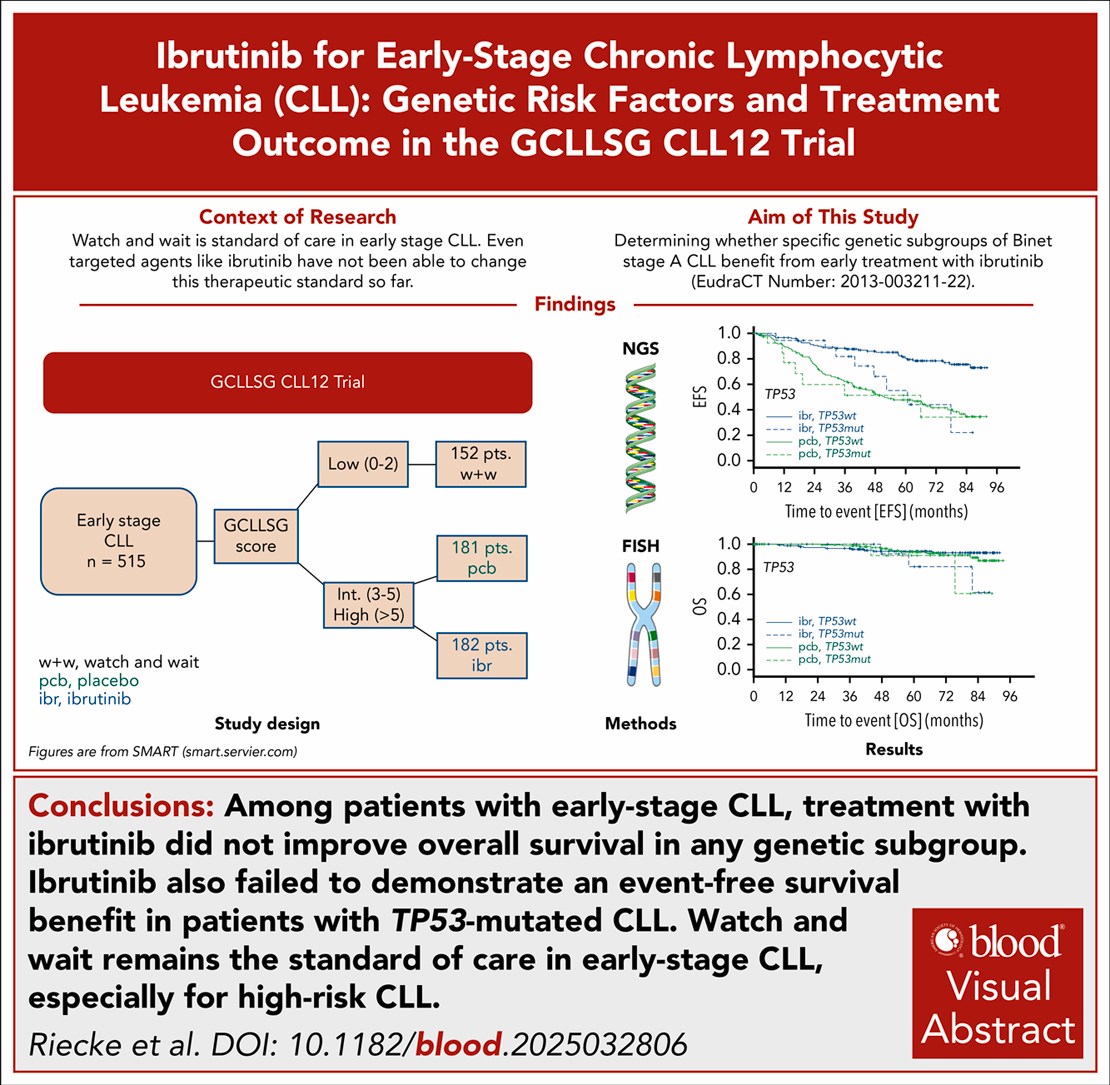
Beyond Complexity: Why Molecular Features Still Dictate the Prognosis of Chronic Lymphocytic Leukemia
Emerging data from UK clinical trials indicate that while high genomic complexity (HGC) correlates with poor outcomes in CLL, it often serves as a surrogate for other established high-risk markers like TP53 status and telomere length.

Beyond the Plasma Cell: Why Anti-BCMA Bispecifics Increase Infection Risk via Early B-Cell Depletion
A landmark study reveals that anti-BCMA bispecific antibodies, unlike anti-GPRC5D, deplete B-cell precursors from the small pre-B stage onward, explaining the significantly higher infection rates observed in multiple myeloma patients.

Abelacimab Shows Superior Safety Over Rivaroxaban for Older Adults with Atrial Fibrillation
A phase 2b study demonstrates that the Factor XI inhibitor abelacimab significantly reduces bleeding risk compared to rivaroxaban in older atrial fibrillation patients, offering a safer alternative for stroke prevention in high-risk populat

Challenging the Incurability Paradigm: 15-Year Data Suggests a Cure for Advanced Follicular Lymphoma
The 15-year follow-up of the SWOG S0016 trial demonstrates that approximately 42% of patients with advanced follicular lymphoma may be cured with initial CHOP-based chemoimmunotherapy, with relapse rates dropping significantly after 15 year

Lupuslike Manifestations in Myelodysplastic Syndromes and Chronic Myelomonocytic Leukemia: A Case-Cohort Analysis of Clonal Inflammation
MDS and CMML can present with lupuslike manifestations that represent a distinct entity of clonal inflammation rather than idiopathic autoimmunity. This study highlights the need for clone-directed therapies over standard lupus treatments.

Molecular Mimicry Unveiled: How Somatic Hypermutation and Adenoviral Protein pVII Drive VITT
Researchers have identified that a specific somatic hypermutation (K31E) in the IGLV3-21*02/03 allele triggers VITT by causing antibodies intended for adenoviral protein pVII to cross-react with Platelet Factor 4 (PF4), explaining the patho
Browse by specialty
Open language-specific specialty feeds and department pages.