Diabetes & Endocrinology
Latest news
532 articles · 20 / page

High-Dose Oral Insulin Fails to Prevent Islet Autoimmunity: Primary Results from the POInT Randomized Trial
The POInT trial demonstrated that high-dose daily oral insulin does not prevent islet autoantibodies in infants at high genetic risk for type 1 diabetes. Despite its safety, the primary endpoint was not met, though genotype-specific interac

Resveratrol and Type 2 Diabetes: Does the Red Wine Compound Really Control Blood Sugar?
A rigorous clinical trial reveals that five weeks of resveratrol supplementation does not improve blood sugar, GLP-1 levels, or gastric emptying in patients with type 2 diabetes.

Dietary Phytomix Dibifree Reshapes T2D Management by Modulating the Gut-Pancreas-Adipose-Immune Axis
A randomized trial demonstrates that Dibifree, a novel dietary phytomix, improves HbA1c and adiposity in T2D patients by enhancing GLP-1 activity and modulating immune responses.

Healthy Nordic Diet vs. Anti-Lipogenic High-Fat Diet: Superior Cardiometabolic Outcomes in the NAFLDiet Trial
The NAFLDiet trial reveals that while both anti-lipogenic LCPUFA and Healthy Nordic Diets reduce liver fat, the Nordic diet offers superior benefits for weight loss, glycemic control, and systemic inflammation in patients with type 2 diabet

Beyond the Oral Cavity: Probiotic Adjuncts in Periodontitis Yield Systemic Glycemic Benefits for Diabetic Patients
A randomized clinical trial reveals that while Limosilactobacillus reuteri probiotics do not enhance local periodontal healing compared to standard therapy, they significantly improve systemic glycemic control (HbA1c) in patients with diabe

Beyond the High-Protein Hype: Why Moderate Diets May Be the Secret to Reversing Prediabetes
A major long-term trial reveals that a moderate-protein, moderate-glycaemic index diet is more effective for sustaining prediabetes remission than high-protein alternatives, regardless of total weight loss.

Mobile Health Management Model Slashes Gestational Diabetes Incidence by Nearly 45% in High-Risk Pregnancies
A randomized controlled trial demonstrates that an mHealth management model using the Better Pregnancy app significantly reduces GDM incidence, improves glycemic control, and enhances maternal self-efficacy among high-risk pregnant women, p

Donor Diabetes Status Does Not Compromise DMEK Outcomes: 1-Year Results from the DEKS Randomized Clinical Trial
The Diabetes Endothelial Keratoplasty Study (DEKS) confirms that donor diabetes status has no clinically significant impact on 1-year graft success rates or endothelial cell loss after Descemet membrane endothelial keratoplasty (DMEK), faci

Modulating Starch Digestibility: A Practical Strategy for Optimizing Glycemic Variability in Type 2 Diabetes
A 12-week randomized controlled trial demonstrates that prioritizing slowly digestible starch (SDS) through dietary and culinary counseling significantly reduces glycemic variability and helps patients with type 2 diabetes achieve target Hb

Tirzepatide and the Future of MASH Treatment: Insights from the SYNERGY-NASH Trial
The SYNERGY-NASH trial demonstrates that Tirzepatide significantly improves MASH resolution and liver fibrosis. This effect is driven by substantial weight loss, improved glycemic control, and liver fat normalization, highlighting a transfo

Breaking the C-Peptide Barrier: New Evidence Shows Automated Insulin Delivery Benefits All Adults with Type 2 Diabetes
A landmark study reveals that automated insulin delivery systems significantly improve blood sugar control for adults with type 2 diabetes, regardless of their C-peptide levels, challenging current insurance restrictions that limit access t

Bone Metabolism Biomarkers: A New Frontier in Predicting Cardiovascular Risk for Diabetes and Renal Disease
Recent studies demonstrate that biomarkers of bone metabolism, particularly the OPG/TRAIL ratio, are powerful predictors of cardiovascular disease and mortality in patients with type 2 diabetes and chronic kidney disease, offering improved

Precision Hypertension Management: Haptoglobin Phenotype Predicts Cardiovascular Benefit from Intensive Blood Pressure Control in Type 2 Diabetes
A post-hoc analysis of the ACCORD trial reveals that intensive blood pressure control significantly reduces cardiovascular and stroke risk in haptoglobin 1 allele carriers, but not in those with the Hp2-2 phenotype, suggesting a genotype-dr

Reversing Prediabetes Halves 30-Year Risk of Cardiovascular Death and Heart Failure: New Insights from DPPOS and DaQing
A landmark post-hoc analysis of the DPPOS and DaQing studies reveals that achieving prediabetes remission reduces the risk of cardiovascular death and heart failure hospitalization by approximately 50% over three decades, highlighting a pro

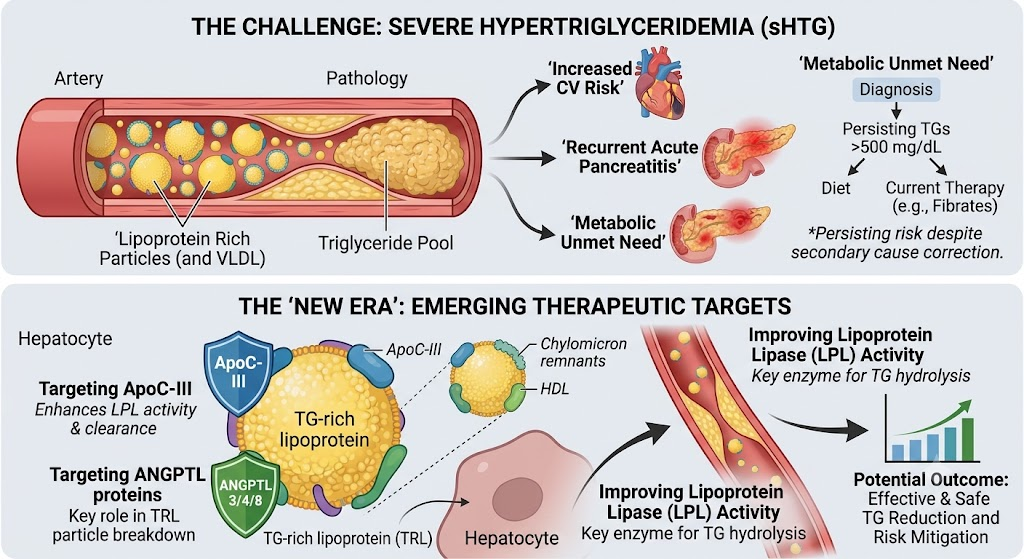
RNAi Targeting of ANGPTL3 with Zodasiran Delivers Substantial LDL-C Lowering in Patients with Homozygous Familial Hypercholesterolaemia
The Phase 2 GATEWAY trial demonstrates that zodasiran, an RNAi therapeutic targeting ANGPTL3, significantly reduces LDL cholesterol in patients with homozygous familial hypercholesterolaemia (HoFH) by approximately 36-40%. The treatment was

Beyond HbA1c: How Diabetes Subtyping Predicts Comorbidities and Mortality Over 14 Years
A landmark Swedish cohort study demonstrates that diabetes subgroups, particularly those characterized by insulin resistance and deficiency, carry significantly higher risks for end-organ damage and cardiovascular mortality than previously

SGLT2 Inhibitors Demonstrate Cardioprotective Benefits Even in Low-Risk Type 2 Diabetes Populations: Insights from a Causal Forest Analysis
A nationwide target trial emulation study reveals that SGLT2 inhibitors provide cardiovascular benefits across a broader range of patients than previously recognized, with benefit more closely tied to individual metabolic traits than tradit

SGLT2 Inhibitors Emerge as Superior Choice for Cardiovascular Protection in Patients with T2DM and MASLD
A nationwide target trial emulation reveals that SGLT2 inhibitors significantly reduce major adverse cardiovascular events and mortality compared to other oral antidiabetics in patients with concurrent T2DM and MASLD, with benefits partiall

GLP-1 Receptor Agonists Associated with Significantly Lower Risk of Subarachnoid Hemorrhage in Patients with Intracranial Aneurysms
A large-scale retrospective cohort study reveals that GLP-1 receptor agonists reduce the risk of subarachnoid hemorrhage by 34% and all-cause mortality by 37% in patients with type 2 diabetes and intracranial aneurysms, suggesting a potent
Browse by specialty
Open language-specific specialty feeds and department pages.