Critical Care
Latest news
195 articles · 20 / page

Plasma GFAP and NfL Levels Predict Acute Brain Injury and Poor Outcomes in Pediatric ECMO
This multi-center study demonstrates that serial monitoring of plasma GFAP and NfL biomarkers can detect acute brain injury in pediatric ECMO patients before imaging diagnosis, significantly correlating with long-term survival and functiona

Plasma GFAP and NfL as Real-Time Predictors of Brain Injury and Long-Term Disability in Pediatric ECMO
A prospective study demonstrates that rising levels of plasma GFAP and NfL precede neuroimaging-confirmed brain injury in children on ECMO. These biomarkers are also strongly associated with mortality and long-term functional impairment, of

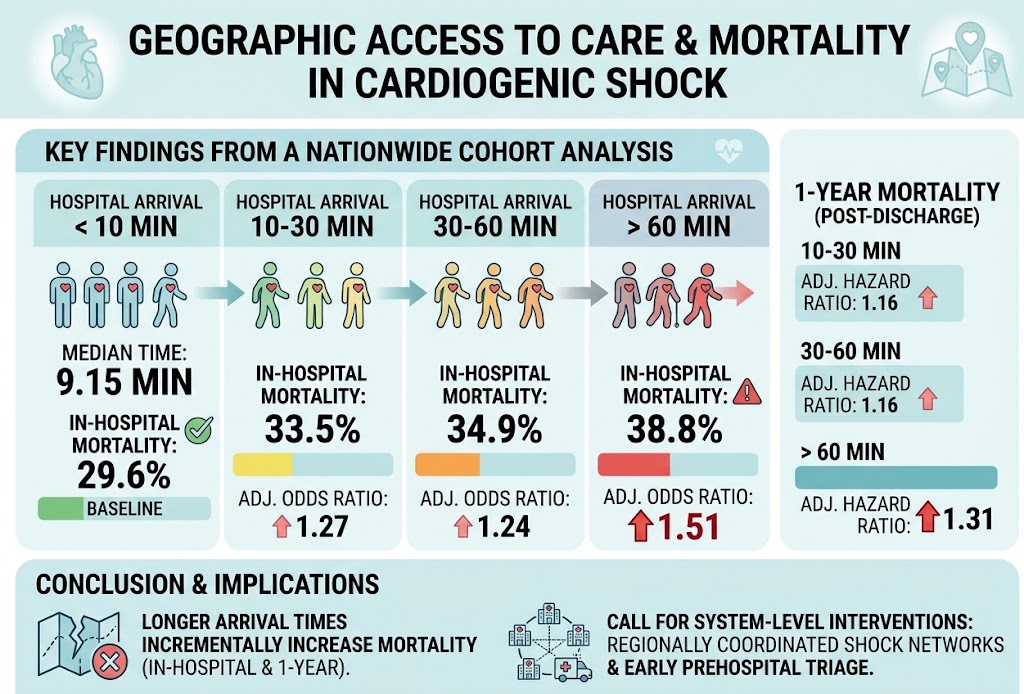
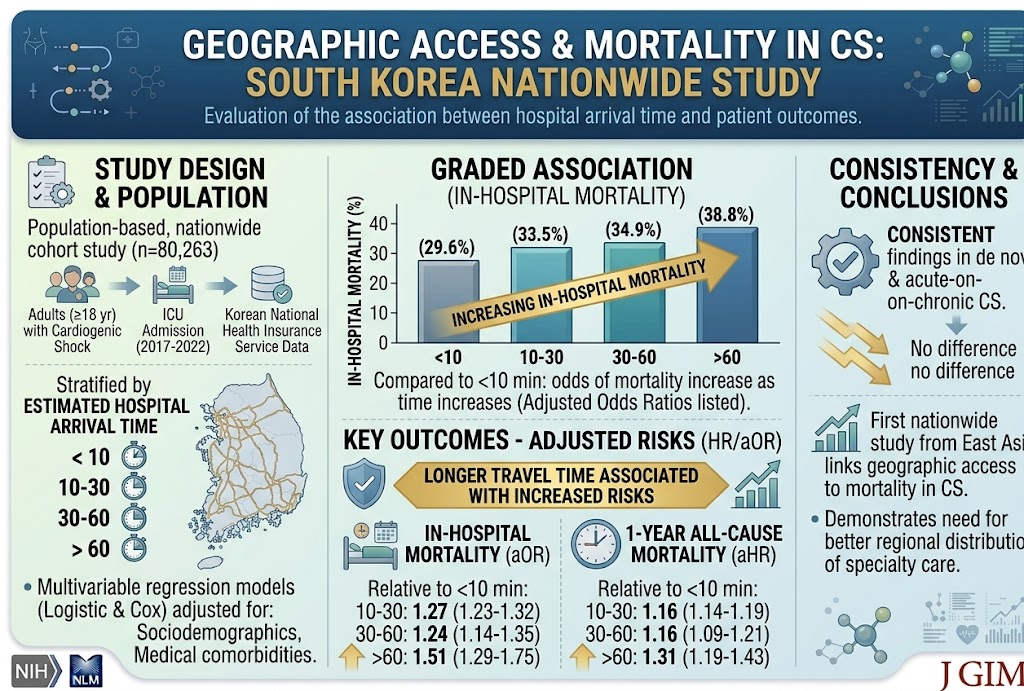
The Warning Signs of Deterioration: Acute Kidney Injury and Diuretic Resistance in SCAI Stage B Cardiogenic Shock
A large-scale study reveals that 25% of patients with SCAI Stage B cardiogenic shock deteriorate clinically. Acute kidney injury and diuretic resistance are identified as critical, independent predictors of poor outcomes, emphasizing the ne

AKI and Diuretic Resistance: Identifying the High-Risk Phenotype in SCAI Stage B Cardiogenic Shock
New research highlights that nearly a quarter of SCAI Stage B cardiogenic shock patients deteriorate. Acute kidney injury and diuretic resistance serve as critical early warning signs, providing clinicians a window for proactive interventio

Albumin Replacement in Septic Shock: Safety Confirmed but Survival Benefit Remains Elusive
The ARISS randomized clinical trial found that 20% albumin supplementation to maintain serum levels ≥3.0 g/dL is safe in septic shock but does not significantly improve 90-day survival compared to standard crystalloids, though the study’s e

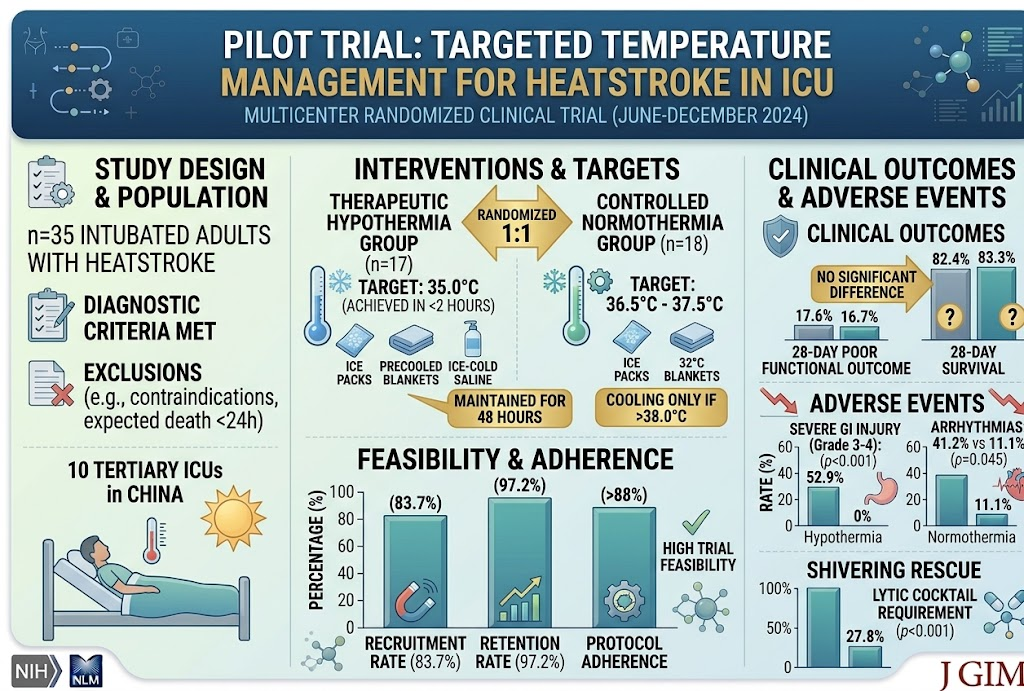
Redefining Post-Cardiac Arrest Care: Two-Year TTM2 Data Confirm No Long-Term Advantage for Targeted Hypothermia
This 2-year follow-up of the TTM2 trial demonstrates that targeted hypothermia at 33°C provides no long-term benefit for functional or cognitive recovery compared to targeted normothermia. The findings emphasize the importance of early feve

Subglottic Suction and Polyurethane Cuffs Fail to Improve Outcomes in Emergency Intubation: Insights from the PreVent 2 Trial
The PreVent 2 trial demonstrates that specialized endotracheal tubes with subglottic suction and polyurethane cuffs do not significantly reduce ventilator-associated complications or improve 6-month laryngeal, cognitive, or quality-of-life

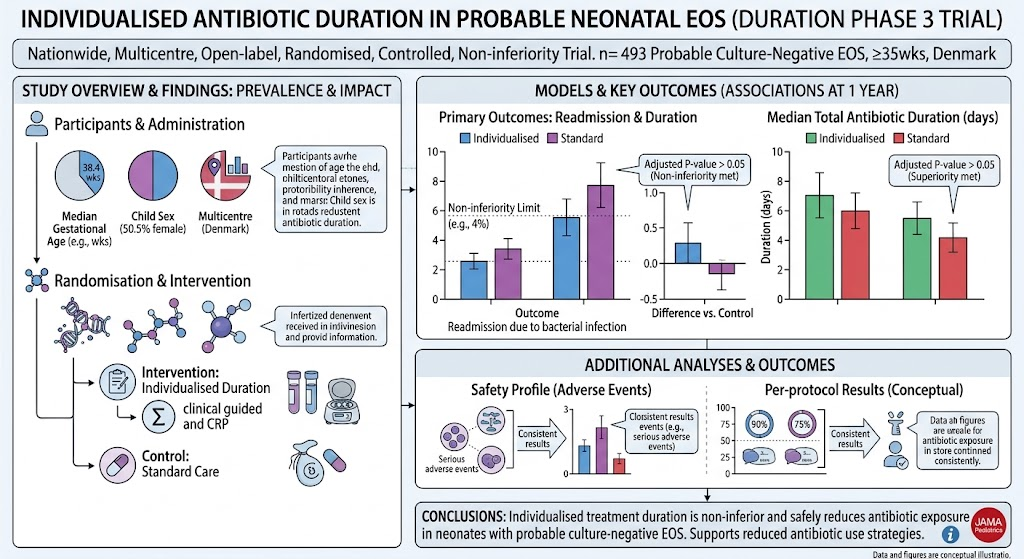
Automated Oxygen Control vs. Manual Care: Large-Scale Trial Finds No Difference in Clinical Outcomes for Extremely Preterm Infants
A multicenter randomized trial of 1,082 extremely preterm infants found that automated FiO2 control did not significantly reduce death or major morbidities compared to manual titration, though it remains a safe labor-saving tool for neonata

Cerebral Oximetry-Guided Treatment Significantly Stabilizes Oxygenation in Extremely Preterm Infants: Results from a Randomized Clinical Trial
A randomized trial involving 100 extremely preterm infants shows that cerebral oximetry-guided treatment using a standardized guideline and NIRS device significantly reduces the burden of cerebral hypoxia and hyperoxia during the first five

Cerebral Oximetry-Guided Protocol Slashes Hypoxia and Hyperoxia Burden in Extremely Preterm Neonates
A randomized trial demonstrates that standardized treatment guided by cerebral oximetry reduces cerebral oxygenation instability by over 40% in extremely preterm infants, offering a precise new strategy for neonatal neuroprotection.

Liberating the Kidney: Can a Conservative Dialysis Strategy Improve Recovery in AKI-D?
The LIBERATE-D randomized trial suggests that a conservative, indication-driven dialysis strategy may enhance kidney recovery and reduce treatment burden in stable patients with dialysis-requiring acute kidney injury compared to conventiona

Precision Prognostics in Sepsis: How Stress Hyperglycemia and Glucose Variability Define Mortality Risk Across Metabolic Profiles
This study reveals that combining stress hyperglycemia ratio and glucose variability significantly improves mortality prediction in sepsis, with risk patterns varying significantly based on a patient’s baseline metabolic status (Normal, Pre

Precision Immunotherapy in Pneumonia: Presepsin-Guided Anakinra Significantly Reduces Organ Dysfunction and Mortality
The Phase IIa INSPIRE trial demonstrates that early administration of anakinra, guided by the presepsin biomarker, reduces the risk of organ dysfunction by 30% and significantly improves 90-day survival in hospitalized pneumonia patients, m

Sepsis Subtypes Are Fluid: How ‘Fuzzy’ Classification Explains Treatment Variability and Patient Trajectories
A large-scale study of 35,691 sepsis patients reveals that clinical subtypes are highly dynamic, with 82% of patients changing categories within 48 hours. This classification uncertainty significantly impacts treatment response and long-ter

Plasma Proteomics Unveils VEGFR1 as a High-Precision Prognostic Biomarker in Cardiogenic Shock
A large-scale proteomic analysis identifies VEGFR1 as a significant, independent predictor of 180-day mortality in patients with cardiogenic shock, offering incremental prognostic value beyond traditional markers like serum lactate and SAPS

Mechanical Thrombectomy Superior to Anticoagulation Alone for Rapid Right Ventricular Recovery in Intermediate-High Risk Pulmonary Embolism: Results from the STORM-PE Trial
The STORM-PE trial, the first randomized controlled trial of its kind, demonstrates that computer-assisted vacuum thrombectomy (CAVT) significantly improves right ventricular recovery and reduces clot burden compared to anticoagulation alon

Decompressive Craniectomy Benefits Persist Across Deep Intracerebral Hemorrhage Locations: A SWITCH Trial Analysis
A post hoc analysis of the SWITCH trial demonstrates that the clinical benefits of decompressive craniectomy in reducing death and severe disability are consistent across different anatomical locations of deep supratentorial intracerebral h

Elevated Admission D-dimer: A Potent New Predictor of In-Hospital Mortality in Takotsubo Syndrome
A retrospective study of 580 TTS patients demonstrates that admission D-dimer levels ≥3.5 µg/mL are associated with a seven-fold increase in in-hospital mortality, significantly improving the predictive accuracy of the traditional InterTAK

High-Acuity Presentations with Favorable Outcomes: The Paradox of Young Adults in the Cardiac ICU
A large-scale registry study reveals that young adults (18-39) in the Cardiac Intensive Care Unit present with higher rates of cardiogenic shock and cardiac arrest compared to older adults, yet demonstrate significantly higher survival rate

Bailout Catheter Ablation: A Lifesaving Strategy for Refractory Ventricular Tachycardia in Early Acute Myocardial Infarction
A clinical study demonstrates that catheter ablation is a highly effective rescue therapy for refractory, scar-related ventricular tachycardia occurring in the early phase of acute myocardial infarction, challenging traditional management t
Browse by specialty
Open language-specific specialty feeds and department pages.