Critical Care
Latest news
195 articles · 20 / page

Continuous Subphenotype Probabilities Expose High-Risk Patients Hidden Within “Hypoinflammatory” Acute Respiratory Failure
AHRF patients classified as hypoinflammatory are not prognostically uniform. Continuous biomarker-based probabilities reveal substantial mortality heterogeneity, especially below the binary 0.5 threshold, with implications for enrichment st

Earlier Mechanical Thrombectomy for Intermediate-Risk Pulmonary Embolism Improves Hemodynamics but Not In-Hospital Mortality
In a multicenter retrospective study, early mechanical thrombectomy within 12 hours of pulmonary embolism diagnosis improved pulmonary artery pressure reduction and reduced intubation, but did not significantly lower in-hospital mortality.

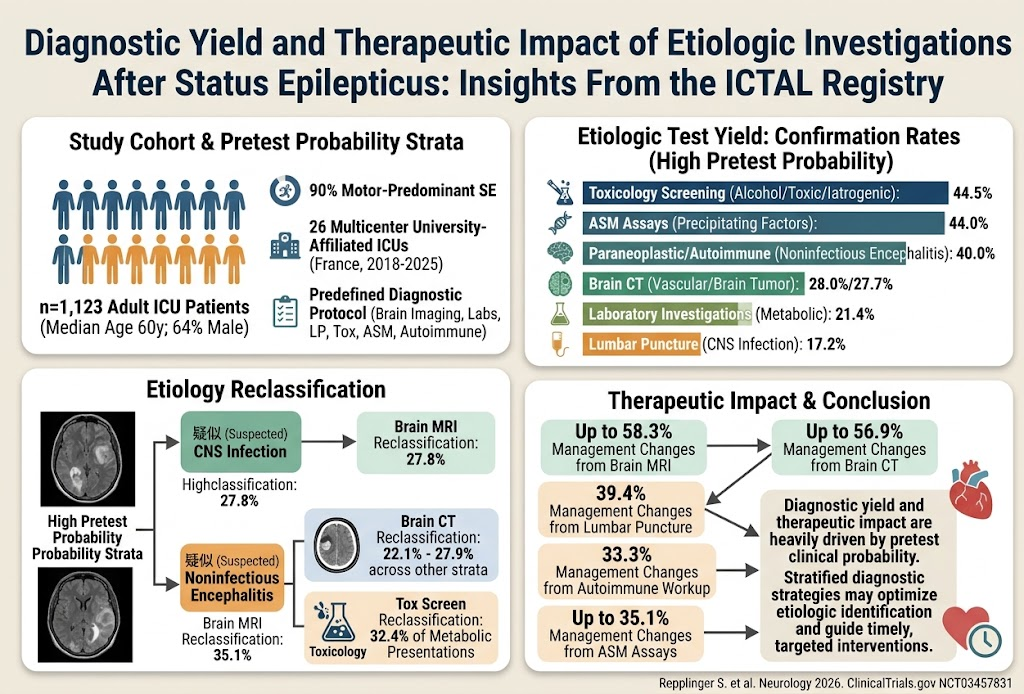
Neurofilament Light Chain Reveals Rapid Neuroaxonal Injury in New-Onset Refractory Status Epilepticus
In a multinational cross-sectional study, serum and CSF neurofilament light chain—unlike S100B—tracked severe acute brain injury in cryptogenic NORSE, rose rapidly over the first 3 weeks, and predicted poor short-term outcome, supporting ur

Circulatory Support Escalation in Cardiogenic Shock: Outcomes and Predictors of Success
A multi-center study reveals that circulatory support escalation in cardiogenic shock is associated with higher mortality and complications, but certain patient factors can predict successful outcomes.

Biomarker Signatures in Sepsis: Linking Host Response to Clinical Outcomes
A prospective cohort study identifies biomarker signatures for host resistance, disease tolerance, and damage in sepsis, revealing associations with mortality and sepsis subtypes.

Early Resistance Training and Verticalization During ECMO: A Safe Path to Improved Functional Outcomes
A structured exercise program combining mobility therapy and resistance training in ECMO patients proved feasible and safe, with longer session times correlating with better functional performance.

Cultural Diversity in ICU: A Protective Factor Against Sepsis Mortality
A multicenter study reveals that culturally and linguistically diverse patients with sepsis had lower in-hospital mortality and shorter ICU stays compared to non-CaLD patients, challenging prior assumptions about healthcare disparities.

Antifungal Therapy Slashes Mortality in COVID-19-Associated Pulmonary Aspergillosis: European Data Confirms
A multicenter European cohort study demonstrates that antifungal treatment significantly reduces 60-day mortality in COVID-19-associated pulmonary aspergillosis (CAPA), particularly in immunocompromised patients. Key findings underscore the

Higher EMS Clinician Trauma Volume Linked to Lower Early Mortality in Trauma Patients
A study finds that increased annual trauma patient volume per EMS clinician is associated with significantly reduced 6-hour and in-hospital mortality rates, highlighting the importance of experience in prehospital trauma care.

Low-Calorie, Low-Protein Feeding in Shock: No Harm to Kidneys, NUTRIREA-3 Analysis Confirms
Early low-calorie and low-protein nutrition in critically ill patients with shock does not worsen renal outcomes compared to standard feeding, per NUTRIREA-3 post hoc analysis.

Language Barriers and Delirium Detection: Study Reveals Critical Disparities in ICU Care for Spanish-Speaking Patients
A new study highlights significant disparities in delirium detection for Spanish-speaking ICU patients, with usual-care methods missing 72% of cases. Caregiver-administered tools improved detection by 47%, offering a potential solution to l

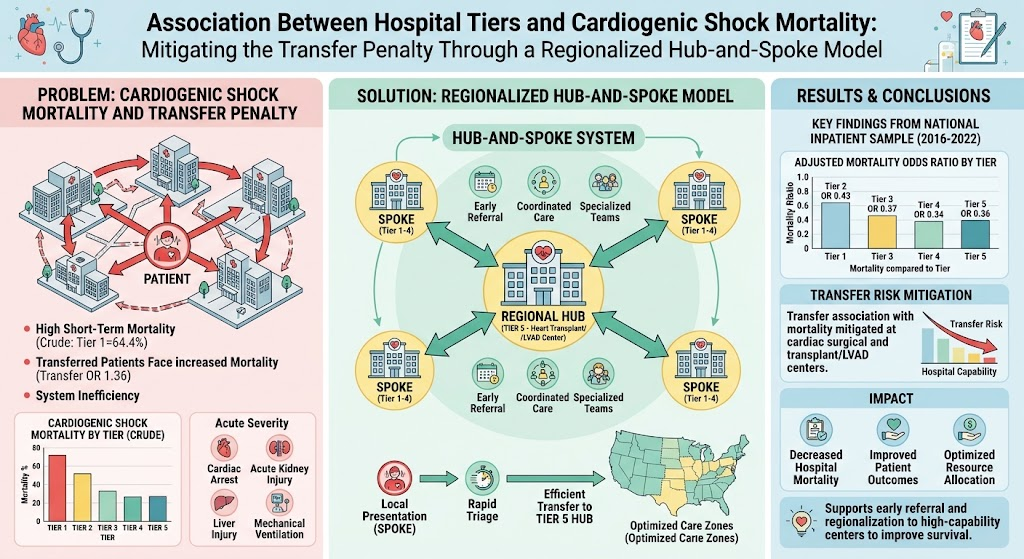
Transfer Before Support: Why Cardiogenic Shock Patients Referred from Regional Centers Face Higher Device-Related Complications
A large observational study reveals that cardiogenic shock patients receiving temporary mechanical circulatory support at regional referral centers before transfer to hub centers experience significantly higher device-related adverse events

Remimazolam Besylate Matches Propofol for Short-Term ICU Sedation: The SHOSREB Trial
The SHOSREB trial demonstrates that remimazolam besylate is non-inferior to propofol for short-term light sedation in mechanically ventilated ICU patients, with both agents achieving 97.5% successful sedation rates and comparable time withi

Mortality Trends in Mechanically Ventilated ARDS: 20 Years of Paradox Revealed
A landmark 20-year analysis of over 200,000 mechanically ventilated ARDS patients reveals a striking paradox—mortality declined during the ICD-9 era but increased after ICD-10 adoption, challenging assumptions about ARDS outcomes and highli

Mind the Gap: Why Point-of-Care and Central Lab Electrolytes Are Not Interchangeable in the ICU
A prospective study highlights significant discrepancies between point-of-care and central laboratory sodium and potassium measurements in the ICU, revealing a 10.48 mmol/L limit of agreement for sodium and a widespread lack of physician aw

Rethinking Shock Management: From Standardized Protocols to Personalized Precision Medicine
Expert consensus highlights a shift in shock treatment, emphasizing that standardized protocols must give way to personalized, physiology-driven bedside care to prevent iatrogenic injury and improve survival.

Electrolyte Monitoring in the ICU: Bridging the Gap Between Point-of-Care and Central Laboratory Discrepancies
This review analyzes the analytical biases between direct and indirect potentiometry for sodium and potassium measurement in critical care, highlighting significant clinical classification discrepancies and a widespread lack of physician aw

Antipsychotic Exposure in the ICU: A Double-Edged Sword for Catatonia Risk?
A prospective cohort study demonstrates that antipsychotic use in critically ill patients is significantly associated with fewer catatonia-free days, suggesting that dopamine blockade may be a primary driver of catatonic syndromes in intens

Etiology, Management, and Outcomes of Society for Cardiovascular Angiography and Interventions Stage B Cardiogenic Shock
This clinical analysis of 500 patients identifies heart failure and arrhythmias as the primary causes of SCAI Stage B shock. Key findings highlight acute kidney injury and diuretic resistance as significant predictors of clinical deteriorat

Daily Chlorhexidine Bathing in the ICU: Results from the CLEAN-IT Multicentre Trial
A large-scale trial in Brazilian ICUs found that daily chlorhexidine bathing did not lower overall nosocomial infection rates but significantly reduced multi-drug resistant pathogen isolation and the use of high-priority reserve antibiotics
Browse by specialty
Open language-specific specialty feeds and department pages.