We use cookies

Our website uses essential cookies and, with your consent, additional cookies to measure performance and improve our services. Cookie Policy.

You can change your choice at any time.

MMedXYNews
HomeVideos
© 2026 MedXY
Contact usAbout usPrivacy PolicyMedXY story
MedXY AI/MedXY News/Psychiatry

Psychiatry

Ask MedXY AI
What is the latest evidence?Key clinical updatesGuideline changes

Latest news

Lithium Use in Pregnancy: Balancing Risks of Spontaneous Preterm Birth, Cardiac Malformations, and Fetal Growth
newsCongenital MalformationsPregnancy

Lithium Use in Pregnancy: Balancing Risks of Spontaneous Preterm Birth, Cardiac Malformations, and Fetal Growth

By MedXY|Aug 18, 2026

A statewide Australian cohort study reveals lithium exposure during pregnancy doubles risk of spontaneous preterm birth and raises risks of cardiac malformations and large-for-gestational-age infants, informing clinical decision-making.


Intermittent Theta Burst Stimulation of the Dorsomedial Prefrontal Cortex Enhances Expectancy-Driven Placebo Mood Effects in Depression: Evidence from a Randomized Clinical Trial
Clinical Updatesdefault mode networkdepression

Intermittent Theta Burst Stimulation of the Dorsomedial Prefrontal Cortex Enhances Expectancy-Driven Placebo Mood Effects in Depression: Evidence from a Randomized Clinical Trial

By MedXY|Jul 9, 2026

This review synthesizes randomized trial evidence demonstrating that intermittent theta burst stimulation (iTBS) targeting the dorsomedial PFC modulates default mode network activity, enhancing expectancy-driven placebo mood responses in de

Efficacy and Safety of Mirtazapine in Treating Methamphetamine Use Disorder: Insights from a Phase 3 Randomized Clinical Trial
newsMethamphetamine Use DisorderMirtazapine

Efficacy and Safety of Mirtazapine in Treating Methamphetamine Use Disorder: Insights from a Phase 3 Randomized Clinical Trial

By MedXY|Jul 2, 2026

This randomized clinical trial evaluated mirtazapine’s safety and efficacy for methamphetamine use disorder, revealing a modest but statistically significant reduction in methamphetamine use without unexpected adverse events, offering

Unraveling Dementia in Severe Schizophrenia: Distinct Cognitive Profiles and Genetic Insights
NeurologyAPOE4cognitive impairment

Unraveling Dementia in Severe Schizophrenia: Distinct Cognitive Profiles and Genetic Insights

By MedXY|Jun 30, 2026

This study reveals that dementia in severe, treatment-resistant schizophrenia exhibits a unique cognitive profile distinct from common neurodegenerative dementias and lacks typical genetic markers such as APOE4, highlighting a novel dementi

Decoding Ketamine’s Neurophysiology Under General Anesthesia: Insights for Targeted Therapeutics
AnesthesiologyEEG OscillationsKetamine

Decoding Ketamine’s Neurophysiology Under General Anesthesia: Insights for Targeted Therapeutics

By MedXY|Jun 26, 2026

This study reveals that general anesthesia selectively modulates ketamine-induced EEG changes, preserving beta-gamma oscillations while attenuating theta augmentation, highlighting discrete neurophysiologic components underlying ketamine&#8

Why an EHR-Embedded OUD Intervention Still Struggled: Lessons from 12 Colorado Hospitals
newselectronic health recordKhoa học Triển khai

Why an EHR-Embedded OUD Intervention Still Struggled: Lessons from 12 Colorado Hospitals

By MedXY|Jun 19, 2026

A qualitative study across 12 Colorado hospitals found that an EHR-embedded OUD intervention improved awareness but still faced stigma, inconsistent messaging, limited addiction expertise, and workflow barriers to MOUD initiation.

Calm in the Clinic? Digital Mindfulness Shows Promise for Anxiety and Depression in Non-infectious Uveitis
newsanxietydepression

Calm in the Clinic? Digital Mindfulness Shows Promise for Anxiety and Depression in Non-infectious Uveitis

By MedXY|Jun 19, 2026

A randomized trial found that an 8-week digital mindfulness app improved anxiety, depression, and stress in adults with non-infectious uveitis, but did not significantly change vision-related quality of life.

Restoring Cortisol Rhythm May Be Key to Recovery After Cushing Syndrome
Diabetes & EndocrinologyBệnh Cushinglate-night salivary cortisol

Restoring Cortisol Rhythm May Be Key to Recovery After Cushing Syndrome

By MedXY|Jun 19, 2026

In treated Cushing syndrome, normal late-night salivary cortisol was linked to better mood, quality of life, and metabolic outcomes, suggesting circadian cortisol restoration may be a meaningful recovery target.

Earlier ADHD Diagnosis May Mark a Better Educational Trajectory: What a Finnish Registry Study Found
newsADHDeducational outcomes

Earlier ADHD Diagnosis May Mark a Better Educational Trajectory: What a Finnish Registry Study Found

By MedXY|Jun 19, 2026

In a nationwide Finnish cohort, earlier ADHD diagnosis was linked to better school performance, more academic progression, and less dropout than diagnosis closer to age 16, especially before educational track selection.

When the ICU Trauma Lingers: How Family PTSD Symptoms Build Across the Critical Illness Journey
Critical Carefamily distressICU

When the ICU Trauma Lingers: How Family PTSD Symptoms Build Across the Critical Illness Journey

By MedXY|Jun 19, 2026

Qualitative interviews show family PTSD after ICU care is shaped by cumulative stressors across the illness trajectory, highlighting the need for continuous, family-centered communication and support.

When Language Becomes a Safety Risk: English Proficiency and Hospital Restraint Practices
Internal Medicineantipsychoticsdelirium

When Language Becomes a Safety Risk: English Proficiency and Hospital Restraint Practices

By MedXY|Jun 19, 2026

A large single-center study found that hospitalized patients with limited English proficiency had higher adjusted odds of physical restraint or antipsychotic use, especially when delirium was present, raising concerns about communication-dr

Longitudinal Risk for Suicidal Self-Directed Violence Among Veterans With Cancer
newsmental healthoncology

Longitudinal Risk for Suicidal Self-Directed Violence Among Veterans With Cancer

By MedXY|Jun 10, 2026

A large study of veterans with cancer found persistent risk of suicidal self-directed violence, especially in younger, unmarried, frail, or mentally ill patients and those with central nervous system, head and neck, or thyroid cancers.

Biochemical Control Is Not Enough: Why Acromegaly Still Carries Major Quality-of-Life and Treatment Burden
Diabetes & EndocrinologyAcromegalypatient-reported outcomes

Biochemical Control Is Not Enough: Why Acromegaly Still Carries Major Quality-of-Life and Treatment Burden

By MedXY|Jun 9, 2026

A 2026 review shows that many patients with acromegaly remain symptomatic and functionally impaired despite biochemical control, underscoring the need for routine patient-reported outcomes and lower-burden, multidisciplinary care.

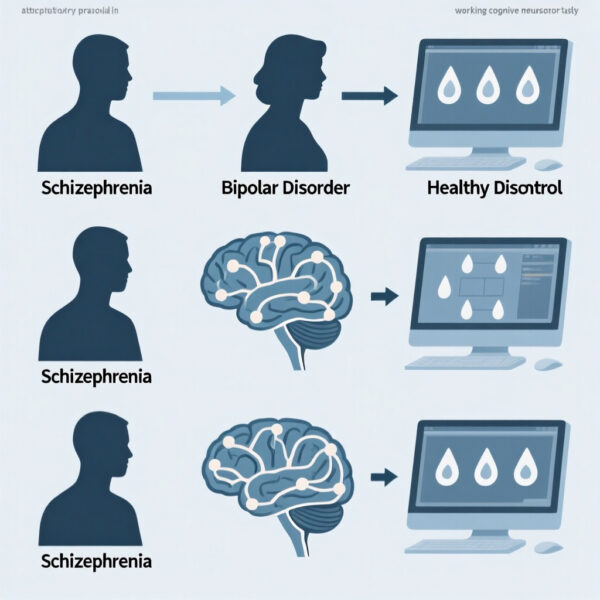
Serial Dependence in Working Memory Distinguishes Schizophrenia From Bipolar Disorder With Psychosis
newsbipolar disorderschizophrenia

Serial Dependence in Working Memory Distinguishes Schizophrenia From Bipolar Disorder With Psychosis

By MedXY|Jun 9, 2026

A multisite case-control study found repulsive serial bias in schizophrenia, attractive bias in healthy controls, and mixed patterns in bipolar disorder, supporting serial dependence as a potential cognitive biomarker across the psychosis s

Routine Laboratory Testing Rarely Improves Emergency Department Medical Screening for Adult Psychiatric Presentations
Emergency Medicineemergency departmentlaboratory testing

Routine Laboratory Testing Rarely Improves Emergency Department Medical Screening for Adult Psychiatric Presentations

By MedXY|Jun 6, 2026

A 145-publication scoping review finds that ED medical screening of adults with psychiatric complaints is dominated by low-level evidence, with society statements generally discouraging routine laboratory testing in otherwise low-risk patie

Ecopipam Reduced Relapse Risk in Pediatric Tourette Syndrome Without Metabolic or Extrapyramidal Signal in a Phase 3 Randomized Withdrawal Trial
Neurologydopamine D1 antagonistecopipam

Ecopipam Reduced Relapse Risk in Pediatric Tourette Syndrome Without Metabolic or Extrapyramidal Signal in a Phase 3 Randomized Withdrawal Trial

By MedXY|Jun 5, 2026

In a phase 3 randomized withdrawal trial, ecopipam maintained tic improvement in pediatric Tourette syndrome over 24 weeks and showed a generally favorable safety profile without clinically meaningful weight, metabolic, or drug-induced move

Confirmatory Efficacy and Safety Trial of Magnetic Seizure Therapy Versus Right Unilateral Ultra-Brief Electroconvulsive Therapy in Depression
newscognitive safetydepression

Confirmatory Efficacy and Safety Trial of Magnetic Seizure Therapy Versus Right Unilateral Ultra-Brief Electroconvulsive Therapy in Depression

By MedXY|Jun 2, 2026

Magnetic seizure therapy was non-inferior to right unilateral ultra-brief ECT for depression remission and caused less autobiographical memory worsening, suggesting a promising convulsive treatment option with better cognitive safety.

Interleukin 6 as a Treatment Target for Depression: A Proof-of-Concept Randomized Clinical Trial
newsdepressioninflammation

Interleukin 6 as a Treatment Target for Depression: A Proof-of-Concept Randomized Clinical Trial

By MedXY|Jun 2, 2026

A small randomized trial found that blocking IL-6 with tocilizumab showed promising, clinically meaningful trends for inflammation-related, hard-to-treat depression, especially for somatic symptoms, fatigue, anxiety, and quality of life, th

Internet-Based CBT for Tinnitus Shows Durable Benefit Up to 6 Years, but Long-Term Interpretation Requires Caution
newshearing healthinternet-based CBT

Internet-Based CBT for Tinnitus Shows Durable Benefit Up to 6 Years, but Long-Term Interpretation Requires Caution

By MedXY|Jun 1, 2026

A 6-year follow-up of guided internet-based CBT for tinnitus found sustained reductions in tinnitus distress, with smaller persistent gains in mood and sleep, despite substantial attrition and the absence of a long-term control group.

Internet-Based CBT for Tinnitus Shows Durable Benefit Up to 6 Years, With Sustained Reduction in Distress but More Modest Auditory Gains
newsinternet-based cognitive behavioral therapylong-term outcomes

Internet-Based CBT for Tinnitus Shows Durable Benefit Up to 6 Years, With Sustained Reduction in Distress but More Modest Auditory Gains

By MedXY|Jun 1, 2026

A 6-year follow-up study suggests guided internet-based CBT for tinnitus can produce durable reductions in tinnitus distress, with sustained but smaller benefits for mood, insomnia, and life satisfaction.

Prev
4 / 20
123456…20
Next
Ask MedXY AI

Most popular

Intimate Health
Five Benefits for Women Continuing Sexual Activity After Menopause
Intimate Health
Why Some Women Have a Strong Sex Drive—And Why Men Shouldn't Worry About It
Nursing & care
How often should a couple have sex?
General Surgery
Optimizing Postoperative Opioid Prescriptions After Intra-Abdominal Cancer Surgery: Comparing the 5x-Multiplier and 3-Tier Models
Intimate Health
Classic Intimacy Recommendations: How to Help Women Reach Orgasm and Enjoy Mutual Pleasure

Browse by specialty

Open language-specific specialty feeds and department pages.

news6829 articlesCardiology1403 articlesClinical Updates1315 articlesOncology1176 articlesDiabetes & Endocrinology868 articlesNeurology834 articlesPublic Health605 articlesGastroenterology586 articles
Hematology-Oncology
513 articles
Pediatrics493 articles
Internal Medicine464 articles