Psychiatry
Latest news
319 articles · 20 / page

Why an EHR-Embedded OUD Intervention Still Struggled: Lessons from 12 Colorado Hospitals
A qualitative study across 12 Colorado hospitals found that an EHR-embedded OUD intervention improved awareness but still faced stigma, inconsistent messaging, limited addiction expertise, and workflow barriers to MOUD initiation.

Calm in the Clinic? Digital Mindfulness Shows Promise for Anxiety and Depression in Non-infectious Uveitis
A randomized trial found that an 8-week digital mindfulness app improved anxiety, depression, and stress in adults with non-infectious uveitis, but did not significantly change vision-related quality of life.

Restoring Cortisol Rhythm May Be Key to Recovery After Cushing Syndrome
In treated Cushing syndrome, normal late-night salivary cortisol was linked to better mood, quality of life, and metabolic outcomes, suggesting circadian cortisol restoration may be a meaningful recovery target.

Earlier ADHD Diagnosis May Mark a Better Educational Trajectory: What a Finnish Registry Study Found
In a nationwide Finnish cohort, earlier ADHD diagnosis was linked to better school performance, more academic progression, and less dropout than diagnosis closer to age 16, especially before educational track selection.

When the ICU Trauma Lingers: How Family PTSD Symptoms Build Across the Critical Illness Journey
Qualitative interviews show family PTSD after ICU care is shaped by cumulative stressors across the illness trajectory, highlighting the need for continuous, family-centered communication and support.

When Language Becomes a Safety Risk: English Proficiency and Hospital Restraint Practices
A large single-center study found that hospitalized patients with limited English proficiency had higher adjusted odds of physical restraint or antipsychotic use, especially when delirium was present, raising concerns about communication-dr

Longitudinal Risk for Suicidal Self-Directed Violence Among Veterans With Cancer
A large study of veterans with cancer found persistent risk of suicidal self-directed violence, especially in younger, unmarried, frail, or mentally ill patients and those with central nervous system, head and neck, or thyroid cancers.

Biochemical Control Is Not Enough: Why Acromegaly Still Carries Major Quality-of-Life and Treatment Burden
A 2026 review shows that many patients with acromegaly remain symptomatic and functionally impaired despite biochemical control, underscoring the need for routine patient-reported outcomes and lower-burden, multidisciplinary care.

Serial Dependence in Working Memory Distinguishes Schizophrenia From Bipolar Disorder With Psychosis
A multisite case-control study found repulsive serial bias in schizophrenia, attractive bias in healthy controls, and mixed patterns in bipolar disorder, supporting serial dependence as a potential cognitive biomarker across the psychosis s

Routine Laboratory Testing Rarely Improves Emergency Department Medical Screening for Adult Psychiatric Presentations
A 145-publication scoping review finds that ED medical screening of adults with psychiatric complaints is dominated by low-level evidence, with society statements generally discouraging routine laboratory testing in otherwise low-risk patie

Ecopipam Reduced Relapse Risk in Pediatric Tourette Syndrome Without Metabolic or Extrapyramidal Signal in a Phase 3 Randomized Withdrawal Trial
In a phase 3 randomized withdrawal trial, ecopipam maintained tic improvement in pediatric Tourette syndrome over 24 weeks and showed a generally favorable safety profile without clinically meaningful weight, metabolic, or drug-induced move

Confirmatory Efficacy and Safety Trial of Magnetic Seizure Therapy Versus Right Unilateral Ultra-Brief Electroconvulsive Therapy in Depression
Magnetic seizure therapy was non-inferior to right unilateral ultra-brief ECT for depression remission and caused less autobiographical memory worsening, suggesting a promising convulsive treatment option with better cognitive safety.

Interleukin 6 as a Treatment Target for Depression: A Proof-of-Concept Randomized Clinical Trial
A small randomized trial found that blocking IL-6 with tocilizumab showed promising, clinically meaningful trends for inflammation-related, hard-to-treat depression, especially for somatic symptoms, fatigue, anxiety, and quality of life, th

Internet-Based CBT for Tinnitus Shows Durable Benefit Up to 6 Years, but Long-Term Interpretation Requires Caution
A 6-year follow-up of guided internet-based CBT for tinnitus found sustained reductions in tinnitus distress, with smaller persistent gains in mood and sleep, despite substantial attrition and the absence of a long-term control group.

Internet-Based CBT for Tinnitus Shows Durable Benefit Up to 6 Years, With Sustained Reduction in Distress but More Modest Auditory Gains
A 6-year follow-up study suggests guided internet-based CBT for tinnitus can produce durable reductions in tinnitus distress, with sustained but smaller benefits for mood, insomnia, and life satisfaction.

Longitudinal Risk for Suicidal Self-Directed Violence Among Veterans With Cancer
A national study of veterans with cancer found elevated suicide-related risk that persisted for years, especially among younger, unmarried, frail, or mentally ill patients and those with certain cancers such as central nervous system and th

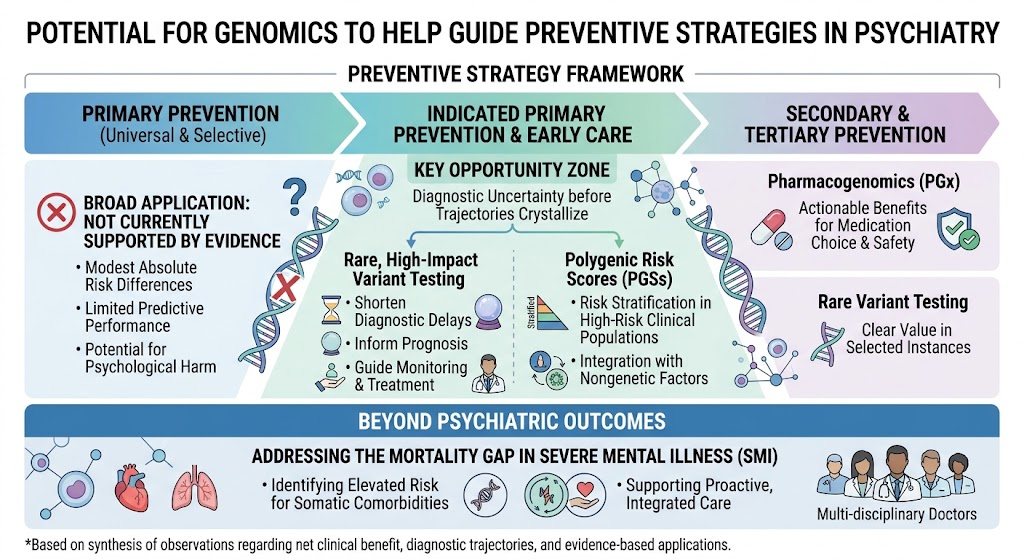
Polygenic Scores Often Rival Recurrent CNVs for Psychiatric Risk Stratification, but Both Add Clinical Insight
A large Danish genetic study suggests recurrent CNVs and polygenic scores provide complementary psychiatric risk information, with polygenic scores often identifying more at-risk individuals and potentially modifying CNV-associated risk.

Integrating Rare and Common Variants: The Synergistic Role of rCNVs and Polygenic Scores in Psychiatric Risk Stratification
This review synthesizes evidence on how recurrent copy number variants (rCNVs) and polygenic scores (PGSs) jointly influence psychiatric risk, highlighting their complementary roles in clinical risk assessment and the emergence of precision

When Severe Mental Illness Meets Lung Cancer: Why Equal Treatment Still Isn’t Guaranteed
A large Japanese study found that people with schizophrenia spectrum disorders were less likely to receive several standard treatments for non-small cell lung cancer, underscoring a persistent and preventable gap in cancer care.

Patients With Schizophrenia Spectrum Disorder Are Less Likely to Receive Stage-Appropriate Treatment for Non-Small Cell Lung Cancer in Japan
A nationwide Japanese cohort study found that patients with schizophrenia spectrum disorder and NSCLC presented with more advanced disease and were less likely to receive surgery, adjuvant chemotherapy, or systemic therapy.
Browse by specialty
Open language-specific specialty feeds and department pages.