Orthopedics
Latest news
92 articles · 20 / page

Ten-Year TOPKAT Follow-up: Partial (Unicompartmental) Knee Replacement Matches Total Replacement Clinically and Is More Cost-Effective
The 10-year TOPKAT randomized trial found no clinically important difference in Oxford Knee Score between partial (PKR) and total knee replacement (TKR) for medial compartment osteoarthritis, similar revision/reoperation rates, and cost-eff

Higher Osteoradionecrosis Risk After Proton Therapy than IMRT in Oropharyngeal Cancer — What Clinicians Should Know
In a large single‑institution cohort of oropharyngeal squamous cell carcinoma, proton therapy was associated with a higher 3‑year rate of osteoradionecrosis than IMRT (6.4% vs 2.7%), though severe ORN remained uncommon.

Once-Weekly Navepegritide Raises Growth Velocity and Improves Skeletal and Functional Outcomes in Children with Achondroplasia: Results from the APPROACH Trial
The APPROACH randomized trial found once-weekly navepegritide significantly increased annualized growth velocity and produced favorable skeletal alignment and physical-function improvements in children with achondroplasia, with an acceptabl

Treatment of a Mandibular Molar with Primary Failure of Eruption: A Case Report
A 12-year-old female with primary failure of eruption (PFE) affecting the right mandibular first molar is treated successfully via extraction and orthodontic repositioning, restoring function and occlusion.

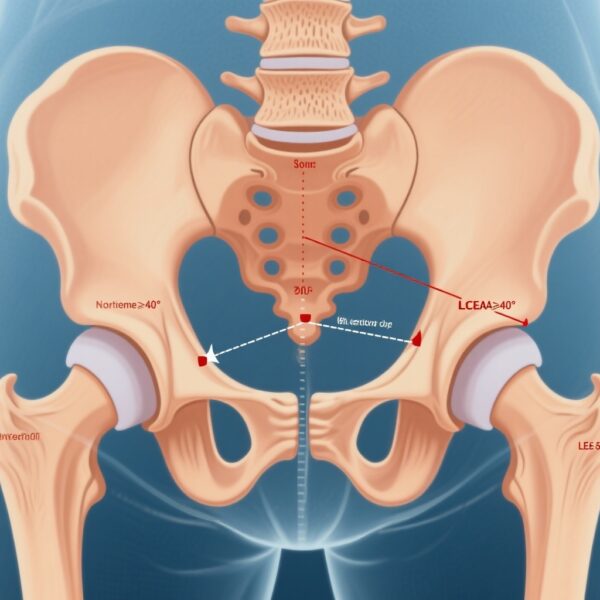
Severe Pincer Morphology Increases Odds of Radiographic Hip Osteoarthritis: Insights from 18,935 Hips in the World COACH Consortium
A pooled prospective analysis of 18,935 hips found severe pincer morphology (LCEA ≥45°) was associated with a 1.5-fold higher odds of incident radiographic hip osteoarthritis within 8 years; moderate pincer (LCEA ≥40°) showed no overall ass

Wearable Monitoring Shows Sustained Increases in Daily Activity After Total Knee Arthroplasty, with a 6‑Month Recovery Window
A prospective cohort using Apple Watch data demonstrated meaningful increases in step count, standing time and gait speed after unilateral total knee arthroplasty, peaking at 6 months and persisting at 12 months.
Intra-articular Hyaluronic Acid Injections: Long-Term Benefits in Early-Stage Knee Osteoarthritis and Older Women
Systematic review of 71 RCTs reveals that intra-articular hyaluronic acid injections offer initial symptom worsening but significant long-term relief, especially in early-stage knee osteoarthritis and older women; molecular weight’s role re

Starting Strong: The 2025 German Consensus on Sports Preparticipation Evaluation for Healthy Adults
A practical, clinician-focused summary of the 2025 German S2k consensus on preparticipation evaluations (PPE) for healthy adults—prioritizing history and physical exam, targeted testing, individualized exercise prescriptions, and research n

Ankle and Knee Dominance, Female Vulnerability, and Game-Time Risk: Contemporary Injury Incidence in Basketball Players
Systematic review and meta-analysis of 22 studies finds player contact and non-contact mechanisms dominate; ankle (25.8%) and knee (15.5%) injuries account for 41% of injuries. Females have higher rates of knee, concussion, and ball-contact

Neuromuscular Training Substantially Improves Athletes’ Balance: A Meta-Analysis with Practical Takeaways
A 2025 meta-analysis of 13 trials found neuromuscular training produced large improvements in athletes’ balance (overall SMD 1.47), with benefits for both static and dynamic domains. Results support incorporating targeted neuromuscular prog

Unraveling Hamstring Injury Mechanisms and Eccentric Training Adaptations: Integrative Insights and Future Preventive Strategies
Hamstring injuries mainly occur during the late swing phase of running due to high eccentric forces and neural factors. Eccentric training reduces injury risk through complex muscle adaptations involving contractile, non-contractile, and ne

Higher Pre-Race Training Exposure but Reduced Training Frequency Associated with Faster Boston Marathon Times
In 917 Boston Marathon registrants, higher habitual running volume and more quality sessions in the year preceding the race — paired with a relative reduction in training frequency in the last four months — were associated with faster race

Optimizing Muscle Recovery: Evidence-Based Insights on Cold, Heat, Contrast, and Hypoxia Therapies for Post-Exercise Muscle Damage
This review synthesizes evidence from randomized controlled trials on environmental stress-based therapies—cold, heat, contrast, and hypoxia—for enhancing muscle recovery after exercise-induced muscle damage, emphasizing the importance of a

Common Youth Sports, Not Extra PE, Predict Lower-Extremity Apophysitis: Incidence, Duration, and Practical Implications
A 5.5-year prospective cohort found lower-extremity apophysitis common in schoolchildren (1265 episodes in 1670 children), median symptom duration 3–4 weeks, and higher risk with soccer, handball, basketball and jump gymnastics but not from

Low Energy Availability Blunts Muscle and Functional Gains: What Clinicians and Coaches Need to Know
A 2025 systematic review finds low energy availability (LEA) is associated with impaired neuromusculoskeletal training responses—reduced gains in lean mass and function and consistent deficits in strength, cellular markers and subjective re

International Expert Recommendations on Shockwave Therapy in Sports Medicine: A Practical Summary of the 2025 Delphi Consensus
An accessible summary of the 2025 international Delphi recommendations on extracorporeal shockwave therapy (ESWT) for sports-related musculoskeletal injuries, highlighting consensus statements, clinical actions, and areas needing research.

FAIR Consensus (2025): What Clinicians and Coaches Need to Know About Preventing Upper‑Extremity Injuries in Female Athletes
The FAIR systematic review and consensus synthesizes evidence on prevention strategies and modifiable risk factors for upper‑extremity injury in female/woman/girl athletes, highlighting shoulder exercise programmes and key research gaps.

High Tibial Osteotomy Slows Medial Cartilage Loss and Improves Symptoms in Varus Knee Osteoarthritis: Randomized Trial Shows Clinically Meaningful Benefit
A randomized, assessor-blinded trial shows medial opening-wedge HTO reduces medial cartilage loss and yields clinically meaningful symptom improvement at 2 years versus optimized nonsurgical care in varus knee osteoarthritis.

What Modifiable Factors Predict Lower‑Extremity Injury in Female Athletes?
A comprehensive FAIR systematic review (195 studies) found limited, low‑certainty evidence linking higher body mass/BMI to increased lower‑extremity injury risk in female athletes; most other modifiable factors showed no clear association o

Prior Osteotomy Lowers Implant Survival and Raises TKA Complexity — but Early Pain and Function Are Similar: Results from 189,932 Dutch Arthroplasties
A large Dutch registry analysis shows total knee arthroplasty (TKA) after prior knee osteotomy carries a modestly higher revision risk and more frequent use of stems/augments, while short-term pain and function are comparable to primary TKA
Browse by specialty
Open language-specific specialty feeds and department pages.