cardiovascular risk
84 all articles · 20 / page
Latest news
Tag

Oral NLRP3 Inhibition With Ruvonoflast Produces Rapid, Reversible Suppression of Residual Inflammation in Adults at High Cardiovascular Risk
In a Phase 1b placebo-controlled trial, ruvonoflast markedly reduced hsCRP, IL-6, and fibrinogen over 28 days in adults with obesity, elevated hsCRP, and cardiometabolic risk, supporting further evaluation of oral NLRP3 inhibition in athero

The Prognostic Value of Serum Interleukin-6 Concentrations for 9 Cardiovascular and Mortality Outcomes
Higher blood IL-6 levels were strongly linked to nine cardiovascular and mortality outcomes in nearly 60,000 adults, supporting IL-6 as an important inflammatory marker and potential prevention target.

Precision Prescribing of SGLT2 Inhibitors in People With Type 2 Diabetes for Primary Prevention of Heart Failure: Model Development and Validation Study
The SABRE model estimates which people with type 2 diabetes may benefit most from SGLT2 inhibitors to prevent heart failure before it develops.

Higher Interleukin-6 Levels Predict Broad Cardiovascular Risk and Mortality Across Diverse Cohorts
A pooled analysis of 59,396 participants found that higher serum IL-6 concentrations independently predicted nine cardiovascular and mortality outcomes, with consistent associations across key clinical subgroups.

Addressing the Equity Gap in Familial Hypercholesterolemia: Comparative Insights into African and European Ancestry Populations
This review analyzes evidence comparing Familial Hypercholesterolemia (FH) across ancestries, highlighting that while pathogenic variant prevalence is similar, African ancestry individuals face higher LDL-C burdens and significant risks fro

Prior Myocardial Infarction and Cognitive Decline: Insights from the REGARDS Cohort
In the REGARDS cohort, prior myocardial infarction, including silent MI, was linked to faster long-term cognitive decline, suggesting heart attack history may help identify people at risk for future cognitive impairment.

Beyond Neuronal Injury: Serum Neurofilament Light Chain as a Prognostic Biomarker for Cardiovascular Outcomes in Atrial Fibrillation
This review analyzes the landmark SWISS-AF study, demonstrating that serum neurofilament light chain (sNfL), traditionally a marker of neuronal damage, is a potent independent predictor of major vascular events, heart failure, and mortality

Laroprovstat, the First Oral Small-Molecule PCSK9 Inhibitor for Hypercholesterolemia: Results From a Phase 1 Trial
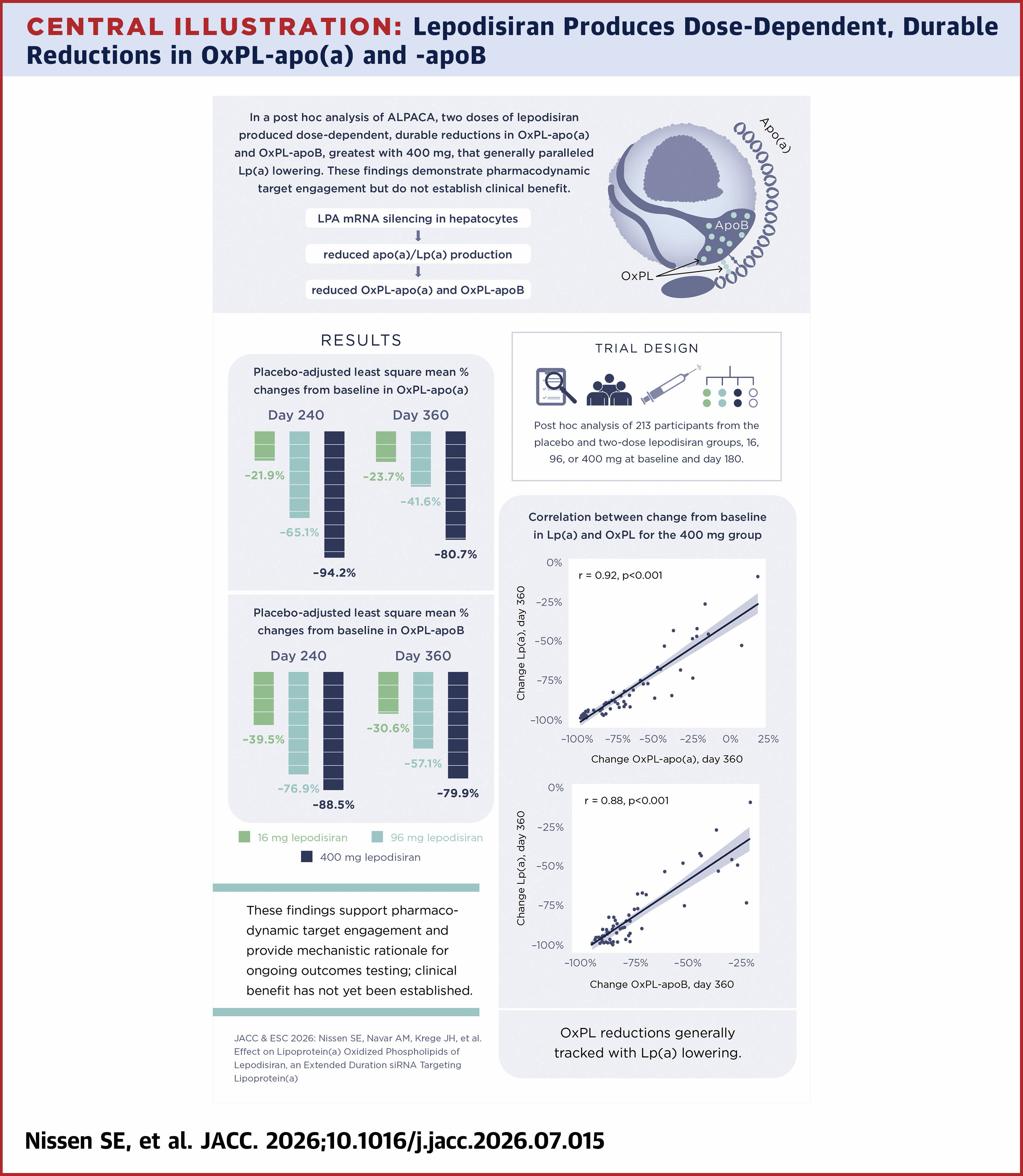
Laroprovstat, an investigational oral PCSK9 inhibitor, was well tolerated and produced substantial LDL cholesterol reductions, especially when combined with rosuvastatin, supporting further development for hypercholesterolemia.

A GOLD Science Committee Perspective on Exacerbations and Cardiovascular Risk In COPD
COPD exacerbations significantly increase cardiovascular risk for months. This article examines the link between COPD and heart disease, emphasizing proactive screening during flare-ups and evidence-based prevention strategies to improve su

Elevated Heart Failure Risk in People With HIV: Insights from the REPRIEVE Trial
The REPRIEVE trial reveals higher heart failure incidence in people with HIV, particularly among women, Black participants in high-income regions, and those with hypertension or obesity. Traditional risk factors, not HIV-specific markers, w

Prolonged TSH Suppression in Postmenopausal Thyroid Cancer Patients Linked to Worse Cardiovascular and Quality-of-Life Outcomes
Study finds long-term TSH suppression in postmenopausal women with thyroid cancer correlates with poorer cardiovascular health, reduced quality of life, and increased osteoporosis risk compared to controls.

Glucagon-Like Peptide-1 Receptor Agonists and Vascular Protection: Mitigating Systemic and Ocular Risks in High-Risk Type 2 Diabetes
A large-scale cohort study demonstrates that GLP-1 RAs significantly reduce macrovascular and microvascular complications, including proliferative retinopathy and retinal vein occlusion, in patients with pre-existing diabetic retinopathy.

44% of Women with HDP Develop Chronic Hypertension Within 10 Years: Missed Opportunities in Postpartum Care
A French cohort study reveals 44% of women receiving postpartum antihypertensives after HDP develop chronic hypertension within 10 years, signaling urgent gaps in long-term cardiovascular risk monitoring.

Even ‘Elevated’ Blood Pressure Raises Dementia Risk: Insights from 2.8 Million Adults Over 8 Years
A landmark South Korean study of 2.8 million adults reveals that both elevated blood pressure and hypertension significantly increase dementia risk, particularly vascular dementia, with stronger effects observed in midlife adults and women.

AI-Enhanced ECG Screening Pinpoints Atrial Fibrillation Risk in Older Adults: Key Insights from VITAL-AF Trial
A VITAL-AF trial analysis reveals that combining ECG-based artificial intelligence with clinical risk scores significantly improves atrial fibrillation screening efficiency. The study demonstrates that high-risk individuals benefit most fro

Longer Wait, Higher Risk? How Timing of Hypertensive Disorder Diagnosis Shapes Women’s Cardiovascular Future
New research reveals that longer latency between hypertensive disorder of pregnancy diagnosis and delivery correlates with subtle inflammatory and lipid changes in young mothers, suggesting subclinical cardiovascular risk elevation years af

Why Exercise Blood Pressure Alone May Miss Cardiovascular Risk—and What Combining It With Fitness Reveals
The EXERTION study of 12,743 individuals demonstrates that exercise systolic blood pressure relative to aerobic fitness (SBP/METPeak) is a powerful predictor of cardiovascular events, whereas exercise BP alone provides no prognostic value.

Efficacy of Blood Pressure-Lowering Pharmacotherapy in Isolated Diastolic Hypertension: A Systematic Synthesis of Evidence
This review synthesizes recent evidence, including a landmark 2026 meta-analysis, showing that blood pressure-lowering therapy provides similar cardiovascular benefits in patients with isolated diastolic hypertension compared to those with

Redefining Gout Management: Cardiovascular Risk Reduction via Treat-to-Target Urate-Lowering Therapy
Achieving serum urate targets

Beyond Calcium: Postoperative Hypoparathyroidism Linked to Long-term Renal and Cardiovascular Risks in Thyroid Cancer Survivors
A nationwide cohort study reveals that permanent postoperative hypoparathyroidism significantly increases the risk of renal insufficiency, nephrolithiasis, and major adverse cardiac events in thyroid cancer patients, highlighting the need f