biomarkers
84 all articles · 20 / page
Latest news
Tag

Biomarker, Functional Status, and Quality-of-Life Trajectories Before Modes of Death in Heart Failure: Post Hoc Analysis of the FINEARTS-HF Randomized Clinical Trial
This study reveals that sudden death in heart failure patients often follows gradual clinical decline, challenging the notion that such deaths are always abrupt.

New Genetic Modifiers in Autosomal Dominant Alzheimer’s Disease Link Aβ, Tau, TDP-43, and Vascular Biology to Clinical Variability
A genome-wide association study identified CNIH4, CCNG1, and RHOJ as genetic modifiers of autosomal dominant Alzheimer’s disease, with associations spanning disease risk, age at onset, fluid biomarkers, and neuroimaging phenotypes.

Elevated Von Willebrand Factor and Factor VIII Show Promise as Biomarkers for Diagnosis and Monitoring of Chronic Graft-Versus-Host Disease
In a prospective cohort, VWF and FVIII were significantly elevated in chronic graft-versus-host disease, tracked with disease activity, and showed moderate diagnostic performance for early cGvHD.

Beyond Neuronal Injury: Serum Neurofilament Light Chain as a Prognostic Biomarker for Cardiovascular Outcomes in Atrial Fibrillation
This review analyzes the landmark SWISS-AF study, demonstrating that serum neurofilament light chain (sNfL), traditionally a marker of neuronal damage, is a potent independent predictor of major vascular events, heart failure, and mortality

Why the cTnI/cTnT Ratio May Matter: A New Signal for Distinguishing Acute Necrotic From Chronic Myocardial Injury
A large multicohort and experimental study suggests the cTnI/cTnT ratio is biologically informative, separates acute from chronic myocardial injury, and modestly improves type 1 versus type 2 MI discrimination.

Continuous Subphenotype Probabilities Expose High-Risk Patients Hidden Within “Hypoinflammatory” Acute Respiratory Failure
AHRF patients classified as hypoinflammatory are not prognostically uniform. Continuous biomarker-based probabilities reveal substantial mortality heterogeneity, especially below the binary 0.5 threshold, with implications for enrichment st

Neurofilament Light Chain Reveals Rapid Neuroaxonal Injury in New-Onset Refractory Status Epilepticus
In a multinational cross-sectional study, serum and CSF neurofilament light chain—unlike S100B—tracked severe acute brain injury in cryptogenic NORSE, rose rapidly over the first 3 weeks, and predicted poor short-term outcome, supporting ur

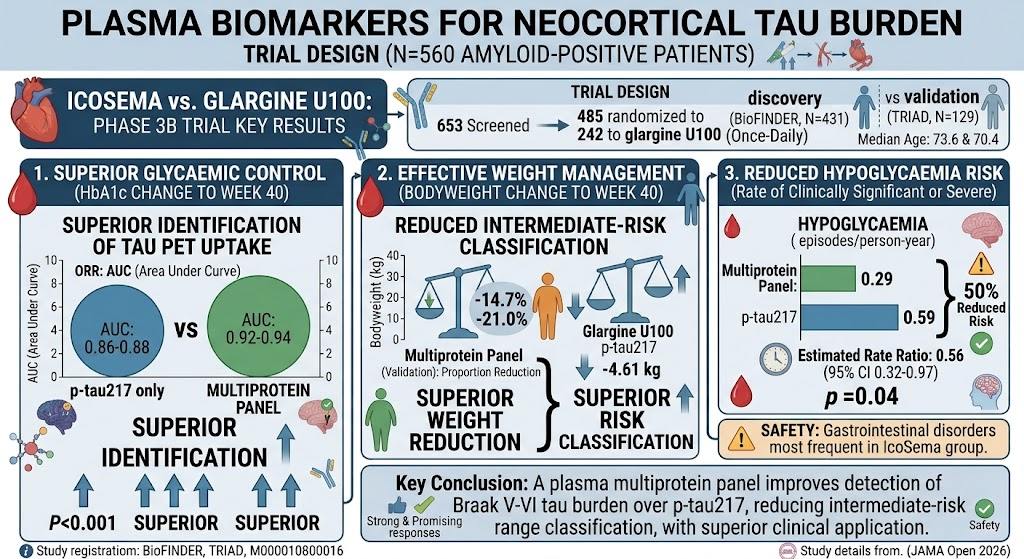
Sex-Specific Differences in P-Tau217 and Tau Aggregation: Implications for Preclinical Alzheimer’s Disease
Women exhibit higher plasma p-tau217 levels and tau aggregation than men in amyloid-positive individuals, suggesting sex-specific pathways in Alzheimer’s disease progression.

Biomarker Signatures in Sepsis: Linking Host Response to Clinical Outcomes
A prospective cohort study identifies biomarker signatures for host resistance, disease tolerance, and damage in sepsis, revealing associations with mortality and sepsis subtypes.

Inflammatory and Cardiac Biomarkers Predict VTE and Bleeding Risks in Cancer Patients
Elevated levels of inflammatory and cardiac biomarkers are linked to higher risks of venous thromboembolism and bleeding in cancer patients, according to a post hoc analysis of the AVERT trial.

Precision Blood-Based Diagnostics for Alzheimer’s Disease: The Synergistic Role of Plasma p-tau217 and eMTBR-tau243
This review synthesizes recent clinical evidence on the integration of plasma p-tau217 and eMTBR-tau243, highlighting how sequential biomarker testing improves the diagnosis of symptomatic Alzheimer’s disease and predicts longitudinal cogni

The Gut-Liver Axis Unveiled: How Microbiome Signatures Track Disease Progression from Fatty Liver to Cancer
A landmark multicohort study of 1,168 individuals reveals that gut microbiome diversity systematically declines across liver disease stages, with specific bacterial markers like Veillonella and functional metabolic shifts predicting disease

Decoding the Heart Failure Peptidome: A Cross-Sectional Study Uncovers Novel Biomarkers and Patient Clusters
A groundbreaking mass spectrometry study analyzing 486 heart failure patients and 98 controls identified over 21,000 unique peptides, revealing 1,924 differentially expressed peptides. The research highlights angiotensin-related peptides, n

Mid-Regional Pro-Adrenomedullin (MR-proADM): A Superior Prognostic Sentinel in Transthyretin Cardiac Amyloidosis
This review synthesizes recent evidence identifying MR-proADM as a premier prognostic biomarker in ATTR-CM, demonstrating its ability to outperform traditional natriuretic peptides and enhance existing clinical staging systems.

Advancing Venous Thromboembolism Prediction: Insights from Large-Scale Plasma Proteomics and Mendelian Randomization
This review synthesizes findings from a landmark proteomic study identifying 23 plasma proteins associated with VTE risk, highlighting novel pathways in immunity and vascular senescence while exploring causal links through Mendelian Randomi

Beyond the Clot: Novel Proteomic Markers Reveal New Pathophysiological Pathways for Venous Thromboembolism
A large-scale proteomic meta-analysis across five cohorts identified 15 novel plasma protein markers for venous thromboembolism, highlighting the roles of the extracellular matrix, immunity, and vascular senescence in disease risk and offer

Beyond the Clot: Novel Proteomic Markers Redefine Venous Thromboembolism Risk
This large-scale proteomic analysis identifies 15 novel protein markers for venous thromboembolism, offering new insights into the roles of immunity and extracellular matrix regulation in VTE pathogenesis beyond traditional coagulation path

Decoding the Diabetic Heart: Five Unique Proteomic Markers Unveil Heart Failure Risk in Patients with Diabetes
Researchers from the ARIC study have identified five specific proteomic markers that uniquely predict heart failure risk in individuals with diabetes. These findings, including four novel proteins, suggest distinct pathophysiological pathwa

Temporal Dynamics of the Circulating Cytokinome in Severe Alcohol-Associated Hepatitis: A Longitudinal Clinical Analysis
This review analyzes the longitudinal kinetics of 43 inflammatory biomarkers in patients with severe alcohol-associated hepatitis, comparing IL-1 receptor antagonism and corticosteroid therapy, highlighting treatment-specific signatures and