We use cookies

Our website uses essential cookies and, with your consent, additional cookies to measure performance and improve our services. Cookie Policy.

You can change your choice at any time.

MMedXYNews
HomeVideos
MedXY AI/MedXY News/Tag: cardiovascular risk
MedXY News
EnglishTag

cardiovascular risk

Ask MedXY AI
type 2 diabetesclinical trialheart failureimmunotherapyobesitycardiovascular riskatrial fibrillationcritical carebiomarkersclinical trialsartificial intelligenceHypertensionCardiologyoncologytype 1 diabetespublic healthMortalitydiabetesAlzheimer's diseasecardiovascular diseasebreast cancerepidemiology

Latest news

Tag

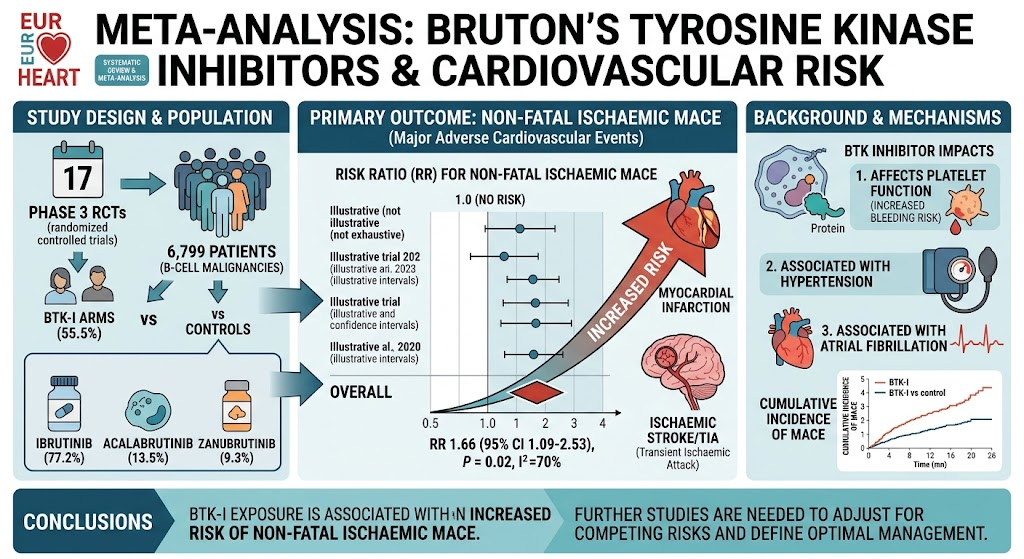
Assessing Cardiovascular Risks Associated with Bruton’s Tyrosine Kinase Inhibitors: Insights from a Meta-Analysis of Phase 3 Trials
Cardiologyischemic eventsmajor adverse cardiovascular events

Assessing Cardiovascular Risks Associated with Bruton’s Tyrosine Kinase Inhibitors: Insights from a Meta-Analysis of Phase 3 Trials

By MedXY|Aug 24, 2026

This meta-analysis of 17 Phase 3 RCTs reveals that BTK inhibitors, primarily ibrutinib, increase the risk of non-fatal ischemic cardiovascular events in patients with B-cell malignancies, highlighting important safety considerations.
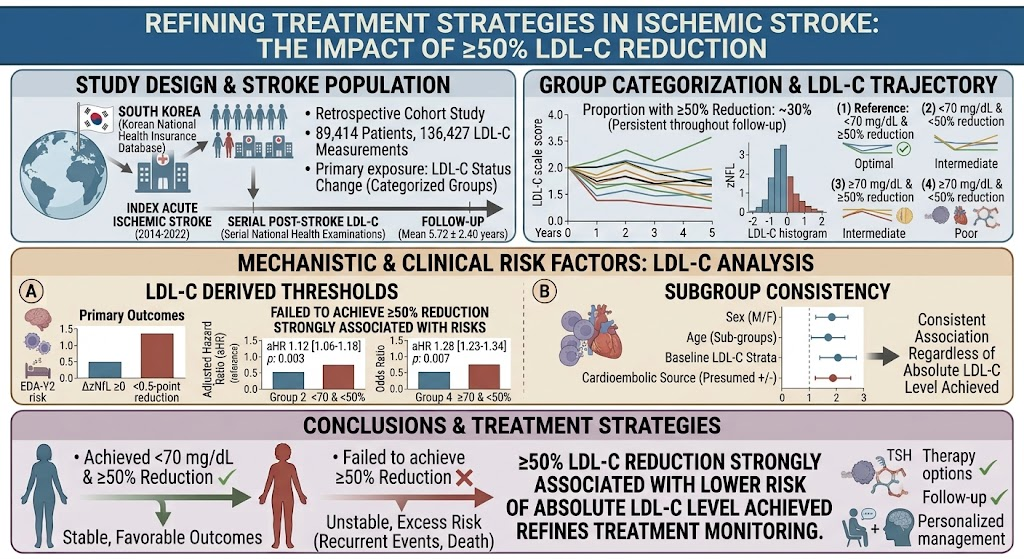
Optimizing LDL-C Reduction Strategies in Ischemic Stroke: Impact of Achieving ≥50% LDL-C Reduction from Baseline
CardiologyLDL-C reductioncardiovascular risk

Optimizing LDL-C Reduction Strategies in Ischemic Stroke: Impact of Achieving ≥50% LDL-C Reduction from Baseline

By MedXY|Aug 21, 2026

Achieving a ≥50% reduction in LDL-C from baseline independently reduces recurrent cardiovascular events post-ischemic stroke, suggesting that combining relative and absolute LDL-C targets improves long-term outcomes.

Beyond BMI: How Waist Circumference and Waist-to-Hip Ratio Enhance Cardiovascular Risk Prediction
CardiologyBMIcardiovascular risk

Beyond BMI: How Waist Circumference and Waist-to-Hip Ratio Enhance Cardiovascular Risk Prediction

By MedXY|Aug 13, 2026

This analysis reveals that waist circumference and waist-to-hip ratio improve cardiovascular risk classification beyond BMI, identifying individuals with hidden risk and refining prognostic assessments across multiple cardiovascular outcome

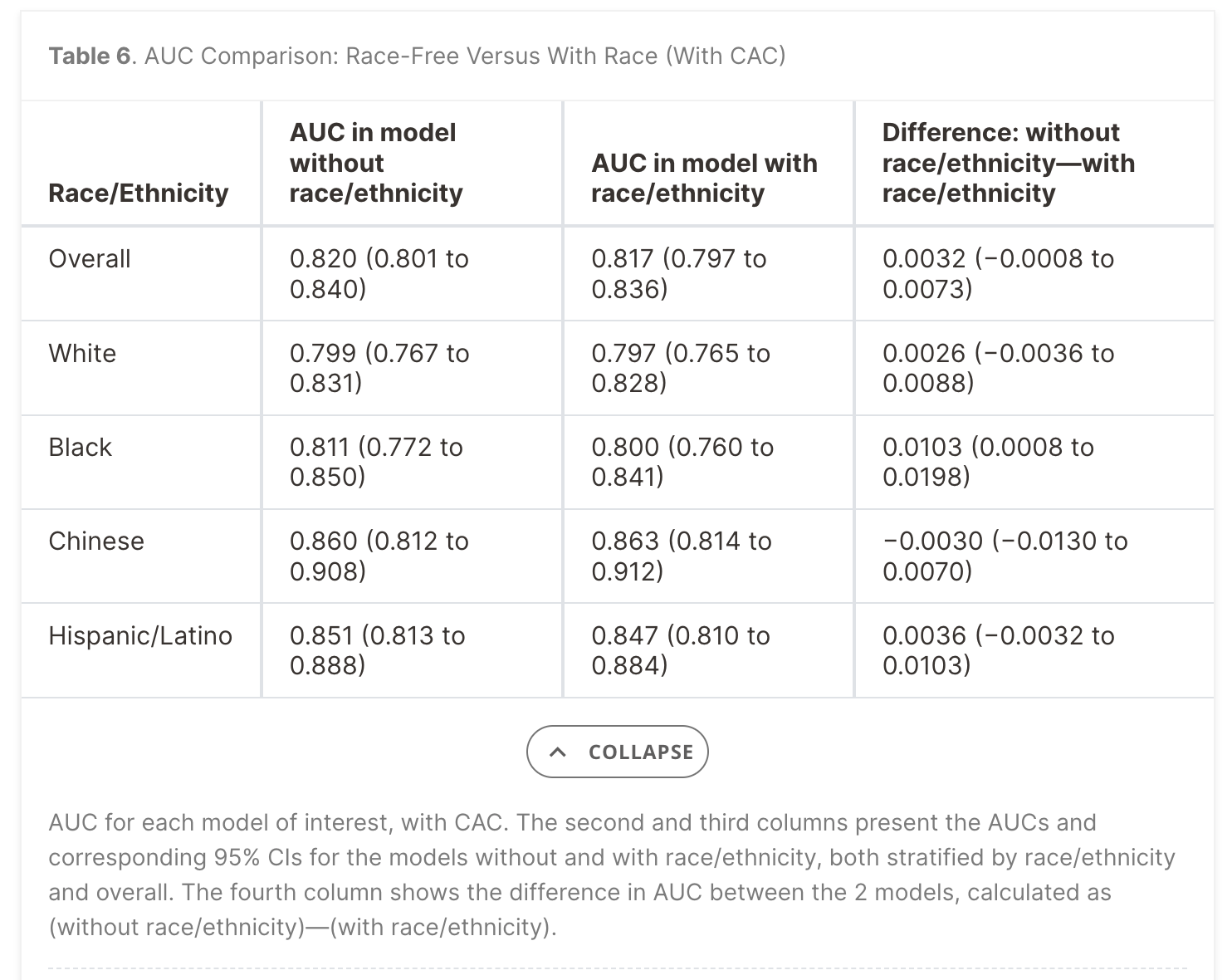
Rethinking Race/Ethnicity in Cardiovascular Risk Assessment: The Race-Free MESA Risk Score
Cardiologycardiovascular riskMESA score

Rethinking Race/Ethnicity in Cardiovascular Risk Assessment: The Race-Free MESA Risk Score

By MedXY|Aug 7, 2026

A race-free adaptation of the MESA risk score estimates 10-year coronary heart disease risk with comparable accuracy to the original, challenging the necessity of including race/ethnicity in cardiovascular risk prediction.

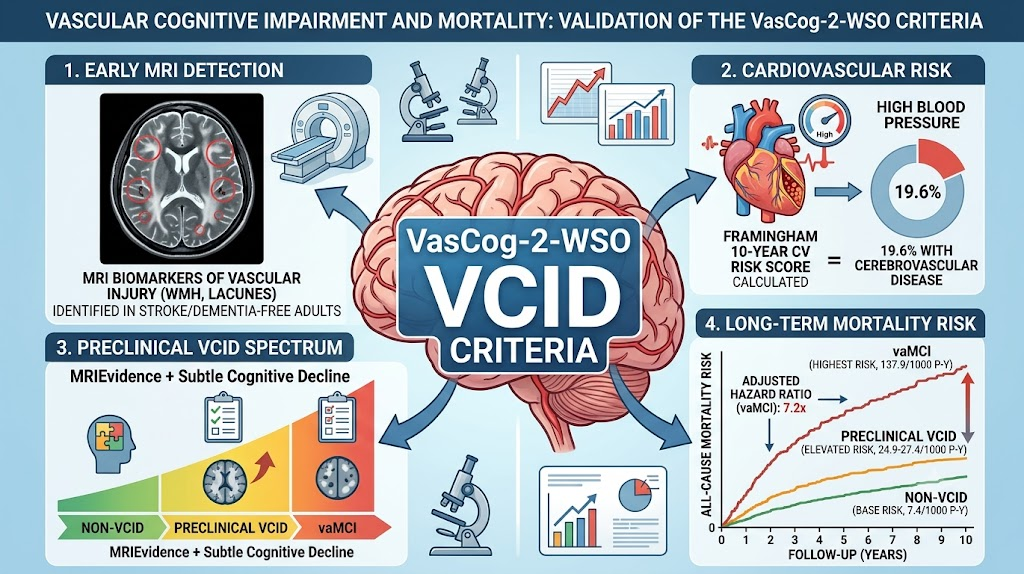
Validating VasCog-2-WSO Criteria: Early MRI Detection of Vascular Cognitive Impairment and Mortality Risk in Stroke- and Dementia-Free Adults
Cardiologycardiovascular riskvascular cognitive impairment

Validating VasCog-2-WSO Criteria: Early MRI Detection of Vascular Cognitive Impairment and Mortality Risk in Stroke- and Dementia-Free Adults

By MedXY|Aug 4, 2026

The VasCog-2-WSO criteria effectively detect MRI-defined vascular cognitive impairment in asymptomatic adults, correlating with increased cardiovascular risk and mortality, highlighting their utility for early diagnosis and community risk s

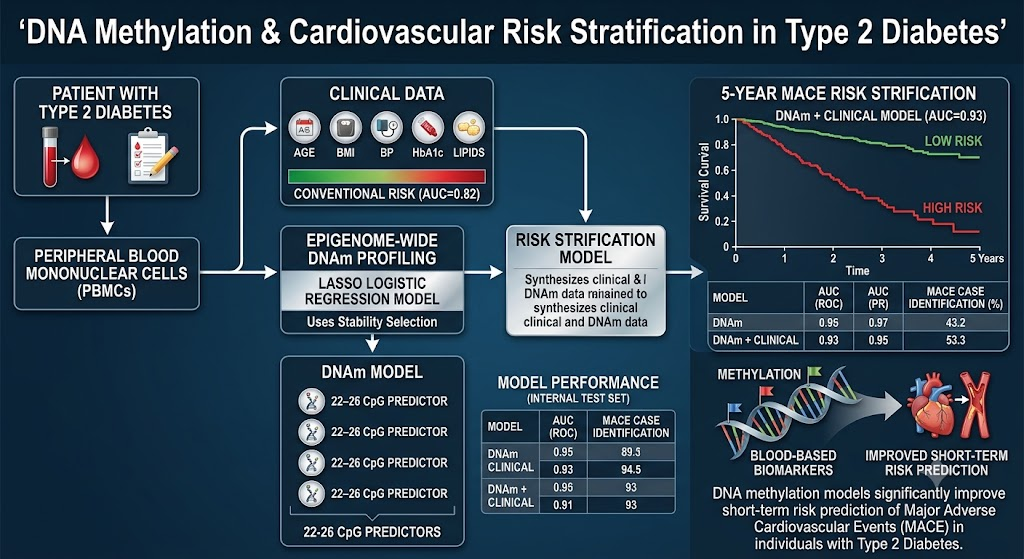
Blood-Based DNA Methylation Models May Improve Cardiovascular Risk Prediction in Type 2 Diabetes
CardiologyDNA methylationcardiovascular risk

Blood-Based DNA Methylation Models May Improve Cardiovascular Risk Prediction in Type 2 Diabetes

By MedXY|Jul 25, 2026

A study of 305 individuals with type 2 diabetes found that blood-based DNA methylation models predicted 5-year major adverse cardiovascular events with high accuracy, suggesting potential for improved risk stratification.

Oral Semaglutide and Cardiovascular Benefits in the SOUL Trial: Impact of Baseline and Changes in HbA1c and BMI on Clinical Outcomes
CardiologyBMIcardiovascular risk

Oral Semaglutide and Cardiovascular Benefits in the SOUL Trial: Impact of Baseline and Changes in HbA1c and BMI on Clinical Outcomes

By MedXY|Jul 22, 2026

This analysis of the SOUL trial shows oral semaglutide reduces major cardiovascular events, with greater benefits linked to higher baseline HbA1c and larger HbA1c reductions, while BMI changes did not significantly affect outcomes.

Development and Validation of a Simplified Martin-Hopkins LDL-C Equation Using Machine Learning
Cardiologycardiovascular riskLDL-C estimation

Development and Validation of a Simplified Martin-Hopkins LDL-C Equation Using Machine Learning

By MedXY|Jul 19, 2026

This study introduces and validates a simplified machine learning-based equation for estimating LDL cholesterol, showing comparable accuracy to the original Martin-Hopkins method and improved ease of use.

Non-HDL Cholesterol and Apolipoprotein B Measures and Risk of Atherosclerotic Cardiovascular Disease
Cardiologyapolipoprotein Batherosclerosis

Non-HDL Cholesterol and Apolipoprotein B Measures and Risk of Atherosclerotic Cardiovascular Disease

By MedXY|Jul 16, 2026

This study compares the predictive value of non-HDL cholesterol and apolipoprotein B for atherosclerotic cardiovascular disease risk in individuals not on lipid-lowering medication.

Molecular Mutations and Cardiovascular Risks Shape Prognosis in Triple-Negative Essential Thrombocythemia
Cardiologycardiovascular riskMutation profile

Molecular Mutations and Cardiovascular Risks Shape Prognosis in Triple-Negative Essential Thrombocythemia

By MedXY|Jul 15, 2026

This study reveals that specific gene mutations and cardiovascular risk factors significantly influence prognosis and thrombotic risk in triple-negative essential thrombocythemia, highlighting the importance of molecular profiling for perso

Wine Consumption, Mediterranean Diet, and Cardiovascular Risk in Two Spanish Cohorts
Cardiologycardiovascular riskMediterranean diet

Wine Consumption, Mediterranean Diet, and Cardiovascular Risk in Two Spanish Cohorts

By MedXY|Jul 14, 2026

This study from two Spanish cohorts explores how moderate wine consumption within a Mediterranean diet impacts cardiovascular disease and mortality, suggesting modest benefits but advising cautious interpretation.

Assessing Cardiovascular Risk in First-Degree Relatives of Individuals with Elevated Lipoprotein(a): Insights from a Swedish Cohort Study
Cardiologycardiovascular riskfamily history

Assessing Cardiovascular Risk in First-Degree Relatives of Individuals with Elevated Lipoprotein(a): Insights from a Swedish Cohort Study

By MedXY|Jul 12, 2026

A cohort study demonstrates increased major cardiovascular event risk in first-degree relatives of individuals with high plasma lipoprotein(a), supporting cascade screening for targeted prevention.

Unveiling the Natural History of Asymptomatic Mild Hypertrophic Cardiomyopathy: Insights from the SHaRe Registry
CardiologyasymptomaticCardiac Remodeling

Unveiling the Natural History of Asymptomatic Mild Hypertrophic Cardiomyopathy: Insights from the SHaRe Registry

By MedXY|Jul 9, 2026

This study reveals that 21% of asymptomatic patients with mild HCM develop major adverse cardiovascular events over 7 years, highlighting key predictors such as age, symptom progression, and cardiac remodeling markers that inform management

Obicetrapib’s Impact on Lipoprotein(a) in High Cardiovascular Risk Patients: A Comprehensive Pooled Analysis
Cardiologycardiovascular riskCholesteryl Ester Transfer Protein Inhibitor

Obicetrapib’s Impact on Lipoprotein(a) in High Cardiovascular Risk Patients: A Comprehensive Pooled Analysis

By MedXY|Jul 7, 2026

Obicetrapib significantly lowers lipoprotein(a), LDL cholesterol, and apolipoprotein B in high cardiovascular risk patients, offering a promising addition to lipid-lowering therapies, especially for patients with mild to moderate Lp(a) elev

Modified Sleep Apnea Severity Index and Cardiovascular Risk in CPAP-Intolerant OSA Patients: A Clinical Evidence Review
Clinical Updatescardiovascular riskCPAP intolerance

Modified Sleep Apnea Severity Index and Cardiovascular Risk in CPAP-Intolerant OSA Patients: A Clinical Evidence Review

By MedXY|Jul 2, 2026

This review synthesizes current evidence on the modified sleep apnea severity index (mSASI) as a composite metric integrating clinical and sleep study factors to predict cardiovascular risk in CPAP-intolerant OSA patients undergoing surgery

Oral NLRP3 Inhibition With Ruvonoflast Produces Rapid, Reversible Suppression of Residual Inflammation in Adults at High Cardiovascular Risk
Cardiologycardiovascular riskhsCRP

Oral NLRP3 Inhibition With Ruvonoflast Produces Rapid, Reversible Suppression of Residual Inflammation in Adults at High Cardiovascular Risk

By MedXY|Jun 10, 2026

In a Phase 1b placebo-controlled trial, ruvonoflast markedly reduced hsCRP, IL-6, and fibrinogen over 28 days in adults with obesity, elevated hsCRP, and cardiometabolic risk, supporting further evaluation of oral NLRP3 inhibition in athero

The Prognostic Value of Serum Interleukin-6 Concentrations for 9 Cardiovascular and Mortality Outcomes
Cardiologycardiovascular riskinflammation

The Prognostic Value of Serum Interleukin-6 Concentrations for 9 Cardiovascular and Mortality Outcomes

By MedXY|Jun 10, 2026

Higher blood IL-6 levels were strongly linked to nine cardiovascular and mortality outcomes in nearly 60,000 adults, supporting IL-6 as an important inflammatory marker and potential prevention target.

Precision Prescribing of SGLT2 Inhibitors in People With Type 2 Diabetes for Primary Prevention of Heart Failure: Model Development and Validation Study
Cardiologycardiovascular riskheart failure prevention

Precision Prescribing of SGLT2 Inhibitors in People With Type 2 Diabetes for Primary Prevention of Heart Failure: Model Development and Validation Study

By MedXY|Jun 10, 2026

The SABRE model estimates which people with type 2 diabetes may benefit most from SGLT2 inhibitors to prevent heart failure before it develops.

Higher Interleukin-6 Levels Predict Broad Cardiovascular Risk and Mortality Across Diverse Cohorts
Cardiologycardiovascular riskinflammation

Higher Interleukin-6 Levels Predict Broad Cardiovascular Risk and Mortality Across Diverse Cohorts

By MedXY|May 31, 2026

A pooled analysis of 59,396 participants found that higher serum IL-6 concentrations independently predicted nine cardiovascular and mortality outcomes, with consistent associations across key clinical subgroups.

Addressing the Equity Gap in Familial Hypercholesterolemia: Comparative Insights into African and European Ancestry Populations
Clinical Updatescardiovascular riskFamilial Hypercholesterolaemia

Addressing the Equity Gap in Familial Hypercholesterolemia: Comparative Insights into African and European Ancestry Populations

By MedXY|May 31, 2026

This review analyzes evidence comparing Familial Hypercholesterolemia (FH) across ancestries, highlighting that while pathogenic variant prevalence is similar, African ancestry individuals face higher LDL-C burdens and significant risks fro

Prev
2 / 6
1234…6
Next
Ask MedXY AI

Most popular

Intimate Health
Five Benefits for Women Continuing Sexual Activity After Menopause
Intimate Health
Why Some Women Have a Strong Sex Drive—And Why Men Shouldn't Worry About It
Nursing & care
How often should a couple have sex?
General Surgery
Optimizing Postoperative Opioid Prescriptions After Intra-Abdominal Cancer Surgery: Comparing the 5x-Multiplier and 3-Tier Models
Intimate Health
Classic Intimacy Recommendations: How to Help Women Reach Orgasm and Enjoy Mutual Pleasure
© 2026 MedXY
Contact usAbout usPrivacy PolicyMedXY story