Diabetes & Endocrinology
Latest news
532 articles · 20 / page

Deciphering ZnT8A: Why Not All Islet Autoantibodies Predict Type 1 Diabetes Risk
The ENDIA cohort study reveals that persistent single ZnT8 autoantibodies detected only via ELISA after age 4 do not significantly increase Type 1 Diabetes risk, whereas earlier detection across multiple assay formats signals higher progres

24-Weekly vs. 12-Weekly Triptorelin: Clinical Equivalence and Enhanced Adherence in Central Precocious Puberty
A UK multicentre study demonstrates that 24-weekly Decapeptyl SR is as effective and well-tolerated as the 12-weekly regimen for central precocious puberty, offering improved patient satisfaction and reduced clinical burden.

Renal Function and Metabolic Risk: Reduced eGFR Does Not Independently Increase DKA Risk in Type 1 Diabetes
A landmark 35-year analysis of DCCT/EDIC data demonstrates that a reduced estimated glomerular filtration rate (30–90 mL/min/1.73 m2) is not an independent risk factor for diabetic ketoacidosis, providing a clearer safety framework for the

Synergistic Protection: Combining GLP-1 Receptor Agonists with Lifestyle Habits Slashes Cardiovascular Risk in Type 2 Diabetes
A massive cohort study of nearly 100,000 veterans reveals that while GLP-1 receptor agonists significantly reduce MACE, the combination with a healthy lifestyle offers a 43% lower risk, emphasizing the need for integrated cardiometabolic ca

Beyond the Binary: The Evolving Consensus on the Spectrum of Primary Aldosteronism and Cardiovascular Risk
Recent data from the ARIC study and emerging expert consensus are redefining primary aldosteronism. Rather than a rare, all-or-nothing condition, it is now viewed as a broad spectrum where even subclinical elevations significantly increase

Beyond Mandatory Resection: Active Surveillance Proves Safe for RAS-Positive Thyroid Nodules
A new study suggests that isolated RAS mutations in Bethesda III and IV thyroid nodules do not always require surgery. With a 34% malignancy rate and low growth incidence, active surveillance emerges as a viable, safe alternative for approp

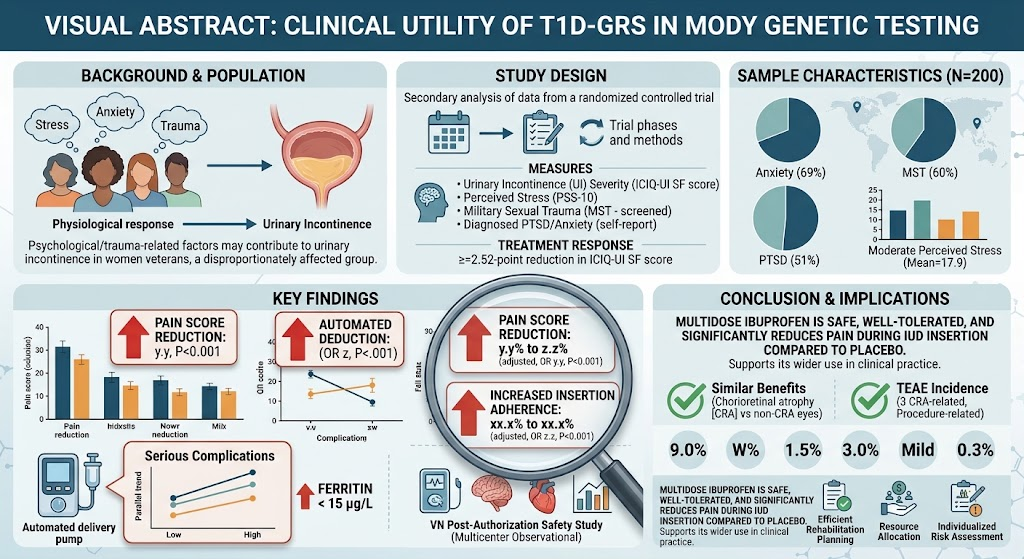
Beyond Haploinsufficiency: How Nonsense-Mediated Decay Escape Redefines MODY Diagnosis and Identifies Novel INS Variants
A systematic analysis reveals that the pathogenicity of loss-of-function variants in MODY genes is gene-specific and dependent on nonsense-mediated decay status. Crucially, NMD-escape variants in the INS gene represent a novel, clinically d

Oxygen-Guided Success: A New Frontier in Adrenal Venous Sampling for Primary Aldosteronism
Researchers have discovered that measuring oxygen partial pressure (pO2) can significantly improve the accuracy and speed of Adrenal Venous Sampling, providing a cost-effective tool for diagnosing Primary Aldosteronism.

SGLT2 Inhibitors Reduce Gout-Related Medication Burden in Patients with Type 2 Diabetes
A large-scale target trial emulation study demonstrates that SGLT2 inhibitors significantly reduce the initiation of allopurinol and the use of anti-inflammatory medications in patients with comorbid gout and type 2 diabetes, offering a pot

Precision Risk Stratification in Cushing’s Disease: Integrating USP8 Genotype and Tumor Size to Predict Long-Term Recurrence
An international cohort study demonstrates that combining USP8 genotype with tumor size significantly improves the prediction of recurrence in Cushing’s disease, identifying high-risk patients even among those with low postoperative cortiso

Orforglipron Demonstrates Superior HbA1c Reduction Over Oral Semaglutide in Type 2 Diabetes: Results from the ACHIEVE-3 Trial
The ACHIEVE-3 phase 3 trial demonstrates that orforglipron, a novel non-peptide oral GLP-1 receptor agonist, provides superior glycemic control compared to oral semaglutide in adults with type 2 diabetes, despite a higher frequency of gastr

SGLT2 Inhibitors Offer Potent Protection Against Contrast-Induced Kidney Injury During Coronary Intervention
A large-scale registry study reveals that preprocedural SGLT2 inhibitor use significantly reduces the risk of contrast-associated acute kidney injury in diabetic patients undergoing PCI, suggesting a major shift in peri-procedural managemen

Insulin Resistance Blunts LVAD-Mediated Myocardial Recovery by Impairing the Pentose Phosphate Pathway
Obesity-induced insulin resistance hinders heart failure recovery post-LVAD by disrupting the pentose phosphate pathway. A new study in Circulation suggests insulin sensitizers could restore cardiac repair mechanisms in obese patients.

Women Achieve Greater Weight Loss With GLP-1 Receptor Agonists: A Comprehensive Meta-Analysis of Treatment Heterogeneity
A systematic review and meta-analysis of 64 randomized trials reveals that GLP-1 receptor agonists lead to significantly higher weight loss in women (10.9%) compared to men (6.8%), while maintaining consistent efficacy across various ages,

Heart Failure Prevention in Type 2 Diabetes: Comparative Effectiveness of GLP-1 Receptor Agonists vs. SGLT-2 and DPP-4 Inhibitors
A large-scale target trial emulation demonstrates that GLP-1RAs significantly reduce heart failure hospitalization risks compared to DPP-4 inhibitors and provide comparable protection to SGLT-2 inhibitors in routine clinical practice.

Short-Course Romosozumab Followed by Denosumab Is Non-Inferior to Standard 12-Month Regimen for Postmenopausal Osteoporosis
The LIDA trial demonstrates that a 3-month abbreviated course of romosozumab followed by denosumab is non-inferior to the standard 12-month regimen in increasing total hip bone mineral density, potentially reducing treatment costs and injec

Proactive Pharmacist Outreach Slashes Hypoglycemia Risk and Optimizes Prescribing in High-Risk Type 2 Diabetes
This randomized clinical trial demonstrates that proactive pharmacist outreach using evidence-based algorithms significantly improves prescribing safety and reduces emergency hypoglycemia events in high-risk patients with type 2 diabetes wi

Long-Term Benfotiamine Treatment Fails to Improve Diabetic Polyneuropathy: Insights from the BOND Randomized Controlled Trial
The 12-month BOND study found that high-dose benfotiamine (600 mg daily) did not significantly improve corneal nerve fiber length or other neurophysiological markers in patients with type 2 diabetes and symptomatic polyneuropathy, despite s

Produce Prescriptions Alone Fail to Improve Diabetes Outcomes: Lessons from a Major Pragmatic Trial
A large-scale randomized trial reveals that monthly produce subsidies do not significantly improve HbA1c or reduce healthcare utilization in food-insecure diabetes patients, suggesting that ‘Food is Medicine’ initiatives require more than j

Indigenous American Ancestry and Type 2 Diabetes: A Genomic Perspective on Mexico’s Public Health Crisis
A massive study of 134,548 Mexicans reveals that Indigenous American genomic ancestry is a potent, independent risk factor for type 2 diabetes and prediabetes, highlighting an urgent need for population-specific preventive healthcare strate
Browse by specialty
Open language-specific specialty feeds and department pages.