Oncology
Latest news
915 articles · 20 / page

Peritoneal Cancer Risk After Risk-Reducing Salpingo-Oophorectomy: The Impact of BRCA Mutational Status and STIC Lesions
This study of 1,351 high-risk women demonstrates that while risk-reducing salpingo-oophorectomy (RRSO) is effective, the presence of serous tubal intraepithelial carcinoma (STIC) at the time of surgery significantly increases the 5-year ris

The Shift Toward De-escalation: Why Radical Trachelectomy Is Losing Ground in Early-Stage Cervical Cancer
A multi-database analysis reveals a significant decline in trachelectomy utilization since 2016. With comparable 10-year survival rates between trachelectomy and conization, clinical practice is rapidly shifting toward less radical, fertili

Predictive Power of MRI-Based Radiomic Dynamics for Pathological Complete Response in Hepatocellular Carcinoma: A Deep Learning Synthesis
This review evaluates how deep learning-assisted delta radiomics on MRI, combined with AFP response, provides a non-invasive, high-accuracy prediction of pathological complete response in unresectable HCC undergoing conversion immunotherapy

Therapeutic Reversal of SOX9-Mediated Chemoresistance in Esophageal Adenocarcinoma via APE1-Redox Inhibition
This review details a breakthrough in esophageal adenocarcinoma treatment, identifying the APE1-SOX9 axis as a primary driver of chemoresistance and demonstrating how targeting APE1’s redox function can sensitize tumors to oxaliplatin.

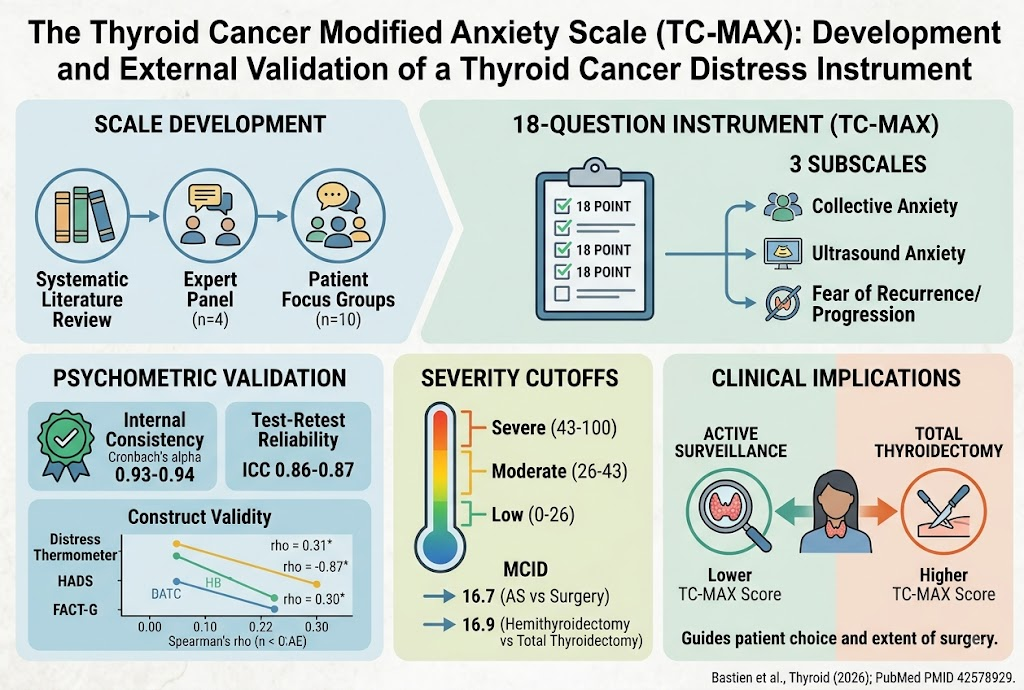
Long-Term Quality of Life Is Comparable Between Active Surveillance and Surgery for Low-Risk Papillary Thyroid Cancer
A prospective cohort study reveals that patients with low-risk papillary thyroid cancer experience similar quality of life outcomes at three years whether they choose active surveillance or immediate surgery, though those who crossover to s

Malignancy Risk Patterns in Solid Organ Transplant Recipients with a History of Pretransplant Cancer
A large-scale cohort study reveals that solid organ transplant recipients with pre-existing cancer histories face significantly elevated risks for subsequent malignancies, particularly recurring or de novo cancers of the same type, necessit

Beyond Complexity: Why Molecular Features Still Dictate the Prognosis of Chronic Lymphocytic Leukemia
Emerging data from UK clinical trials indicate that while high genomic complexity (HGC) correlates with poor outcomes in CLL, it often serves as a surrogate for other established high-risk markers like TP53 status and telomere length.

Severe Nocturnal Hypoxemia, Not Just Obstructive Sleep Apnea, Predicts Reduced Survival in Non-Small Cell Lung Cancer Patients
The NEOSAS-GFPC study demonstrates that severe sleep-related hypoxemia is an independent predictor of increased mortality in NSCLC patients, highlighting the clinical importance of monitoring nocturnal oxygen saturation beyond traditional a

Long-Term Survival Outweighs Short-Term Quality of Life: Why Esophagectomy Remains the Gold Standard for Esophageal Cancer Responders
A decision analytical model reveals that while active surveillance offers short-term quality-of-life benefits, standard esophagectomy provides superior 5-year survival and quality-adjusted life-years (QALYs) for esophageal cancer patients a

Lymph Node Isolated Tumor Cells in Ovarian Cancer: Clinically Significant or Pathological Incidentaloma?
A large-scale cohort study of over 15,000 patients reveals that isolated tumor cells (ITCs) in regional lymph nodes do not significantly impact short-term overall survival in epithelial ovarian cancer, despite higher prevalence in low-grade

Tamoxifen and Uterine Disease Risk in Young Breast Cancer Survivors: Evidence from a Target Trial Emulation Study
A large-scale cohort study of premenopausal women demonstrates that adjuvant tamoxifen significantly increases the risk of endometrial cancer, hyperplasia, and polyps, with risk correlating to treatment duration.

Rethinking the Urgency of Post-FIT Colonoscopy: Why Compliance May Take Precedence Over Speed
A nationwide French cohort study of over 370,000 individuals reveals that delaying colonoscopy for up to 24 months after a positive FIT result does not significantly increase the risk of advanced-stage colorectal cancer, though high fecal h

Predictive Biomarkers in PML: Preexisting Virus-Specific T Cells as Determinants of Response to Checkpoint Inhibition
This review synthesizes recent evidence on the role of pretreatment virus-specific T cells in predicting clinical response, survival, and safety outcomes in patients with progressive multifocal leukoencephalopathy (PML) treated with immune

Optimized Heart Failure Therapy in Advanced Cancer: Insights from the EMPATICC Trial
The EMPATICC trial explored heart failure therapy for patients with advanced cancer in palliative care. While it did not meet its primary endpoint for self-care ability due to high mortality, survivors showed improved cardiac biomarkers and

Rethinking Frontline Standards: SONIA Trial Finds No Survival Benefit for First-Line CDK4/6 Inhibitors in HR+/HER2- Advanced Breast Cancer
The Phase 3 SONIA trial demonstrates that delaying CDK4/6 inhibitors to the second-line setting for advanced breast cancer yields comparable overall survival to first-line use, while significantly reducing treatment-related toxicities and h

Balancing the Scales: The FYN/LCK Kinase Switch Rescues Progenitor T Cells to Overcome Immunotherapy Resistance in Hepatocellular Carcinoma
A breakthrough study reveals that the balance between FYN and LCK kinases acts as a metabolic switch in hepatocellular carcinoma. By modulating this axis through low-dose LCK inhibition, researchers successfully preserved T-cell stemness an

Long-Term Thyroid Toxicity Burden in Children Who Received Treatment for High-Risk Neuroblastoma
This review analyzes the significant long-term thyroid toxicity burden in high-risk neuroblastoma survivors, identifying key risk factors such as molecular radiotherapy, tandem myeloablative therapy, and immunotherapy.

Targeting CXCR6: A New Therapeutic Frontier in Immune Checkpoint Inhibitor-Induced Myocarditis
This study identifies CXCR6+ T cells as the primary drivers of immune checkpoint inhibitor-induced myocarditis, especially with anti-LAG-3/PD-1 combinations. Researchers demonstrate that targeting the CXCR6-CXCL16 axis can reduce cardiac in

Toxicity as a Proxy for Efficacy: How Immune-Mediated Adverse Events Correlate with Survival in the HIMALAYA Trial
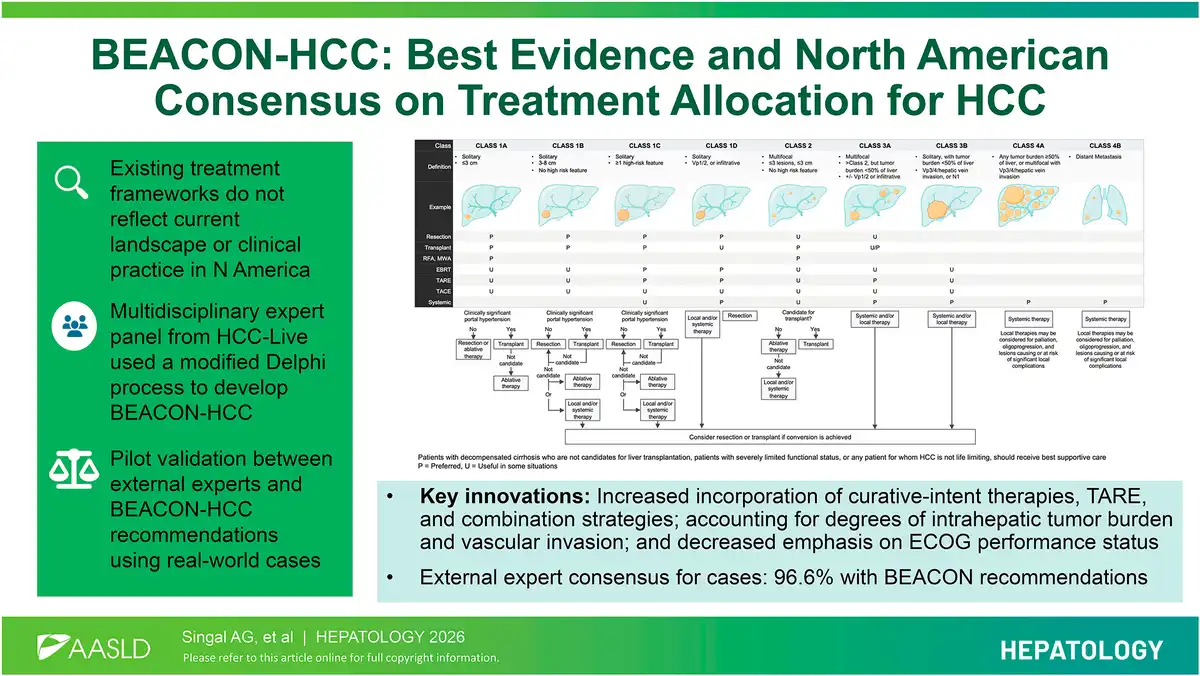
This post-hoc analysis of the HIMALAYA Phase III trial explores the link between immune-mediated adverse events and overall survival in unresectable HCC, revealing that patients on the STRIDE regimen who experienced imAEs had improved survi

TAF2 in Hepatocellular Homeostasis and Tumorigenesis: Navigating the 8q24.12 Amplicon in Liver Cancer
This review explores the dual role of TAF2 as a basal transcription factor essential for hepatocyte survival and an oncogenic driver in hepatocellular carcinoma when overexpressed via 8q24.12 amplification.
Browse by specialty
Open language-specific specialty feeds and department pages.