OB/GYN & Women’s Health
Latest news
62 articles · 20 / page

GLP-1 Receptor Agonists May Outperform Bariatric Surgery in Obese Postmenopausal Breast Cancer Patients, Study Suggests
A large real-world study found GLP-1 receptor agonists were associated with better survival and lower locoregional recurrence than bariatric surgery in postmenopausal women with obesity and breast cancer.
Prehabilitation During Neoadjuvant Chemotherapy May Improve Surgery Eligibility and Chemotherapy Delivery in Advanced Ovarian Cancer
A matched-cohort study found that multimodal prehabilitation during neoadjuvant chemotherapy improved chemotherapy delivery and increased the chance of interval debulking surgery in advanced ovarian cancer, with the strongest benefits seen

When the Prenatal Ultrasound “Level” Does Not Match the Neurologic Reality: Mapping Anatomical-Motor Discordance in Open Spinal Dysraphism
In 187 fetuses with open spinal dysraphism, prenatal motor level was more caudal than the anatomical level in 85% of cases, with larger gaps in myeloschisis and higher lesions.

Why the Spinal Lesion Level on Prenatal Ultrasound Often Does Not Match Fetal Motor Function
Prenatal ultrasound in open spinal dysraphism often underestimates functional level: in 85% of fetuses, motor level was more caudal than anatomy. Lesion type and height influenced the gap, with implications for counseling and fetal care pla

From Symptoms to Preferences: Q-Methodology Maps What Women With Chronic Pelvic Pain Want From Treatment
A Q-methodology study translated chronic pelvic pain experiences into five patient preference profiles to better align counseling and treatment selection with what matters most to patients.

Hantavirus in Pregnancy: Why Obstetricians Need a High Index of Suspicion
Hantavirus infection in pregnancy is rare but potentially fatal. Obstetricians should suspect it after rodent or travel exposure, recognize rapid respiratory decline, and prioritize supportive critical care because no proven antiviral thera

Pregnancy-Associated SCAD in Focus: What the iSCAD Registry Reveals About a Rare but High-Stakes Cause of MI in Women
The iSCAD Registry study highlights distinctive reproductive and psychosocial features among women with pregnancy-associated SCAD, underscoring the need for individualized counseling, heightened diagnostic suspicion, and multidisciplinary f

Avelumab Plus Methotrexate in Low-Risk Gestational Trophoblastic Tumors: A Promising First-Line Signal From TROPHAMET
TROPHAMET found that first-line avelumab plus methotrexate achieved 96.2% hCG normalization in low-risk gestational trophoblastic tumors with manageable toxicity, no relapses at 41 months, and preserved fertility.

Pelvic Exenteration for Recurrent Cervical Cancer Can Deliver Long-Term Survival, but Survivorship Burden Remains Substantial
A mixed-methods study suggests pelvic exenteration offers meaningful long-term survival in selected patients with recurrent cervical cancer, while qualitative data reveal persistent physical, social, and sexual burdens that standardized qua

Pregnancy in Women With Vascular Malformations Carries High Risks of Postpartum Hemorrhage and Symptom Worsening, While Thromboembolism Clusters in Extensive Lower-Extremity Disease
A nationwide Dutch study suggests pregnancy in women with peripheral vascular malformations is frequently complicated by symptom progression and postpartum hemorrhage, with venous thromboembolism concentrated in extensive lower-extremity ma

Postmenopausal Migraine Signals Higher Ischemic Stroke Risk, Not Hemorrhagic Stroke, in the Women’s Health Initiative
In a large cohort of postmenopausal women, migraine history was associated with a modest increase in ischemic stroke risk over 20 years, while total and hemorrhagic stroke risks were not significantly elevated.

Fovinaciclib for First-Line Therapy of Advanced Breast Cancer: A Randomized Clinical Trial
Adding fovinaciclib to first-line aromatase inhibitor therapy significantly prolonged progression-free survival in advanced hormone receptor-positive, ERBB2-negative breast cancer, with manageable safety and no clear quality-of-life loss.

Brazil’s Maternal Mortality Ratio May Be Substantially Higher Than Official Reports Because of Death Certificate Coding Errors
A national Brazilian analysis found 3,480 maternal deaths were missed by official coding from 2010 to 2021, raising the median maternal mortality ratio from 58.2 to 67.5 per 100,000 live births.

Cold Knife Conization Was Linked to Lower Long-Term Cervical Lesion Recurrence Than LEEP in Two Real-World Cohorts
In Swedish and Chinese cohorts, cold knife conization was associated with lower recurrent cervical lesion risk and faster HPV clearance than LEEP, although important questions remain about residual confounding, obstetric trade-offs, and pro

Homologous Recombination Repair Gene Alterations Are Uncommon and Not Prognostic in Molecularly Classified Endometrial Cancer
In a 298-patient endometrial cancer cohort, HRR gene alterations were rare, enriched in aggressive tumor subsets, but did not predict survival or platinum sensitivity beyond integrated molecular classification.

Cesarean Scar Pregnancy Continued Beyond the First Trimester Carries High Risks of Pregnancy Loss, Placenta Accreta Spectrum, and Hysterectomy
International registry data show that expectant management of live cesarean scar ectopic pregnancy is frequently followed by second-trimester loss, placenta accreta spectrum, and peripartum hysterectomy, with first-trimester ultrasound mark

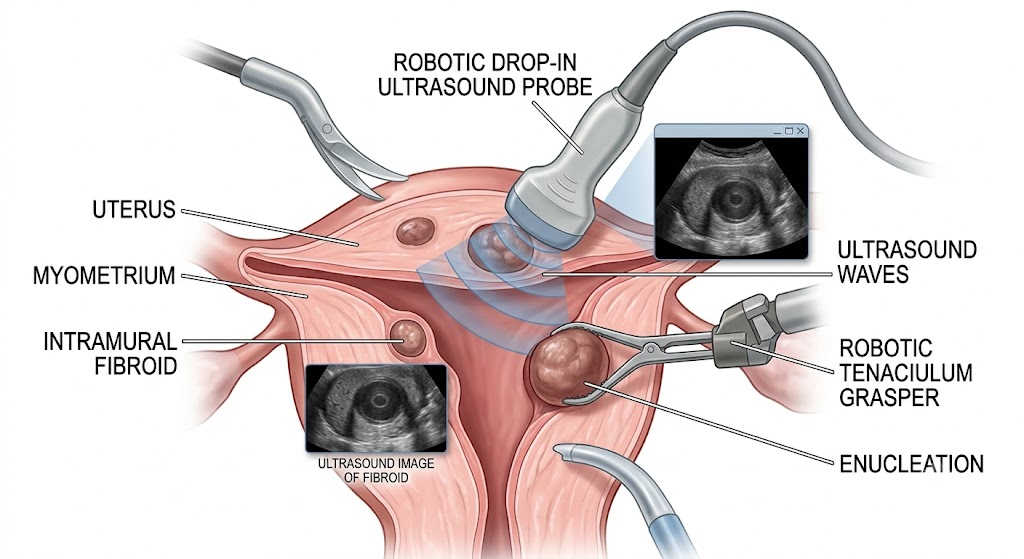
Fibroids Do Not Uniformly Regress After Menopause: Reframing Leiomyoma Care Across the Menopausal Transition
A contemporary review shows that uterine leiomyomas often persist across menopause, requiring symptom-driven evaluation, structured imaging, and individualized management rather than assumptions of spontaneous regression.

Tumor Morcellation, Not Minimally Invasive Surgery Alone, Drives Worse Disease-Free Survival in Stage I Adult Granulosa Cell and Sertoli-Leydig Cell Tumors
In stage I ovarian sex cord-stromal tumors, stage IC and tumor morcellation were independently associated with recurrence, while minimally invasive surgery itself was not after adjustment.

Phenotyping Preeclampsia Using Unsupervised Machine Learning: A Prospective Cohort Study
Unsupervised machine learning identified three distinct preeclampsia phenotypes linked to timing of delivery, placental dysfunction, fetal growth, and complications, suggesting a path toward more personalized risk assessment and management.

Severe Maternal Morbidity at Delivery Is Linked to Shorter and Less Exclusive Breastfeeding in Nulliparous U.S. Patients
In a large prospective U.S. cohort, severe maternal morbidity did not reduce breastfeeding initiation, but it was associated with lower odds of breastfeeding beyond 6 months and of exclusive breastfeeding.
Browse by specialty
Open language-specific specialty feeds and department pages.