General Surgery
Latest news
203 articles · 20 / page

Irregular Sleep Timing in Surgeons May Increase Postoperative Major Adverse Events
A multicenter prospective cohort study suggests that substantial surgeon social jet lag, but not midsleep variability alone, is associated with higher 30-day major adverse event risk after surgery and correlates with surgeon burnout.

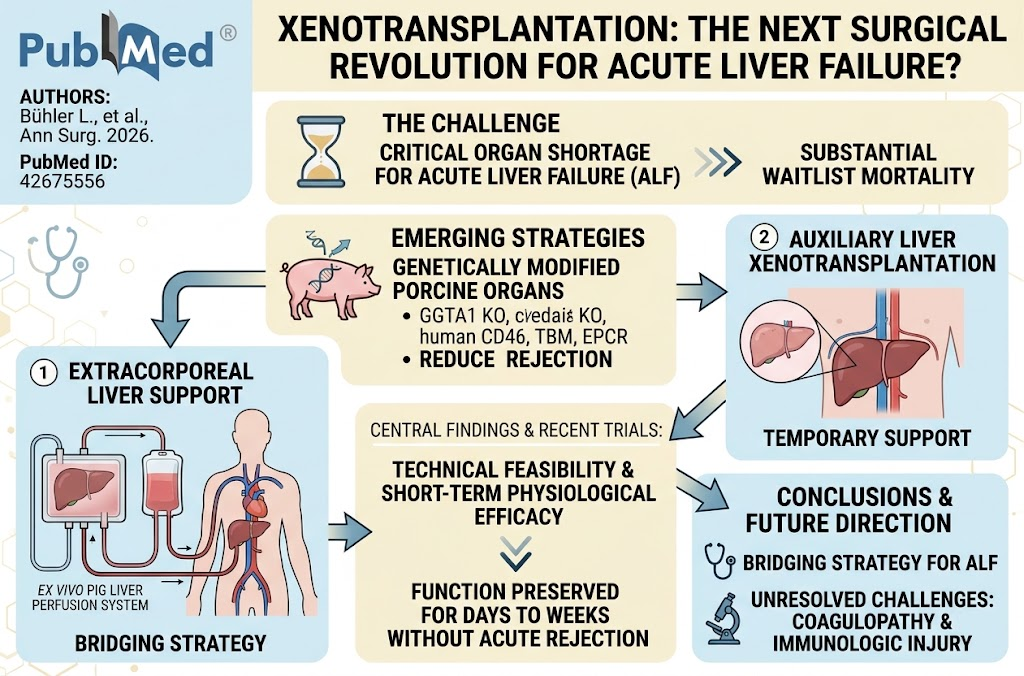
SLA-DR–Deleted Donor Pigs Show Durable Kidney Xenograft Function and a Favorable Safety Profile in Rhesus Monkeys
CRISPR-engineered GGTA1/B4GALNT2/SLA-DR knockout pigs remained healthy, screened negative for 55 zoonotic pathogens, and supported long-term renal xenograft function in rhesus monkeys when preformed anti-SLA antibodies were absent.

Machine Learning Clustering Reveals Distinct Phenotypes in Bilateral Hepatocellular Carcinoma
Machine learning identified two distinct bilateral hepatocellular carcinoma phenotypes with different tumor burdens, surgical approaches, and outcomes, suggesting preoperative risk stratification may improve patient selection and treatment

Portal-Venous Hypothermic Oxygenated Perfusion in Liver Transplantation: Evidence Synthesis from the Bridge to HOPE Trial and Global Clinical Landscape
This review synthesizes findings from the Bridge to HOPE multicenter trial and other recent evidence, demonstrating that portal-venous hypothermic oxygenated perfusion (HOPE) significantly reduces early allograft dysfunction, improves bilia

Relaxing Diaphragmatic Incisions May Improve Symptom Outcomes in Difficult Hiatal Hernia Repair, but Morphologic Durability Remains Unproven
In complex redo and giant hiatal hernia repair, lateral diaphragmatic relaxing incisions were feasible and associated with favorable patient-reported symptom control at 24 months, although objective recurrence data are still lacking.

Role of Relaxing Lateral Incisions as an Add-On to Difficult Hiatal Repair in Redo and Giant Hernia Cases
A modified diaphragmatic relaxing incision technique may reduce tension during difficult redo and giant hiatal hernia repairs, with most patients reporting improved reflux symptoms and low postoperative symptom burden.

Onlay Mesh Was Linked to Lower Reoperation and Bowel Obstruction Risk Than Retromuscular or IPOM Repair in Primary Ventral Hernia Surgery
A nationwide Danish cohort found lower risks of reoperation for recurrence and bowel obstruction after onlay mesh placement compared with retromuscular repair and IPOM in elective primary ventral hernia repair.

What the New Thyroid Surgery Consensus Means for Same-Day Care
The American Thyroid Association’s updated consensus refines who can safely undergo outpatient thyroid surgery and what teams must do before, during, and after the operation to reduce complications.

Higher Hospital Myectomy Volume Was Linked to Fewer Early Complications in Dutch Hypertrophic Obstructive Cardiomyopathy Surgery
In a 12-hospital Dutch registry, surgical myectomy effectively relieved LVOT obstruction, but 30-day complications were more frequent in low-volume centers, in women, and when at least two concomitant procedures were performed.

Marked Preoperative TSH Elevation Signals More Difficult Thyroidectomy in Graves’ Disease
In a large single-center cohort, Graves’ disease patients with preoperative TSH ≥10.0 μIU/mL had greater blood loss, larger preoperative thyroid enlargement, and longer operations, suggesting that avoiding iatrogenic hypothyroidism during s

Routine Surgical Left Atrial Appendage Occlusion Did Not Improve 1-Year Outcomes in Valvular Surgery Patients Without Atrial Fibrillation: Insights From the OPINION Trial
In OPINION, prophylactic left atrial appendage occlusion during valve surgery did not significantly lower stroke, TIA, or cardiovascular death at 1 year in patients without pre-operative atrial fibrillation.

Activity and Physiological Stress Within 90 Days After Minimally Invasive and Open Pancreatoduodenectomy
Wearable activity tracking in the DIPLOMA-2 trial found that minimally invasive pancreatoduodenectomy led to more activity for about 5 weeks and less physiologic stress up to 90 days versus open surgery.

Most Patients With Uncertain Response After Neoadjuvant Chemoradiotherapy for Esophageal Cancer Still Harbor Residual Disease
In the SANO cohort, 85% of patients with uncertain post-chemoradiotherapy response had residual tumor at esophagectomy, supporting surgery for most, while highlighting a notable complete response subgroup among squamous cell carcinoma with

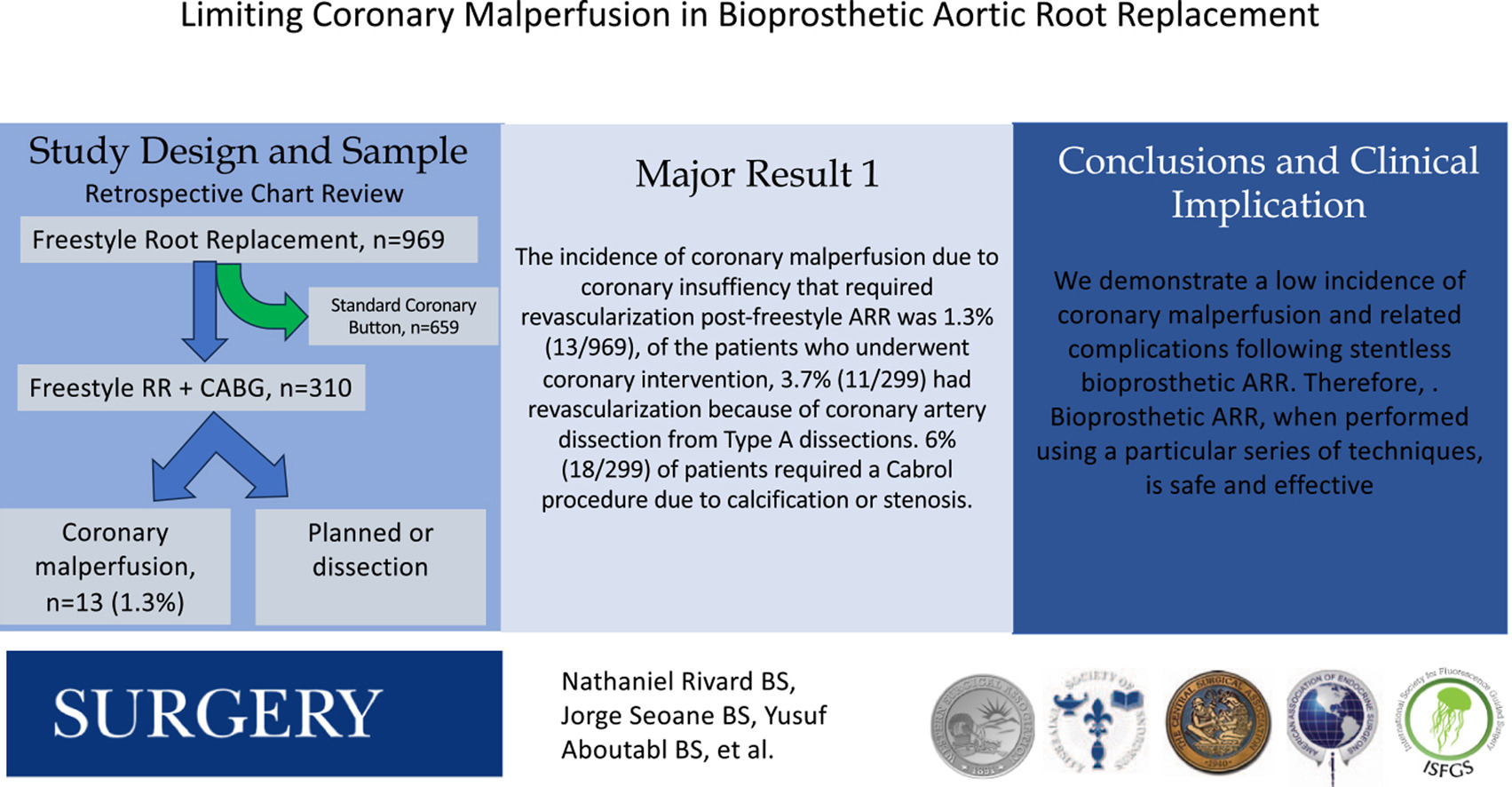
Frozen Elephant Trunk for Acute Type A Aortic Dissection Delivers Durable 20-Year Outcomes and Fewer Late Aortic Events Than Hemiarch Repair
A 20-year single-center experience suggests frozen elephant trunk plus total arch replacement offers durable survival and fewer late adverse aortic events than hemiarch repair in acute type A aortic dissection.

Higher-Fidelity Enhanced Recovery Shortened Stay and Reduced Complications in Children Undergoing GI Surgery, Even Though the Overall Trial Was Neutral
In a stepped-wedge trial across 18 US centers, a pediatric GI surgery enhanced recovery protocol did not improve length of stay overall, but patients receiving at least 13 protocol elements had shorter stays, fewer complications, faster die

ABRUPT2 Trial: 5% Albumin Reduced Fluid Requirements in Major Burn Resuscitation
ABRUPT2 found that adding 5% albumin to lactated Ringer’s significantly reduced fluid needs in the first 48 hours after major burns, without clear differences in mortality, kidney injury, or healing time.

Fatigue After Thyroidectomy: What Patients Actually Experience
A qualitative study found that fatigue after thyroidectomy is common, disruptive, and often unexpected. Patients described major impacts on work and daily life, and many wanted surgeons to warn them about it before surgery.

Survival Outcomes After Neoadjuvant Chemotherapy in Node-Positive Hormone Receptor-Positive Breast Cancer”,
A national database study found that neoadjuvant chemotherapy was linked to worse overall survival than upfront surgery in node-positive hormone receptor-positive, HER2-negative breast cancer, except in patients who achieved nodal complete

Clipped Axillary Node Pathology May Support Axillary Surgery De-escalation After Neoadjuvant Therapy in Occult Breast Cancer
In occult breast cancer, clipped-node pathology after neoadjuvant therapy tracked residual axillary disease with high specificity, supporting limited axillary surgery in selected patients, especially those with cN1–cN2 disease.

Drug-Eluting Resorbable Scaffold Maintains a 3-Year Patency Advantage Over Angioplasty in Infrapopliteal CLTI
Three-year LIFE-BTK data show sustained patency and reintervention benefits with a drug-eluting resorbable scaffold versus angioplasty in selected patients with infrapopliteal CLTI, with comparable limb salvage and safety.
Browse by specialty
Open language-specific specialty feeds and department pages.