Latest news
134 articles · 20 / page

Explainable Artificial Intelligence for Predicting Refractory Ulcerative Colitis: Insights from a Japanese Nationwide Registry
A machine learning model using nationwide registry data accurately predicts long-term remission in refractory ulcerative colitis and identifies key prognostic factors such as pseudopolyps.

AI-Powered Image Recognition Revolutionizes Aspergillus Species Identification: Insights from a Proof-of-Concept Study
A proof-of-concept study demonstrates that AI-based image recognition, using the ResNet-18 algorithm, can accurately identify clinically important Aspergillus species, offering a rapid, cost-effective alternative to traditional methods.

Revolutionizing Ankylosing Spondylitis Assessment: AI-Driven Severity Inspection Model Enhances Diagnostic Precision
An AI-based model for assessing ankylosing spondylitis severity using spinal X-rays and mSASSS demonstrates high accuracy, offering clinicians a rapid, reliable tool and reducing human resource demands.

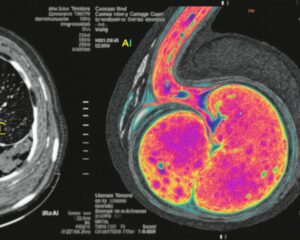
AI-Powered Coronary Calcium Screening: Transforming Cardiovascular Risk Assessment in the Veterans Affairs Health System
AI-CAC enables automated, accurate coronary artery calcium scoring from routine chest CTs, offering scalable, opportunistic cardiovascular risk stratification across diverse populations.

AI-Powered Smile Analysis: A Breakthrough in Parkinson’s Disease Screening
AI analysis of smile videos demonstrates high accuracy in detecting Parkinson’s disease, offering a scalable and accessible screening solution with strong generalizability across populations.

Can Merely Seeing Infection Activate Real Immunity? The Neuroscience of Virtual Pathogens and Immunological Anticipation
A pioneering study demonstrates that visual cues of infection in virtual reality can trigger real immune activation, revealing a rapid neural-immune interface with potential implications for medicine, psychology, and vaccine development.

Artificial Intelligence in Clinical Trials: Building a Value-Based Framework for Effective Adoption
AI offers transformative potential for clinical trials, but realizing its value demands a robust, stakeholder-driven framework to guide adoption and assess impact across the trial lifecycle.

Evaluation of ChatGPT-4 as an Online Outpatient Assistant in Puerperal Mastitis Management: An Observational Study Analysis
This study assesses ChatGPT-4’s effectiveness as a virtual assistant in managing puerperal mastitis, focusing on accuracy, clarity, and safety in patient communication.

Online Video Versus Face-to-Face Preoperative Consultation for Major Abdominal Surgery: Insights from the VIDEOGO Non-Inferiority Trial
The VIDEOGO trial shows that online video consultations are non-inferior to face-to-face consultations for preoperative assessment in major abdominal surgery, achieving similar patient satisfaction and information recall.

Comparative Analysis of Virtual Reality Therapies for Psychotic Symptoms: Auditory Hallucinations vs. Persecutory Delusions
Two randomized controlled trials evaluated immersive VR therapies targeting auditory verbal hallucinations and persecutory delusions in schizophrenia and psychosis, revealing modest benefits for hallucinations but no superior effect for cog

Demographic Data Gaps in FDA Authorization of AI-Based Devices for Alzheimer’s Disease and Related Dementias
Limited demographic data transparency in FDA-authorized AI devices for Alzheimer’s may hinder equitable care and generalizability, highlighting a crucial need for improved dataset representativeness and regulatory oversight.

Systemic Bias in AI: A Double-Edged Sword for Hospital Diagnostic Accuracy
Systemically biased AI models can reduce clinicians’ diagnostic accuracy, and explanations alone may not mitigate this harm, according to a multicenter study involving over 450 clinicians.

AI Doctors: How Artificial Intelligence is Transforming Your Medical Future
Explore how artificial intelligence is reshaping healthcare, from diagnosis to patient care, and what it means for doctors and patients alike.

Is Your Smartwatch Saving Your Life? The Future of Digital Health is Here
Smartwatches are transforming healthcare, from heart monitoring to early disease detection. But are they truly lifesavers—or can they mislead us? Discover the science, the myths, and the future of wearable health tech.
Browse by specialty
Open language-specific specialty feeds and department pages.