Rehabilitation Medicine
Latest news
43 articles · 20 / page

Optimizing Muscle Recovery: Evidence-Based Insights on Cold, Heat, Contrast, and Hypoxia Therapies for Post-Exercise Muscle Damage
This review synthesizes evidence from randomized controlled trials on environmental stress-based therapies—cold, heat, contrast, and hypoxia—for enhancing muscle recovery after exercise-induced muscle damage, emphasizing the importance of a
Higher Endogenous Testosterone Is Associated with Lower Risk of Knee Osteoarthritis in Women
In a large UK Biobank cohort, higher circulating testosterone was associated with lower prevalent and incident knee osteoarthritis (KOA) in middle-aged and older women, while SHBG and estradiol showed no clear associations.

Two-thirds of ACL-injured Patients Avoid Surgery at 2 Years: Nationwide Registry Shows Rehab-first Strategy Often Works but Younger, Pivoting-sport Athletes and Meniscal Tears Predict Delayed Reconstruction
A Norwegian registry study reports that 63% of patients with primary ACL injury initially managed non‑operatively remained non‑operative at two years; younger age, participation in pivoting sports and baseline meniscal injury increased risk

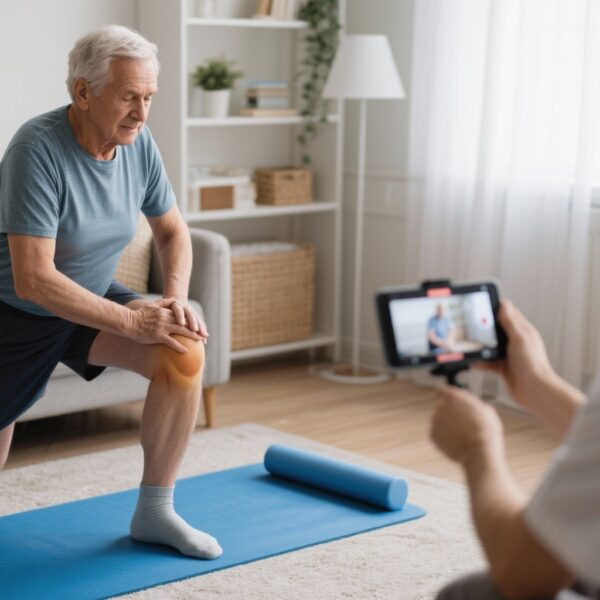
Physical Therapy for Degenerative Meniscal Tear: No Added Benefit Over Home Exercise Alone in Knee Pain Management
A randomized trial shows that physical therapy and text message reminders do not significantly improve knee pain outcomes beyond a simple home exercise program in patients aged 45-85 with degenerative meniscal tears.

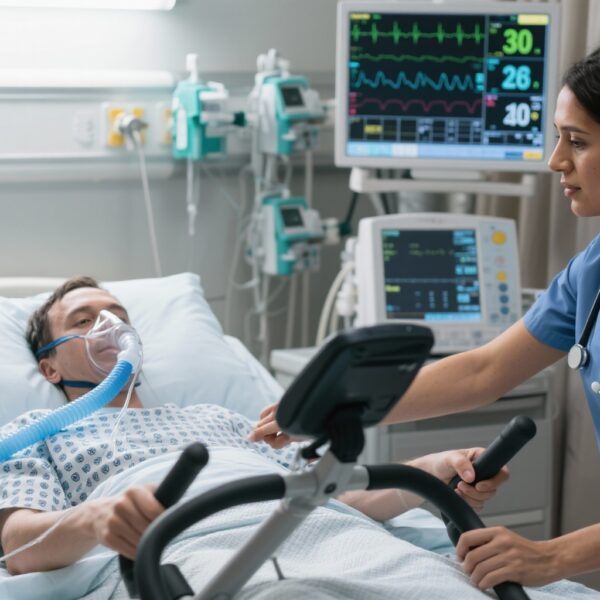
Evaluating the Cost-Effectiveness of Early In-Bed Cycling Plus Routine Physiotherapy in Mechanically Ventilated ICU Patients: Insights from the CYCLE Trial
This economic evaluation from the CYCLE randomized trial found no significant cost or quality-adjusted life-year benefit by adding early in-bed cycling to usual physiotherapy for ICU patients on mechanical ventilation, underscoring a need f

Enhanced Exercise Rehabilitation via Tailored Adherence Support Improves Outcomes in Vertebral Fragility Fractures: Insights from the OPTIN Randomised Controlled Trial
Integrating tailored adherence support into exercise rehabilitation for vertebral fragility fractures significantly improves functional mobility and walking capacity compared to standard exercise alone at 12 months.

Integrating Obesity Management into Cardiac Rehabilitation: Challenges, Evidence, and Future Directions
Obesity management in cardiac rehabilitation (CR) is underutilized despite its cardiovascular benefits. This review explores the evidence, complexities, patient perspectives, and healthcare provider attitudes, emphasizing tailored strategie

Enhancing Oral Function through Long-Term Rehabilitation in Tongue and Non-Tongue Cancer Patients
This review examines a study on the long-term impact of an oral rehabilitation program on patients with and without tongue cancer, highlighting benefits and clinical implications.

Long-Term Unmet Needs and Rehabilitation Gaps: Impacts on Stroke Survivors’ Quality of Life in Korea
This study highlights how long-term unmet needs and rehabilitation deficits adversely affect the quality of life among stroke survivors in South Korea, emphasizing the need for community-based support systems.

Minimally Invasive Ceramic Laminate Veneers for Maxillary Anterior Esthetic Rehabilitation: A 12+ Years Follow-Up
This case report details a long-term successful esthetic rehabilitation using thin feldspathic ceramic laminate veneers to close diastemas and improve tooth morphology, with a follow-up exceeding 12 years.

Addressing Disparities in Post-Stroke Community Rehabilitation: Insights from the COMPASS Study
This article analyzes recent findings on sociodemographic and geographic disparities in community-based stroke rehabilitation from the COMPASS trial.

Harnessing Wearable Technology to Boost Cardiac Rehabilitation Adherence in CHD Patients: Insights from a Randomized Trial
This study evaluates how smartwatch-assisted home-based cardiac rehab improves exercise adherence and health outcomes in coronary heart disease patients.

Revolutionizing Cardiac Rehab: The Impact of Wearable Technology and Online Coaching
This review discusses a landmark study demonstrating how wearable devices and online coaching improve exercise capacity in coronary artery disease patients, highlighting advancements in remote cardiac rehabilitation.

X-CircuiT versus Conventional Exercise in Home-Based Cardiac Rehabilitation: A Non-Inferiority Randomized Trial for CAD Patients
This randomized controlled non-inferiority trial demonstrates that X-CircuiT, a smartphone-guided multi-component exercise regime, is as effective and safe as conventional exercise in improving fitness in home-based cardiac rehabilitation f

Bridging the Gap after Pulmonary Rehabilitation: Evaluating the PICk UP Programme in COPD Management
A randomized trial shows that a six-month personalised community-based physical activity programme sustains physical activity improvements and functional performance post-pulmonary rehabilitation in COPD patients, though other health benefi

Optimizing Critical Care Outcomes: The Pivotal Role of Rehabilitation and Physiotherapy
This article reviews current evidence and clinical practices for physiotherapy in ICU settings, emphasizing benefits, safety, staffing challenges, and future directions in critical care rehabilitation.

Optimizing Exercise Progression in COPD with Chronic Respiratory Failure: Insights from a Pilot Trial of High Intensity Interval Training
This pilot randomized trial investigates the safety, feasibility, and efficacy of high intensity interval training modalities compared to constant-load endurance training in COPD patients with chronic respiratory failure, revealing promisin

Electroacupuncture in Ischemic Stroke: Integrating Preclinical Evidence into Clinical Potential
This review synthesizes preclinical evidence on electroacupuncture’s mechanisms in ischemic stroke, highlighting its therapeutic potential and factors influencing efficacy.

Evaluating Telestroke’s Impact on Acute Ischemic Stroke Treatment Timeliness and Outcomes
Telestroke evaluation increases thrombolysis rates but is associated with longer treatment times and delays in patient transfers in acute ischemic stroke, highlighting the need to address modifiable treatment delays.

Impact of Early Extracranial Surgery on One-Year Outcomes After Traumatic Brain Injury: Insights from the TRACK-TBI Study
Early extracranial surgery following moderate-severe traumatic brain injury or positive CT findings is linked to worse cognitive, functional, and quality of life outcomes at one year, highlighting the need to refine surgical timing and post
Browse by specialty
Open language-specific specialty feeds and department pages.