Gastroenterology
Latest news
416 articles · 20 / page

Holding GLP-1/GIP Agonists Before Upper Endoscopy Reduces Residual Gastric Volume Risk: Insights from the OCULUS Randomized Trial
The OCULUS randomized trial demonstrates that continuing GLP-1/GIP agonists before upper endoscopy significantly increases the risk of clinically significant residual gastric volume compared to holding a single dose, providing crucial evide

Telemedicine-Delivered Nutritional Therapy Slashes Risk of Advanced Liver Disease in Patients with Metabolic Dysfunction
A large-scale retrospective study demonstrates that individualized carbohydrate reduction through remote care significantly reduces the incidence of MASH and advanced liver complications in patients with type 2 diabetes and obesity compared

Mapping the Escape: How Spatial Transcriptomics Reveals the Complex Resistance Landscape in HER2-Positive Gastric Cancer
Researchers utilized spatial transcriptomics to uncover how HER2-positive gastric cancers evolve resistance to trastuzumab and T-DXd, identifying EMT, ERAD pathways, and metabolic shifts as key survival mechanisms that could inform future s

Mechanotransduction in Congestive Hepatopathy: The Integrin αV-YAP-CTGF Axis as a Driver of Fibrosis and Carcinogenesis
This review synthesizes recent findings on how mechanical stress in congestive hepatopathy activates the Integrin αV-YAP-CTGF pathway in liver sinusoidal endothelial cells, leading to fibrosis and liver cancer.

Evolution of Acute Upper GI Bleeding Management: Lessons from the 2022 UK National Audit
This article examines the 2022 UK audit of acute upper gastrointestinal bleeding, highlighting improved mortality rates despite an aging, more complex patient population, while emphasizing the urgent need for restrictive transfusion practic

Laparoscopic Repeated Pancreatectomy: Breaking the Re-operation Barrier with Safety and Precision
A monocentric study of 72 cases demonstrates that laparoscopic repeated pancreatectomy is as safe and effective as the open approach, offering potential benefits in blood loss and venous preservation in high-volume centers.

Metabolic Synergy: How Obesity and Diabetes Amplify Liver Disease Risk in Alpha-1 Antitrypsin Deficiency
A large-scale longitudinal study reveals that obesity and diabetes synergistically amplify the risk of advanced liver disease in individuals with Alpha-1 Antitrypsin Deficiency (AATD), while also identifying a complex relationship between b

Rethinking the Urgency of Post-FIT Colonoscopy: Why Compliance May Take Precedence Over Speed
A nationwide French cohort study of over 370,000 individuals reveals that delaying colonoscopy for up to 24 months after a positive FIT result does not significantly increase the risk of advanced-stage colorectal cancer, though high fecal h

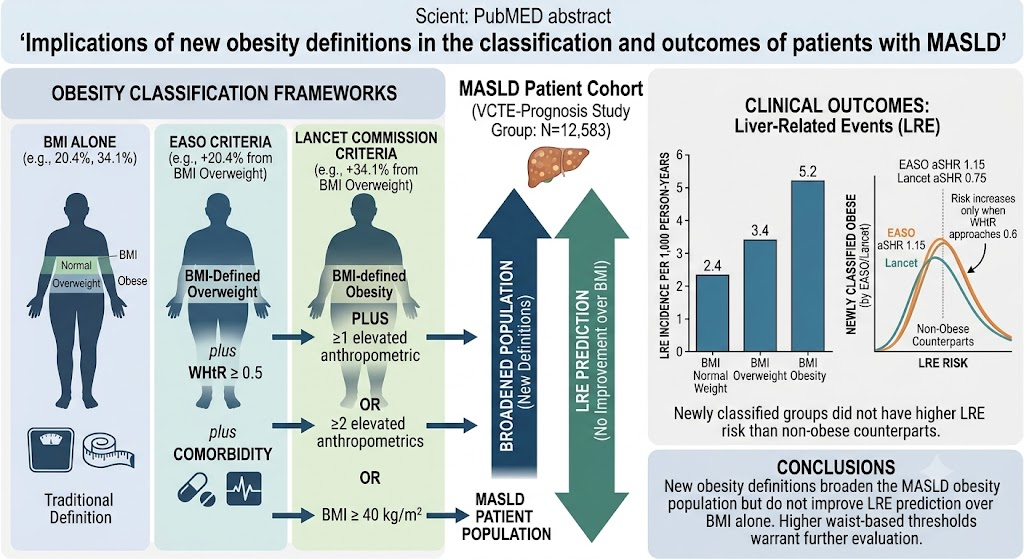
Navigating the New Frontier of MASLD: An Updated Clinical Pathway for Liver Health
This article summarizes the updated clinical care pathway for Metabolic Dysfunction-Associated Steatotic Liver Disease (MASLD), highlighting new diagnostic nomenclature, risk stratification tools, and the integration of the first FDA-approv

Balancing the Scales: The FYN/LCK Kinase Switch Rescues Progenitor T Cells to Overcome Immunotherapy Resistance in Hepatocellular Carcinoma
A breakthrough study reveals that the balance between FYN and LCK kinases acts as a metabolic switch in hepatocellular carcinoma. By modulating this axis through low-dose LCK inhibition, researchers successfully preserved T-cell stemness an

Toxicity as a Proxy for Efficacy: How Immune-Mediated Adverse Events Correlate with Survival in the HIMALAYA Trial
This post-hoc analysis of the HIMALAYA Phase III trial explores the link between immune-mediated adverse events and overall survival in unresectable HCC, revealing that patients on the STRIDE regimen who experienced imAEs had improved survi

Targeted Gut-Liver Axis Modulation: The Therapeutic Potential of Gut-Restricted LXR Agonists in Short Bowel Syndrome
This review explores the development of WUSTL0717, a gut-restricted LXR agonist that mitigates liver injury in short bowel syndrome by leveraging the intestinal HDL-ApoA1 pathway without inducing systemic metabolic complications.

Universal ESD for Large Barrett’s Cancers: Shifting the Paradigm Toward Curative R0 Resection
A multicenter study demonstrates that prioritizing endoscopic submucosal dissection (ESD) for Barrett’s cancers >15mm significantly improves R0 resection rates and survival, particularly in T1b disease, compared to traditional endoscopic mu

Artificial Intelligence in Gastric Endoscopy: Decoding the Findings of a Landmark Multicenter Randomized Controlled Trial
A large-scale multicenter RCT investigating AI-assisted gastric neoplasm detection found no significant improvement in pathologically confirmed detection rates but demonstrated significant reductions in procedural blind spots and benefits f

Uncovering the Hepatocyte CEBPA-ORM1 Axis: A Novel Regulatory Pathway and Biomarker in Alcohol-Associated Liver Disease
This review synthesizes recent findings identifying the CEBPA-ORM1 axis as a critical suppressor of alcohol-associated liver disease, highlighting its potential as both a therapeutic target and a diagnostic biomarker for disease staging.

Beyond Clinical Remission: Why Diet and Gut Signatures Remain Perturbed in Crohn’s Disease
A multi-omic study reveals that despite effective immune suppression, Crohn’s disease patients in remission exhibit persistent dietary, microbial, and metabolic abnormalities. This research highlights the critical role of ultraprocessed foo

Global Diversity in Autoimmune Gastritis: Deciphering Regional Phenotypes and Neoplastic Risks
An international multicentre study of 1,240 patients reveals that autoimmune gastritis presentation varies by region, with distinct risk factors—including age, intestinal metaplasia, and extreme hypergastrinemia—driving the development of g

New Consensus on APC Mosaicism: Transforming the Diagnosis and Management of Unexplained Polyposis
A landmark study in Gastroenterology reveals that APC mosaicism accounts for nearly 10% of unexplained colorectal polyposis. New guidelines recommend specific testing thresholds and surveillance strategies to prevent colorectal cancer in th

Unmasking DARS1: A Dual-Action Driver of Hepatocellular Carcinoma Aggressiveness via SAGA-MYC Signaling
Researchers have identified DARS1 as a critical oncogenic driver in hepatocellular carcinoma. Beyond its role in protein synthesis, DARS1 enters the nucleus to modulate MYC signaling through the SAGA complex, offering a new therapeutic vuln

The Tryptophan Tug-of-War: How Faecalibacterium prausnitzii Counteracts Bacteroides fragilis in Colorectal Cancer
A comprehensive multi-omics study reveals that Faecalibacterium prausnitzii metabolizes tryptophan into picolinic acid, which antagonizes the pro-tumorigenic effects of enterotoxigenic Bacteroides fragilis by down-regulating TCERG1 and CKAP
Browse by specialty
Open language-specific specialty feeds and department pages.