New International Consensus: Colorectal Cancer Risk in MASLD — What Clinicians Need to Know
Introduction and Context
Metabolic dysfunction‑associated steatotic liver disease (MASLD) is now the world’s most common chronic liver disorder and often coexists with obesity, insulin resistance, diabetes and other cardiometabolic conditions. In parallel, colorectal cancer (CRC) remains a leading cause of cancer morbidity and mortality worldwide. A growing body of epidemiological and mechanistic data has linked MASLD (previously termed nonalcoholic fatty liver disease or NAFLD) to a higher risk of colorectal neoplasia. However, clinicians have lacked a clear, expert‑driven approach to assessing and managing CRC risk among people with MASLD.
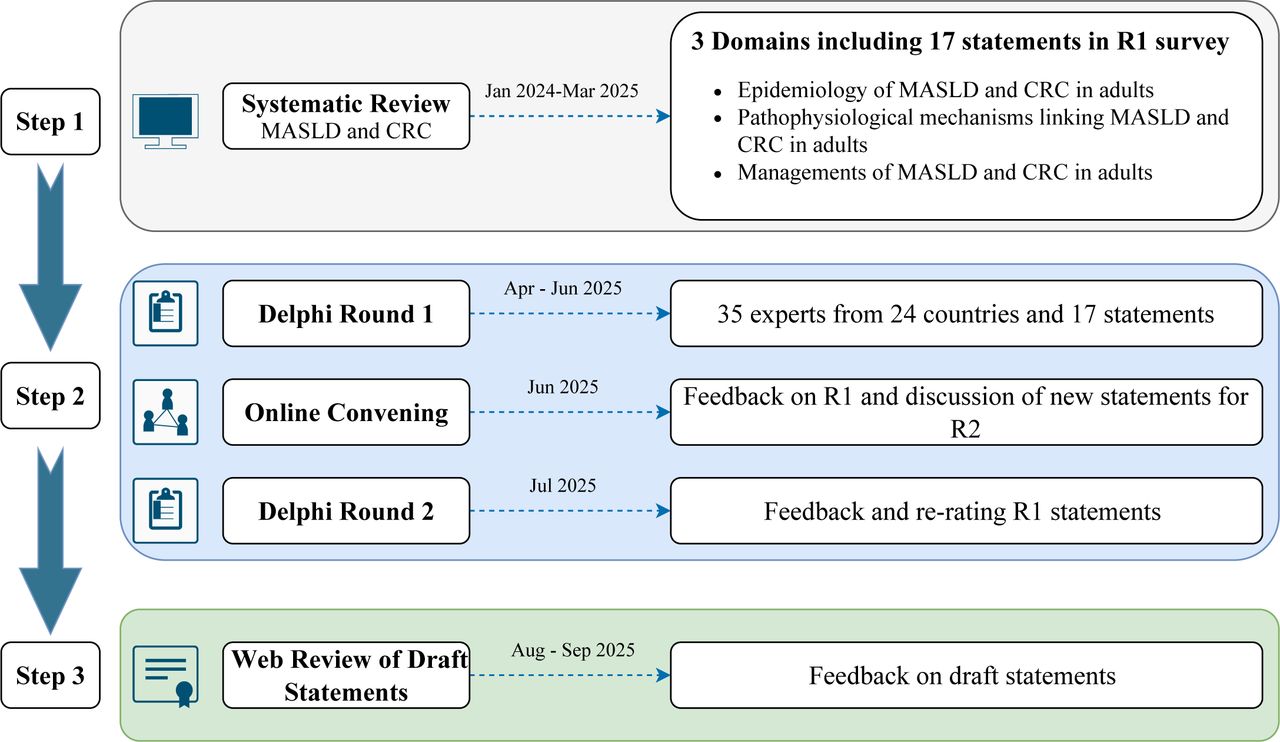
The international Delphi consensus reported by Wu et al. in Gut (2026) convened 35 multidisciplinary experts from six continents to assess 17 statements across epidemiology, pathogenesis and management of CRC risk in MASLD. The panel reached consensus on all statements and issued practical, patient‑centered recommendations emphasizing earlier, risk‑adapted CRC screening and integrated metabolic management to reduce CRC burden in this population (Wu et al., Gut 2026). This article summarizes the core findings and practical implications for clinicians and health systems.
Sign in free to continue reading
Create or use your MedXY account to unlock the complete article.
This article was created using several editorial tools, including AI, as part of the process. Human editors reviewed this content before publication.