Cardiology
Latest news
1101 articles · 20 / page

AI-Based OCT Analysis Outperforms Human Experts in Predicting Outcomes from Non-Culprit Lesions: Insights from the PECTUS-AI Study
The PECTUS-AI study demonstrates that AI-based identification of thin-cap fibroatheromas using OCT provides superior prognostic value for cardiovascular events compared to manual analysis, particularly when assessing the entire imaged coron

Beyond Body Mass Index: How Sex-Specific Fat Distribution Drives Cardiovascular Ageing
A large-scale UK Biobank study reveals that while visceral and liver fat accelerate cardiovascular ageing in both sexes, subcutaneous and android fat specifically impact males, whereas gynoid fat may offer protective benefits.

Elevated LDL-C Increases Cardiovascular Risk in Symptomatic Patients Despite a Coronary Calcium Score of Zero
A large-scale cohort study from the Western Denmark Heart Registry demonstrates that high LDL-C remains a significant predictor of non-calcified plaque and coronary heart disease events in patients with a CAC score of zero, particularly amo

Tracking the Invisible: CMR-ECV Mapping Reveals Amyloid Stabilization with Patisiran and Predicts Mortality in ATTR-CM
A landmark study demonstrates that CMR-derived extracellular volume (ECV) mapping effectively monitors amyloid burden in ATTR-CM. While untreated patients show significant progression, patisiran stabilizes amyloid load, with ECV progression

Mental Health Labels Linked to Critical Delays and Doubled Five-Year Mortality in STEMI Care
A prospective study reveals that patients with mental health conditions face significant delays in STEMI diagnosis, resulting in larger infarct sizes and a twofold increase in five-year cardiovascular mortality compared to those without suc

Win Ratio Analysis Confirms No Net Benefit for Anticoagulation in Device-Detected Atrial Fibrillation
A hierarchical win ratio analysis of the NOAH-AFNET 6 trial confirms that edoxaban does not provide a net clinical benefit over no anticoagulation in patients with device-detected atrial fibrillation, primarily due to the balance between lo

Timing Matters: Delayed Statin Initiation After Incidental High LDL-C Detection Significantly Increases Myocardial Infarction Risk
A large-scale cohort study demonstrates that delaying statin therapy following the incidental discovery of high LDL-C during routine health screenings leads to a progressively higher risk of myocardial infarction, emphasizing the critical i

Baseline Risk Does Not Resuscitate PCI Benefit in Ischemic Cardiomyopathy: Lessons from the REVIVED-BCIS2 Sub-analysis
A prespecified analysis of the REVIVED-BCIS2 trial reveals that baseline risk of death or hospitalization does not modify the effectiveness of PCI in patients with ischemic left ventricular dysfunction, reinforcing the primacy of optimal me

The 30-Day Ischemic Penalty: Why Early Aspirin Withdrawal in ACS Requires Caution
A landmark analysis from the NEOMINDSET trial demonstrates that while potent P2Y12 inhibitor monotherapy reduces bleeding, it significantly increases ischemic risk in the first 30 days after PCI for acute coronary syndrome, suggesting that

High-Acuity Presentations with Favorable Outcomes: The Paradox of Young Adults in the Cardiac ICU
A large-scale registry study reveals that young adults (18-39) in the Cardiac Intensive Care Unit present with higher rates of cardiogenic shock and cardiac arrest compared to older adults, yet demonstrate significantly higher survival rate

Subcutaneous ICDs in the Real World: Lessons from the French Nationwide HONEST Study
The nationwide HONEST study provides critical five-year data on S-ICD performance, highlighting a 13.8% inappropriate shock rate, the protective effect of SMART Pass filtering, and unexpected challenges with battery longevity in a large, un

M-TEER Benefits in Secondary Mitral Regurgitation: Consistent Clinical and Quality-of-Life Improvements Regardless of Baseline Health Status
The RESHAPE-HF2 trial reveals that mitral transcatheter edge-to-edge repair (M-TEER) significantly reduces cardiovascular risks and enhances health status across all baseline patient conditions, reinforcing its role as a key intervention fo

Precision Risk Assessment in CPVT: New Validated Models Predict Arrhythmic Events on Beta-Blocker Therapy
A landmark study has developed and validated the first clinical risk prediction models for RYR2-mediated CPVT, identifying key factors like age at treatment and prior symptoms that determine life-threatening outcomes despite beta-blocker th

FFR-Guided Revascularization Significantly Reduces 12-Month MACCE in TAVI Patients: The FAITAVI Trial
The FAITAVI trial demonstrates that physiology-guided PCI using FFR significantly reduces major adverse cardiac events, particularly mortality, compared to angiography-guided PCI in elderly patients undergoing TAVI with intermediate coronar

Hypertensive Response in Advanced Conduction Disorders: A Paradoxical Marker of Haemodynamic Resilience?
Recent research reveals that nearly half of patients with high-degree AV block present with hypertension, a phenotype characterized by preserved cardiac function and higher peripheral vascular resistance, leading to better short-term clinic

Beyond the Mutation: Uncovering the Triggers of Disease Onset in Titin-Related Dilated Cardiomyopathy
An international multicenter study reveals that while Titin-truncating variants significantly increase cardiomyopathy risk, disease onset is heavily influenced by male sex, co-morbidities, and atrial fibrillation, while early prophylactic t

Bailout Catheter Ablation: A Lifesaving Strategy for Refractory Ventricular Tachycardia in Early Acute Myocardial Infarction
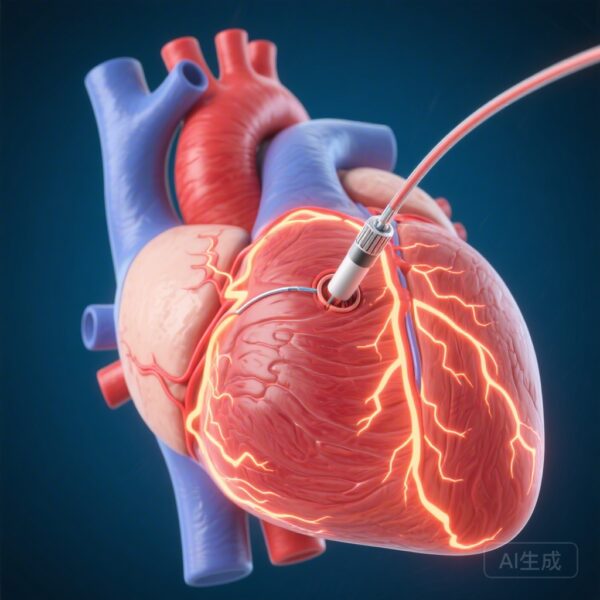
A clinical study demonstrates that catheter ablation is a highly effective rescue therapy for refractory, scar-related ventricular tachycardia occurring in the early phase of acute myocardial infarction, challenging traditional management t

Beyond Arrhythmia: High-Risk Genotypes in Dilated Cardiomyopathy Predict Progression to Advanced Heart Failure
A landmark Spanish study reveals that patients with ‘arrhythmic’ genotypes in dilated cardiomyopathy face a significantly higher risk of advanced heart failure events, including heart transplantation and VAD implantation, necessitating a pa

Why Universal Cholesterol Screening for Familial Hypercholesterolaemia Should Wait Until Age One
A landmark Norwegian study reveals that umbilical cord LDL-C levels overlap significantly between FH and non-FH newborns, making birth screening unreliable. In contrast, LDL-C becomes highly discriminative after age one, suggesting that uni

The Price of Time: 20-Year Study Reveals Pre-Hospital Delay as a Critical Driver of STEMI Mortality
A 20-year analysis of 89,155 patients from the SWEDEHEART registry confirms that pre-hospital delay independently predicts short- and long-term mortality. Despite advances in reperfusion, women, elderly patients, and those with diabetes con
Browse by specialty
Open language-specific specialty feeds and department pages.