Emergency Medicine
Latest news
89 articles · 20 / page

Ambient AI Scribes Reduced Emergency Department Documentation Time, but Early Adoption Was Limited and Highly Concentrated
In a real-world academic emergency department, ambient AI scribe use was uncommon and concentrated among a small group of physicians, but when used it was associated with shorter documentation and total EHR time.

Intracranial Hemorrhage Patterns and Outcomes in Minor Stroke: Insights from the TEMPO-2 Trial
Secondary analysis of TEMPO-2 trial data reveals intracranial hemorrhage in minor stroke patients increases 90-day mortality risk threefold, with higher hemorrhage rates in tenecteplase-treated patients despite most bleeds being non-symptom

Stroke Disability and Mortality Post-ED Discharge for Dizziness: Rare but Clinically Significant
A retrospective cohort study reveals that stroke-related disability or mortality after ED discharge for dizziness is rare (0.04% incidence), with most lesions occurring in the anterior fossa. Findings underscore the need for targeted risk s

Revolutionary Sixth-Generation Troponin Assay Doubles Early MI Rule-Out Capacity
A novel sixth-gen hs-cTnT assay with a 13 ng/L threshold safely identified twice as many low-risk MI patients at ED presentation vs fifth-gen assays, achieving >99.5% NPV in multinational validation.

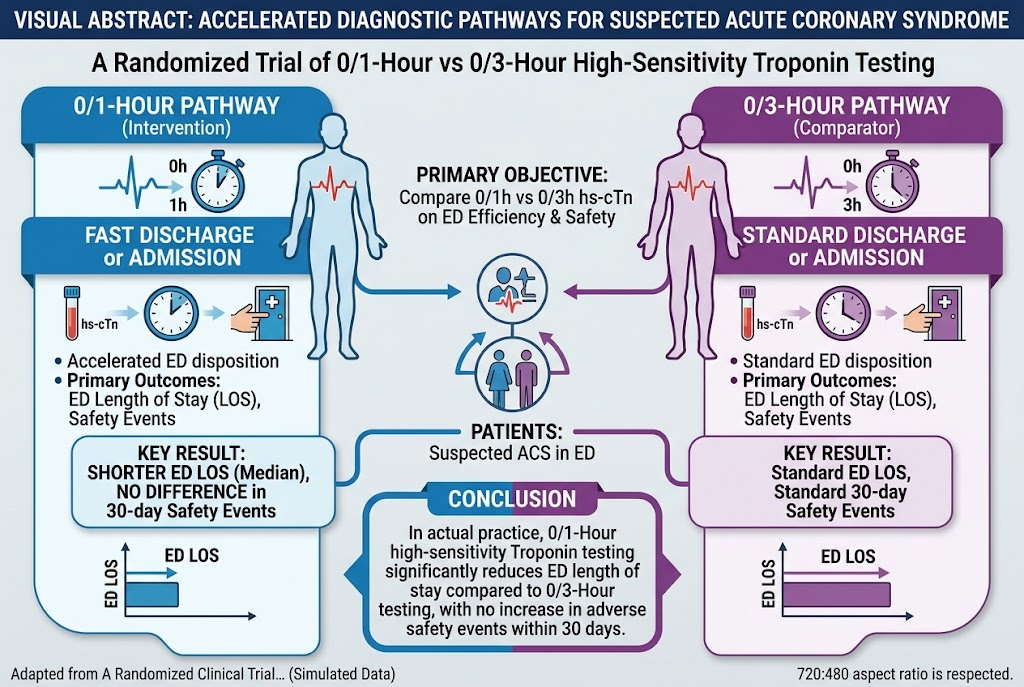
LEGEND Trial: A Game-Changer in Rapid Rule-Out of Acute Myocardial Infarction in the ED
The LEGEND trial demonstrates that a high-sensitivity troponin-based rule-out strategy significantly reduces hospital length of stay and cardiac testing while safely excluding acute myocardial infarction in emergency department patients.

Higher EMS Clinician Trauma Volume Linked to Lower Early Mortality in Trauma Patients
A study finds that increased annual trauma patient volume per EMS clinician is associated with significantly reduced 6-hour and in-hospital mortality rates, highlighting the importance of experience in prehospital trauma care.

Observation Reduces CT Use in Pediatric Blunt Abdominal Trauma Without Missing Critical Injuries
A multicenter study shows that observation with deferred CT decision-making significantly reduces CT use in children with blunt abdominal trauma, particularly in cases with intermediate clinician suspicion, without increasing missed injurie

How Matching Algorithms Can Uncover True Patient Counts From Emergency Medical Services Data
A novel matching approach using 911 call time and patient characteristics can effectively identify duplicate EMS responses, enabling more accurate patient-level inferences from response-based datasets with 100% sensitivity and up to 98.6% s

Sex-Specific Disparities in Syncope Management: Evidence from Clinical Trials and Real-World Outcomes
This review synthesizes evidence on sex differences in syncope management, highlighting that while men face higher admission rates and adverse events, these disparities are largely driven by baseline clinical risk factors rather than gender

Past-Year Emergency Department Utilization Patterns Among Suicide Decedents: Characterizing At-Risk Patient Populations
This study analyzes emergency department visit patterns among suicide decedents, identifying frequent users and a critical 30-day window for intervention after discharge.

Every Hour Counts: Emergency Department Boarding Linked to Increased Clinical Deterioration and Mortality
A large-scale retrospective study involving over 170,000 patients demonstrates that prolonged emergency department boarding significantly increases the odds of early clinical deterioration and 28-day mortality, emphasizing the urgent need f

Rethinking Shock Management: From Standardized Protocols to Personalized Precision Medicine
Expert consensus highlights a shift in shock treatment, emphasizing that standardized protocols must give way to personalized, physiology-driven bedside care to prevent iatrogenic injury and improve survival.

Telemedicine as a Strategic Tool for Post-Emergency Department Care Transitions: Analysis of Utilization and Safety, 2020–2022
This evidence-based review analyzes the adoption and clinical outcomes of telemedicine for post-ED follow-up, highlighting that while utilization is currently low (2.8%), it offers a safe alternative to in-person care without increasing ret

Analyzing Emergency Department Utilization Patterns Among Suicide Decedents: Characterizing At-Risk Patient Populations
This study examines the timing and frequency of emergency department visits among individuals who died by suicide. Research identifies frequent ED use as a high-risk indicator and suggests that the 30-day window following an emergency visit

Evolution of Acute Upper GI Bleeding Management: Lessons from the 2022 UK National Audit
This article examines the 2022 UK audit of acute upper gastrointestinal bleeding, highlighting improved mortality rates despite an aging, more complex patient population, while emphasizing the urgent need for restrictive transfusion practic

The NIHSS Bias: Why Right-Sided Middle Cerebral Artery Strokes Carry Higher Mortality and Complication Risks
A retrospective study of 489,360 patients reveals that right-sided middle cerebral artery strokes are associated with significantly higher inpatient mortality and complications compared to left-sided strokes, likely due to inherent scoring

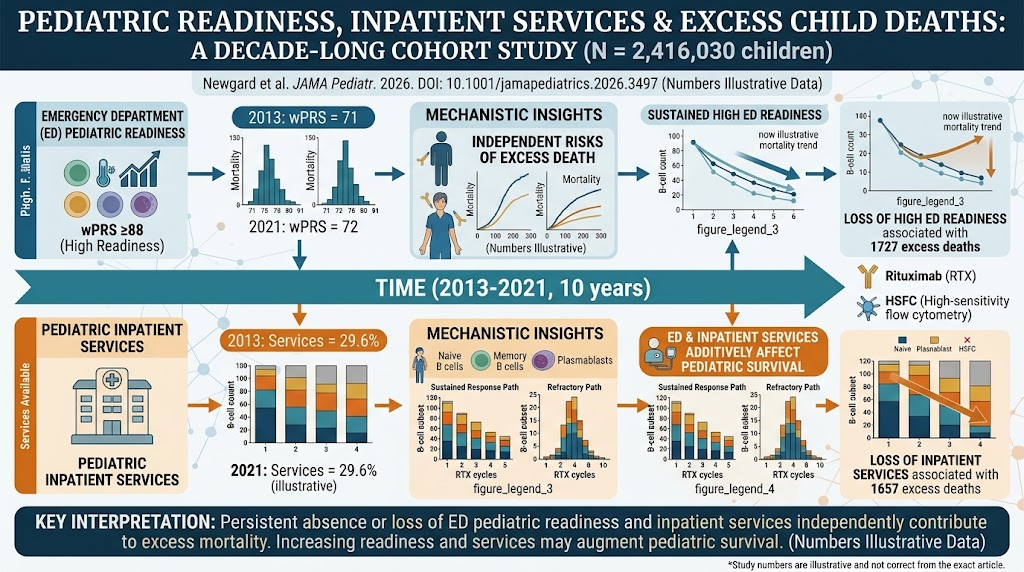
Strengthening the Safety Net: Insights from the First National Assessment of EMS Pediatric Readiness
This article examines the landmark findings from the National Pediatric Prehospital Readiness Project, identifying critical gaps in emergency care for children and highlighting the transformative role of Pediatric Emergency Care Coordinator

Bridging the Gap in Emergency Care: The National Assessment of Pediatric Readiness in EMS
The first national assessment of US EMS agencies reveals a critical need for improved pediatric readiness. While equipment scores are high, significant gaps exist in quality improvement and family-centered care, with Pediatric Emergency Car

Lower Mortality and Complication Rates for Solid-Organ Transplant Patients Treated at Specialized Transplant Centers for Emergency General Surgery
A large-scale retrospective study in Ontario indicates that solid-organ transplant recipients, particularly kidney transplant patients, experience significantly better outcomes for emergency general surgery conditions when treated at specia

Motor Vehicle Accidents vs. Falls: Does the Mechanism of TBI Predict Long-Term Recovery?
A large-scale longitudinal study reveals that motor vehicle accidents cause significantly worse acute traumatic brain injury outcomes compared to falls. However, by one year post-injury, disability levels and community participation converg
Browse by specialty
Open language-specific specialty feeds and department pages.