Diabetes & Endocrinology
Latest news
609 articles · 20 / page

Empagliflozin Protects the Kidney Across Clinical Spectra — Acute Dip Is Not a Dealbreaker
An individual participant-level meta-analysis of 23,340 participants shows empagliflozin reduces acute and chronic kidney events, slows eGFR decline, and lowers kidney failure risk regardless of predicted acute eGFR dip, diabetes, heart fai

Orforglipron in Type 2 Diabetes and Obesity: A Promising Oral GLP‑1 Agonist That Delivers Clinically Meaningful Weight and Glycaemic Benefits
In ATTAIN‑2, oral orforglipron produced dose‑dependent, statistically superior weight loss and improved HbA1c versus placebo over 72 weeks in adults with overweight/obesity and type 2 diabetes, with an adverse‑event profile dominated by gas

Balcinrenone plus Dapagliflozin Reduces Albuminuria in CKD: MIRO‑CKD Phase 2b Shows Dose‑Dependent Benefit with Acceptable Safety
The MIRO‑CKD phase 2b trial found that adding the non‑steroidal MRA balcinrenone to dapagliflozin reduced albuminuria versus dapagliflozin alone in people with CKD, with dose‑dependent effects and modest hyperkalaemia rates over 12 weeks.

Thyroid Cancer in Adolescents and Young Adults Is Surging Worldwide — But Deaths Aren’t: Strong Evidence of Overdiagnosis from a 185‑Country Analysis
A 185-country study shows large, sustained increases in thyroid cancer incidence among adolescents and young adults (15–39 years) since the 2000s while mortality remains low and stable — a pattern most consistent with widespread overdiagnos

Prediabetes Pathways: Age-Driven Trajectories to Type 2 Diabetes, Cancer, and Death in 328,000 Adults — What Clinicians Need to Know
A 20-year multistate analysis of 328,049 adults with prediabetes in England shows age strongly shapes progression to type 2 diabetes, cancer, and death, with younger patients likely to remain in prediabetes—highlighting windows for tailored

Increased Gestational Weight Gain and Adverse Pregnancy Outcomes After Stopping GLP‑1 Receptor Agonists Prior to or in Early Pregnancy
In a large retrospective cohort, women who discontinued GLP‑1 receptor agonists shortly before or during early pregnancy had greater gestational weight gain and higher risks of preterm birth, gestational diabetes, and hypertensive disorders

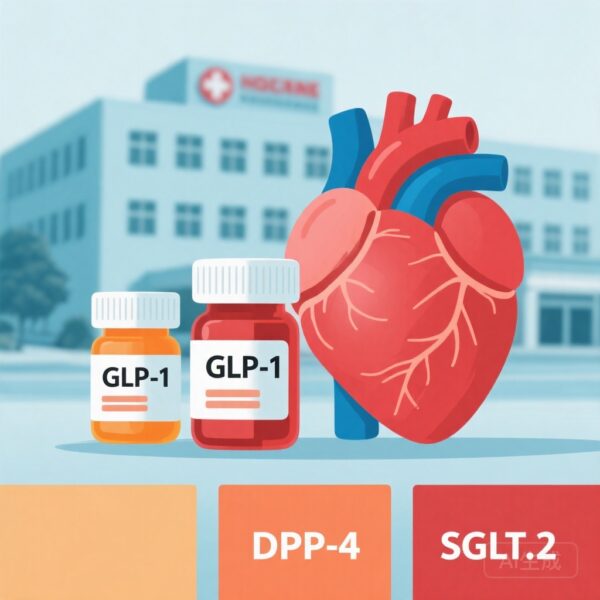
GLP‑1 Receptor Agonists Associated with Lower Fibrosis Progression in MASLD and T2DM: Target‑Trial Emulation of Real‑World Data
A target-trial emulation of 4,476 matched T2DM patients with early MASLD found GLP-1RA use was associated with a 25% lower hazard of progression to high-risk FIB‑4 versus DPP‑4i (HR 0.75); no difference was seen for hard liver outcomes.

Updated Basal Calcitonin Cutoffs Better Predict Extent of Lymph Node Metastasis in Medullary Thyroid Cancer
A multicenter Chinese cohort identifies new preoperative basal calcitonin thresholds (241.9, 693.9, 2378.5, 2787.1 pg/mL) that stratify risk of central, ipsilateral lateral, bilateral/contralateral lateral, and upper mediastinal lymph node

Metformin Selectively Lowers Vitamin B12 but Not Other Vitamin Levels: Clinical Implications for Long-Term Therapy
A 200‑patient cross‑sectional study found metformin use tripled the odds of vitamin B12 deficiency without affecting vitamins A, B1, B6, B9, C or E, highlighting the need for targeted B12 monitoring in long‑term metformin therapy.

Metformin Did Not Prevent Metabolic Syndrome During ADT but Improved Weight, Waist and HbA1c: Findings from the PRIME Phase 3 Trial
In the PRIME randomized phase 3 trial, metformin did not significantly reduce metabolic syndrome incidence in men starting androgen deprivation therapy, but produced modest, clinically relevant reductions in body weight, waist circumference

Empagliflozin, Pioglitazone or Glimepiride as Third Agents with Metformin + DPP‑4 Inhibitor: Similar HbA1c Drops but Different Trade‑offs
A 24‑week randomized phase 4 trial found comparable HbA1c reductions when adding empagliflozin, pioglitazone or glimepiride to metformin plus a DPP‑4 inhibitor; metabolic and safety profiles differed, arguing for individualized third‑line s

Type 3c Diabetes from Chronic Pancreatitis: Mechanisms, Diagnosis, and Practical Management
This article synthesizes current understanding of type 3c diabetes (T3cDM) caused by chronic pancreatitis—covering pathophysiology (islet loss, exocrine insufficiency, altered incretin and hepatic/peripheral insulin sensitivity), diagnostic

Chiglitazar Added to Metformin Improves Glycaemia and Lipids in T2DM: Results from the RECAM Phase III Trial
In the RECAM randomized phase III trial, chiglitazar (32 mg and 48 mg) as add‑on to metformin produced clinically meaningful HbA1c reductions and favorable lipid changes versus placebo over 24 weeks, with a tolerable safety profile characte

Liraglutide Plus Metformin in Overweight/Obese PCOS: Greater Metabolic and Hormonal Benefits Than Metformin Alone
A 2025 meta-analysis of 19 RCTs (n=1657) found liraglutide combined with metformin improved glycaemia, insulin resistance, BMI, sex hormones and lipids versus metformin alone in overweight or obese women with PCOS; evidence certainty was lo

Liraglutide Plus Metformin in Overweight/Obese PCOS: Greater Metabolic and Hormonal Benefits Than Metformin Alone
A 2025 meta-analysis of 19 RCTs (n=1657) found liraglutide combined with metformin improved glycaemia, insulin resistance, BMI, sex hormones and lipids versus metformin alone in overweight or obese women with PCOS; evidence certainty was lo

Stepped Care Plus Cash Incentives Cuts 3‑Year Diabetes Incidence in Multiethnic Asian Prediabetes Cohort
The Pre-DICTED randomized trial found a stepped-care diabetes prevention program augmented with financial incentives reduced 3‑year diabetes conversion (34.8% vs 47.3%; adjusted RR 0.74), with metformin added for persistent high-risk partic

AI-Derived Body Composition Analysis Unveils Muscle Volume, Metformin-Associated Adipose Effects, and the Obesity Paradox in NSCLC: Clinical and Molecular Insights
AI-driven analysis identifies muscle volume as a robust predictor of survival in NSCLC, highlights metformin-modulated adipose effects, and elucidates molecular links to the obesity paradox, informing personalized prognosis beyond BMI.

SGLT2 Inhibitors Linked to Lower Fibrosis Progression than DPP‑4 Inhibitors in MASLD with T2DM: Target‑Trial Emulation of Real‑World Cohorts
A multicenter target‑trial emulation found SGLT2 inhibitor initiation was associated with a 22% lower risk of progression to advanced fibrosis (confirmed FIB‑4 >2.67) versus DPP‑4 inhibitors in adults with MASLD and T2DM and low‑to‑intermed

Efficacy and Safety of Tirzepatide Added to Basal Insulin in Chinese Patients with Type 2 Diabetes: Insights from the SURPASS-CN-INS Phase 3 Trial
This phase 3 study demonstrates that adding tirzepatide to basal insulin significantly improves glycemic control in Chinese patients with type 2 diabetes, with a manageable safety profile.

Pemvidutide Produces Rapid Reductions in Liver Fat and AI‑Quantified Fibrosis in Early Phase Trials — Promise and Unanswered Questions
Pemvidutide, a dual GLP‑1/glucagon receptor agonist, reduced liver fat markedly and produced small but statistically significant reductions in AI‑quantified fibrosis over 24 weeks in phase 2 studies, but longer trials with clinical endpoint
Browse by specialty
Open language-specific specialty feeds and department pages.