Lipoprotein(a) and Atherosclerotic Cardiovascular Disease Risk Across the Adult Lifespan: Insights from a Large Population Study
Highlight
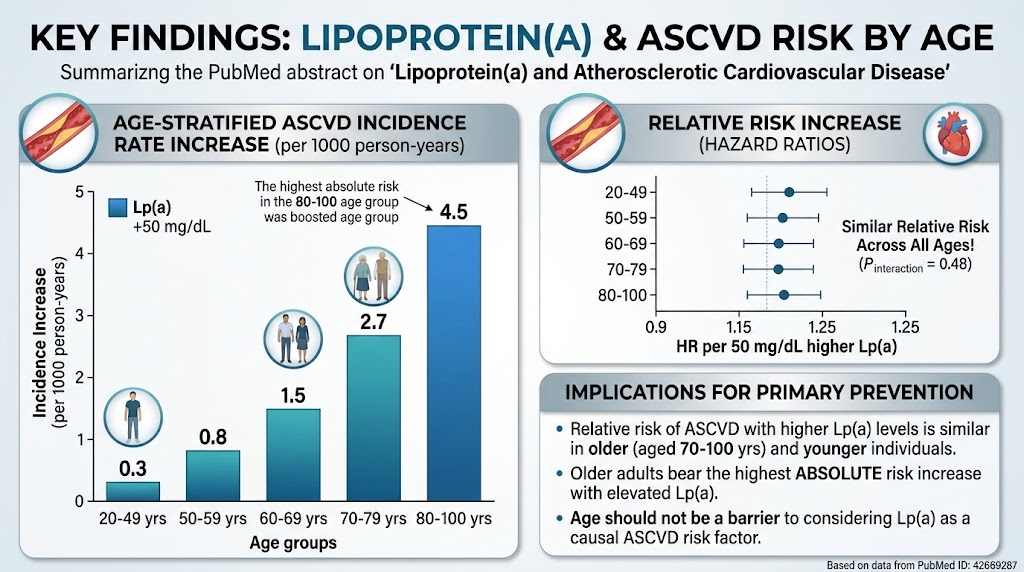
- High lipoprotein(a) [Lp(a)] levels are associated with increased risk of atherosclerotic cardiovascular disease (ASCVD) equally across all adult age groups, including those aged 70 to 100 years.
- The absolute incidence of ASCVD events associated with elevated Lp(a) increases substantially with advancing age, notably highest in adults aged 80 years and older.
- These associations are consistent in both men and women, although men exhibit somewhat higher absolute risk increases.
- The study provides robust evidence supporting Lp(a) measurement and potential future therapeutic targeting across a wide age spectrum for primary prevention of ASCVD.
Study Background
MedXY registered readers
Sign in free to continue reading
Create or use your MedXY account to unlock the complete article.
This article was created using several editorial tools, including AI, as part of the process. Human editors reviewed this content before publication.