MMedXYNews
HomeVideos
MedXY AI/MedXY News/Tag: Neuroprognostication
MedXY News
EnglishTag

Neuroprognostication

Ask MedXY AI
type 2 diabetesclinical trialheart failureimmunotherapyobesitycardiovascular riskatrial fibrillationcritical carebiomarkersartificial intelligencetype 1 diabetesclinical trialsHypertensiononcologyCardiologyMortalitypublic healthcardiovascular diseasediabetesAlzheimer's diseasebreast cancerepidemiology

Latest news

Tag

Quantitative Pupillometry in Post-Cardiac Arrest Neuroprognostication: Insights from a Bicentric Study
Critical Carecardiac arrestEEG

Quantitative Pupillometry in Post-Cardiac Arrest Neuroprognostication: Insights from a Bicentric Study

By MedXY|Sep 30, 2026

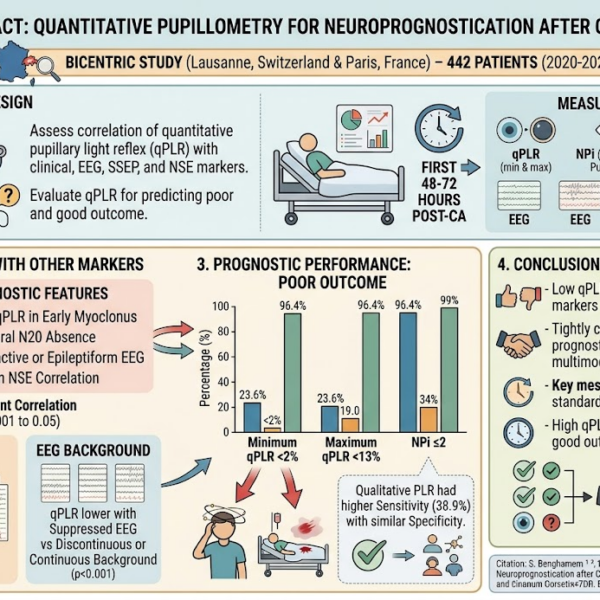
This bicentric study evaluates quantitative pupillary light reflex (qPLR) alongside EEG, SSEPs, and NSE for neuroprognostication in comatose post-cardiac arrest patients, revealing strong correlations but limitations in sensitivity and pred

Precision Prognostics: Automated EEG Background Analysis and 2-Year Outcomes in Neonatal Hypoxic-Ischemic Encephalopathy
NeurologyHypoxic-Ischemic EncephalopathyNeuroprognostication
© 2026 MedXY
Contact usAbout usPrivacy PolicyMedXY story

Precision Prognostics: Automated EEG Background Analysis and 2-Year Outcomes in Neonatal Hypoxic-Ischemic Encephalopathy

By MedXY|Dec 21, 2025

This article explores how automated EEG background analysis via the Brain State of the Newborn (BSN) score provides objective, early-life prognostication for neonates with HIE, significantly improving the prediction of 2-year neurodevelopme

Ask MedXY AI

Most popular

Intimate Health
Five Benefits for Women Continuing Sexual Activity After Menopause
Intimate Health
Why Some Women Have a Strong Sex Drive—And Why Men Shouldn't Worry About It
Nursing & care
How often should a couple have sex?
Cardiology
Precision Medicine for Long QT Syndrome Type 2: Lumacaftor Corrects Trafficking Defects and Shortens QT Interval
General Surgery
Optimizing Postoperative Opioid Prescriptions After Intra-Abdominal Cancer Surgery: Comparing the 5x-Multiplier and 3-Tier Models