Unraveling Attenuated Risk Factor Associations in Secondary Coronary Prevention: Implications for Clinical Practice
index event biascardiovascular risk predictionSecondary Preventionrisk factorsCoronary heart disease
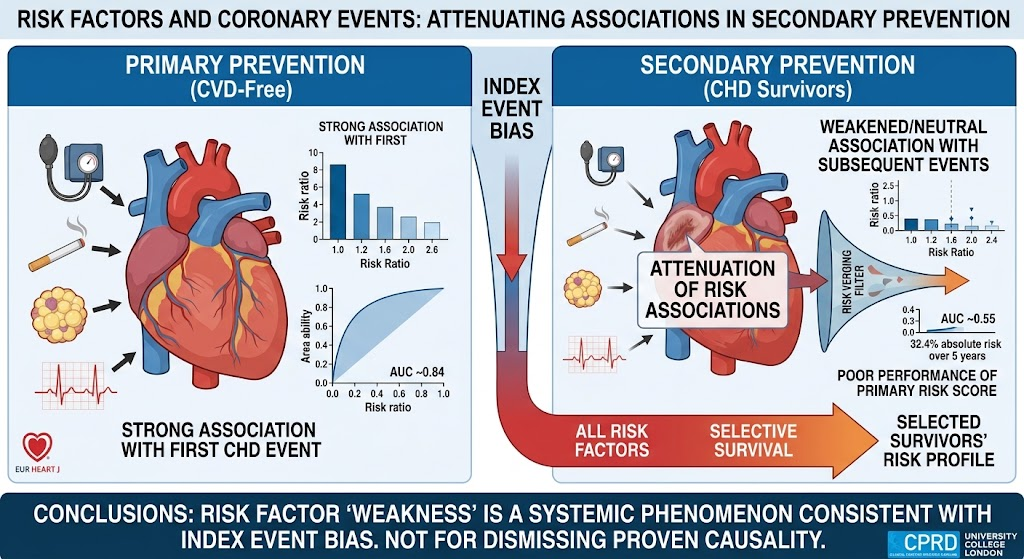
Highlight
- Risk factor associations for subsequent coronary events are systematically weaker compared to first events, a phenomenon attributed to index event bias.
- A 10-year primary prevention risk model performs well for first coronary events but poorly predicts recurrent events after initial coronary heart disease (CHD).
- Some traditional risk factors exhibit paradoxical or neutral associations post-first event, complicating risk interpretation in secondary prevention.
- Findings caution against deprioritizing established therapies, such as LDL cholesterol lowering, based on attenuated risk factor associations in CHD survivors.
Background and Clinical Context
MedXY registered readers
Sign in free to continue reading
Create or use your MedXY account to unlock the complete article.
This article was created using several editorial tools, including AI, as part of the process. Human editors reviewed this content before publication.