We use cookies

Our website uses essential cookies and, with your consent, additional cookies to measure performance and improve our services. Cookie Policy.

You can change your choice at any time.

MMedXYNews
HomeVideos
© 2026 MedXY
Contact usAbout usPrivacy PolicyMedXY story
MedXY AI/MedXY News/Tag: Secondary Prevention
MedXY News
EnglishTag

Secondary Prevention

Ask MedXY AI
type 2 diabetesclinical trialheart failureimmunotherapyobesitycardiovascular riskatrial fibrillationbiomarkerscritical careclinical trialsHypertensionartificial intelligenceCardiologyoncologypublic healthtype 1 diabetesdiabetesMortalityAlzheimer's diseasecardiovascular diseasebreast cancerepidemiology

Latest news

Tag

Inpatient Rehabilitation and Major Adverse Cardiovascular Events After Ischemic Stroke: Clinical Implications and Evidence Synthesis
Clinical Updatesmajor adverse cardiovascular eventsinpatient rehabilitation

Inpatient Rehabilitation and Major Adverse Cardiovascular Events After Ischemic Stroke: Clinical Implications and Evidence Synthesis

By MedXY|Sep 19, 2026

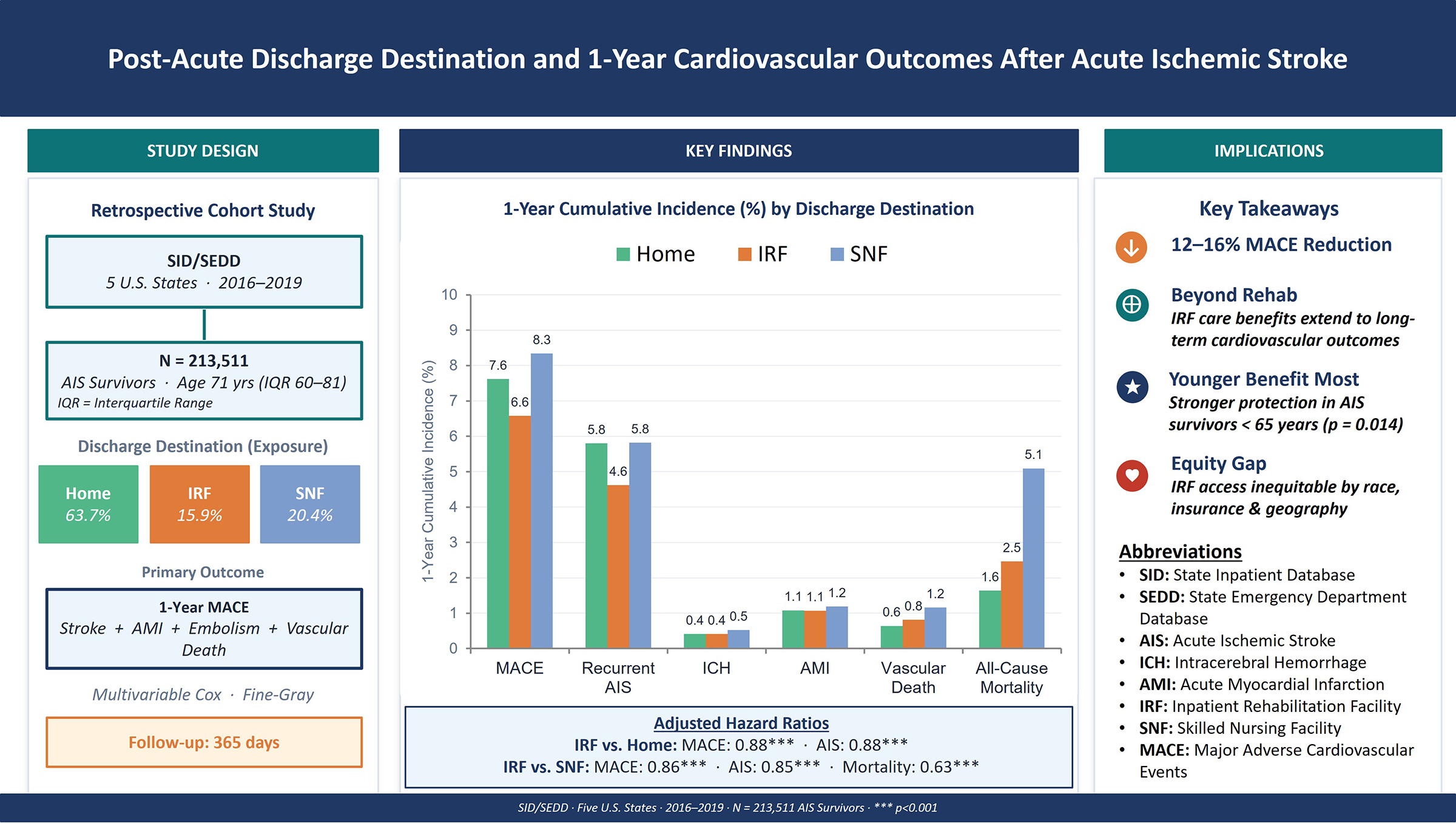
Postacute discharge to inpatient rehabilitation facilities (IRF) after acute ischemic stroke (AIS) is associated with a reduced 1-year risk of major adverse cardiovascular events (MACE) compared to discharge to home or skilled nursing facil

Bridging the Gap: ESC Prevention and Cardiac Rehabilitation Recommendations and What EUROASPIRE VI Reveals About Reality in Europe
Cardiology
ESC Guidelines
EUROASPIRE VI

Bridging the Gap: ESC Prevention and Cardiac Rehabilitation Recommendations and What EUROASPIRE VI Reveals About Reality in Europe

By MedXY|Aug 29, 2026

EUROASPIRE VI exposes wide gaps between ESC prevention and cardiac rehabilitation recommendations and everyday care across Europe — especially in high-risk regions. This article distills core guideline recommendations, what’s new, and

Association of Adherence to Various Dietary Patterns With Mortality Among Survivors of Myocardial Infarction: An Evidence-Based Review
CardiologyDietary patternsmyocardial infarction

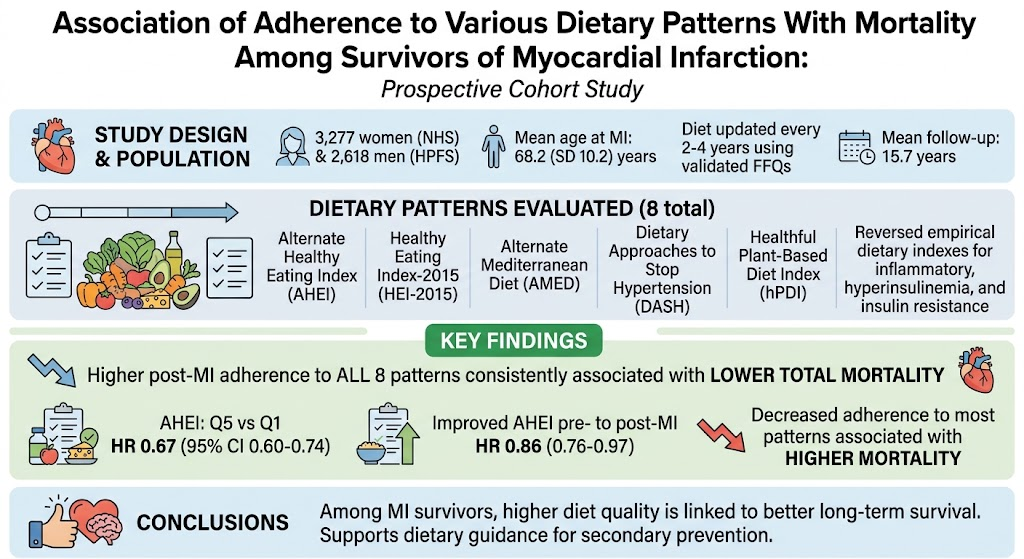
Association of Adherence to Various Dietary Patterns With Mortality Among Survivors of Myocardial Infarction: An Evidence-Based Review

By MedXY|Aug 26, 2026

Post-MI adherence to diverse healthy dietary patterns is consistently linked to reduced mortality and cardiovascular events, underscoring the importance of diet quality in secondary prevention among MI survivors.

Unraveling Attenuated Risk Factor Associations in Secondary Coronary Prevention: Implications for Clinical Practice
Cardiologyindex event biascardiovascular risk prediction

Unraveling Attenuated Risk Factor Associations in Secondary Coronary Prevention: Implications for Clinical Practice

By MedXY|Aug 24, 2026

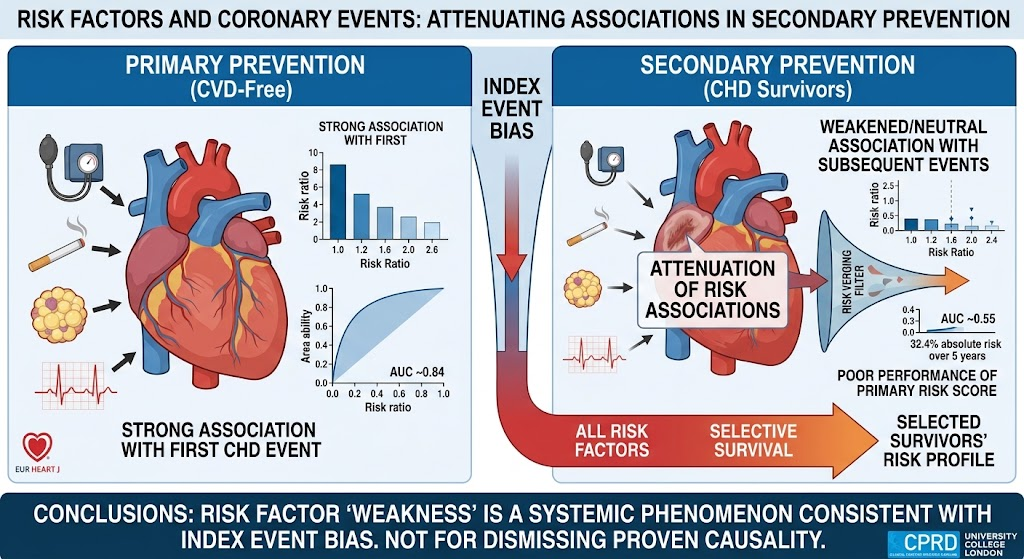
This study reveals that risk factor associations for subsequent coronary heart disease (CHD) events are systematically attenuated due to index event bias, challenging their clinical interpretation in secondary prevention and emphasizing the

Optimizing LDL-C Reduction Strategies in Ischemic Stroke: Impact of Achieving ≥50% LDL-C Reduction from Baseline
CardiologyLDL-C reductioncardiovascular risk

Optimizing LDL-C Reduction Strategies in Ischemic Stroke: Impact of Achieving ≥50% LDL-C Reduction from Baseline

By MedXY|Aug 21, 2026

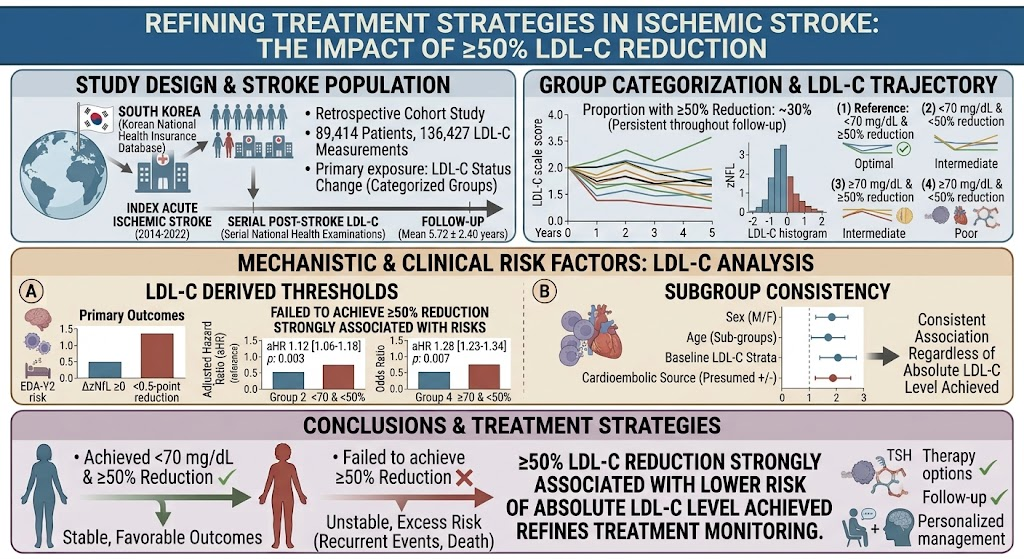
Achieving a ≥50% reduction in LDL-C from baseline independently reduces recurrent cardiovascular events post-ischemic stroke, suggesting that combining relative and absolute LDL-C targets improves long-term outcomes.

Persistence of Blood Inflammatory Biomarkers as Predictors of Long-Term Recurrent Stroke Risk: Insights From the Oxford Vascular Study
Clinical UpdatesInflammatory Biomarkersvascular risk

Persistence of Blood Inflammatory Biomarkers as Predictors of Long-Term Recurrent Stroke Risk: Insights From the Oxford Vascular Study

By MedXY|Aug 6, 2026

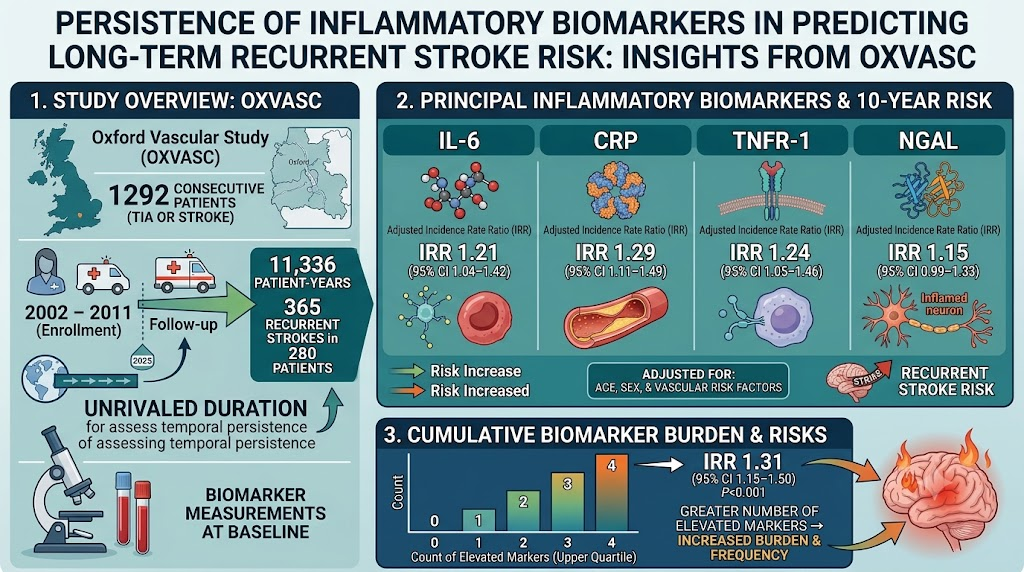
Inflammatory blood biomarkers consistently predict long-term recurrent stroke risk up to 10 years post-event, independent of traditional vascular risk factors, underscoring the potential for anti-inflammatory secondary prevention strategies

Higher Resting Heart Rate Still Signals Risk After Myocardial Infarction, and Stopping β-Blockers Raises Heart Rate Without Identifying a Safe Subgroup
Cardiologybeta-blockersheart rate

Higher Resting Heart Rate Still Signals Risk After Myocardial Infarction, and Stopping β-Blockers Raises Heart Rate Without Identifying a Safe Subgroup

By MedXY|Jun 10, 2026

A secondary analysis of ABYSS shows that in stable post-MI patients with preserved ejection fraction, higher heart rate remains prognostic and β-blocker interruption increases heart rate by about 10–13 bpm while worsening outcomes across he

The 42-Hour Window: Why Delaying Dual Antiplatelet Therapy Compromises Outcomes in Minor Stroke and High-Risk TIA
Internal MedicineDAPTminor stroke

The 42-Hour Window: Why Delaying Dual Antiplatelet Therapy Compromises Outcomes in Minor Stroke and High-Risk TIA

By MedXY|Jan 7, 2026

A large-scale cohort study demonstrates that the efficacy of dual antiplatelet therapy for minor stroke and TIA is highly time-dependent, with maximal benefits seen within 24 hours and a loss of therapeutic effect after approximately 42 hou

NeurologyFunctional Declinehealth services research

The LAST-long Trial: Monthly Coordination Fails to Prevent Functional Decline in Mild Stroke Patients

By MedXY|Dec 19, 2025

The LAST-long randomized trial found that an 18-month coordinator-led multimodal intervention did not significantly prevent functional decline or dependency in patients with mild stroke compared to standard care, highlighting challenges in

Low-Dose Colchicine Reduces Myocardial Infarction and Stroke Risk in Cardiovascular Disease Patients
Cardiologycardiovascular diseasecolchicine

Low-Dose Colchicine Reduces Myocardial Infarction and Stroke Risk in Cardiovascular Disease Patients

By MedXY|Dec 16, 2025

A large meta-analysis shows colchicine can lower MI and stroke risk without raising serious adverse events, but GI side effects remain a concern.

EAT‑Lancet Diet and Recurrent Cardiovascular Events: Lower Stroke Risk and a Signal for Myocardial Infarction in Patients with Established CVD
Cardiologycardiovascular diseaseDietary patterns

EAT‑Lancet Diet and Recurrent Cardiovascular Events: Lower Stroke Risk and a Signal for Myocardial Infarction in Patients with Established CVD

By MedXY|Dec 3, 2025

Two cohort analyses suggest greater adherence to the EAT‑Lancet diet is linked with lower recurrent non‑fatal vascular events—notably stroke—and that education and sex modify long‑term cardioprotective benefits of this sustainable, plant‑fo

High Lipoprotein(a) Predicts Recurrent ASCVD — Intensified LDL‑Lowering, Especially PCSK9 Inhibitors, May Attenuate Risk
CardiologyLipoprotein(a)PCSK9 inhibitors

High Lipoprotein(a) Predicts Recurrent ASCVD — Intensified LDL‑Lowering, Especially PCSK9 Inhibitors, May Attenuate Risk

By MedXY|Dec 2, 2025

In 273,770 US patients with established ASCVD, rising lipoprotein(a) (nmol/L) was steadily associated with higher risk of recurrent events; the excess risk was partially blunted in those receiving high‑impact LDL‑lowering therapy, most nota

Clopidogrel versus Aspirin for Secondary Prevention in Coronary Artery Disease: A Comprehensive Meta-Analysis
CardiologyAntiplatelet TherapyAspirin

Clopidogrel versus Aspirin for Secondary Prevention in Coronary Artery Disease: A Comprehensive Meta-Analysis

By MedXY|Oct 11, 2025

This meta-analysis of nearly 29,000 CAD patients shows clopidogrel monotherapy reduces major cardiovascular events more than aspirin without increasing major bleeding risk, supporting clopidogrel as preferred secondary prevention.

Reevaluating Beta-Blocker Therapy Post-Myocardial Infarction with Preserved Ejection Fraction: Insights from Recent Trials and Meta-Analyses
Cardiologybeta-blockersmyocardial infarction

Reevaluating Beta-Blocker Therapy Post-Myocardial Infarction with Preserved Ejection Fraction: Insights from Recent Trials and Meta-Analyses

By MedXY|Oct 6, 2025

Recent evidence challenges the routine use of long-term beta-blockers after myocardial infarction in patients with preserved ejection fraction, highlighting comparable outcomes with or without therapy and raising safety and efficacy conside

Clopidogrel Surpasses Aspirin: Comprehensive Meta-Analysis Shows Superior Secondary Prevention in Coronary Artery Disease
CardiologyAspirinclopidogrel

Clopidogrel Surpasses Aspirin: Comprehensive Meta-Analysis Shows Superior Secondary Prevention in Coronary Artery Disease

By MedXY|Oct 6, 2025

A large meta-analysis in The Lancet demonstrates that clopidogrel reduces MACCE risk by 14% over aspirin in CAD secondary prevention, with comparable safety over 5.5 years.

Ask MedXY AI

Most popular

Intimate Health
Five Benefits for Women Continuing Sexual Activity After Menopause
Intimate Health
Why Some Women Have a Strong Sex Drive—And Why Men Shouldn't Worry About It
Nursing & care
How often should a couple have sex?
Intimate Health
Classic Intimacy Recommendations: How to Help Women Reach Orgasm and Enjoy Mutual Pleasure
Intimate Health
What Makes a Woman "Physiologically Addicted" Is Never Money, But These Two Relationship Qualities