We use cookies

Our website uses essential cookies and, with your consent, additional cookies to measure performance and improve our services. Cookie Policy.

You can change your choice at any time.

MMedXYNews
HomeVideos
MedXY AI/MedXY News/Tag: Physical Activity
MedXY News
EnglishTag

Physical Activity

Ask MedXY AI
type 2 diabetesclinical trialheart failureimmunotherapyobesitycardiovascular riskatrial fibrillationbiomarkerscritical careclinical trialsHypertensionartificial intelligenceCardiologyoncologypublic healthtype 1 diabetesdiabetesMortalityAlzheimer's diseasecardiovascular diseasebreast cancerepidemiology

Latest news

Tag

Differential Physical Activity Responses to Diabetes Risk Reduction Interventions According to Prediabetes Phenotype: Insights from Pooled Randomized Controlled Trials
Clinical Updatesdiabetes preventionlifestyle intervention

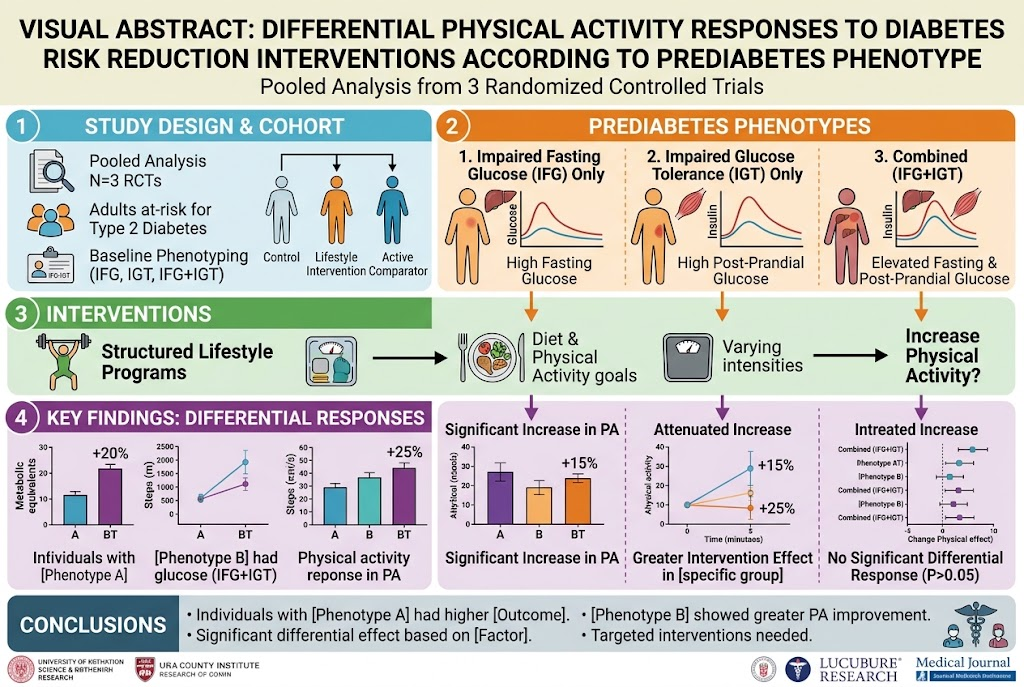
Differential Physical Activity Responses to Diabetes Risk Reduction Interventions According to Prediabetes Phenotype: Insights from Pooled Randomized Controlled Trials

By MedXY|Sep 17, 2026

The effectiveness of lifestyle interventions promoting physical activity for diabetes risk reduction varies by prediabetes phenotype, with individuals having impaired fasting glucose showing the least response. Tailored approaches may enhan

Navigating Rehabilitation During ECMO Support: Insights from a Retrospective Cohort Study
Critical Care
© 2026 MedXY
Contact usAbout usPrivacy PolicyMedXY story
critical care
rehabilitation

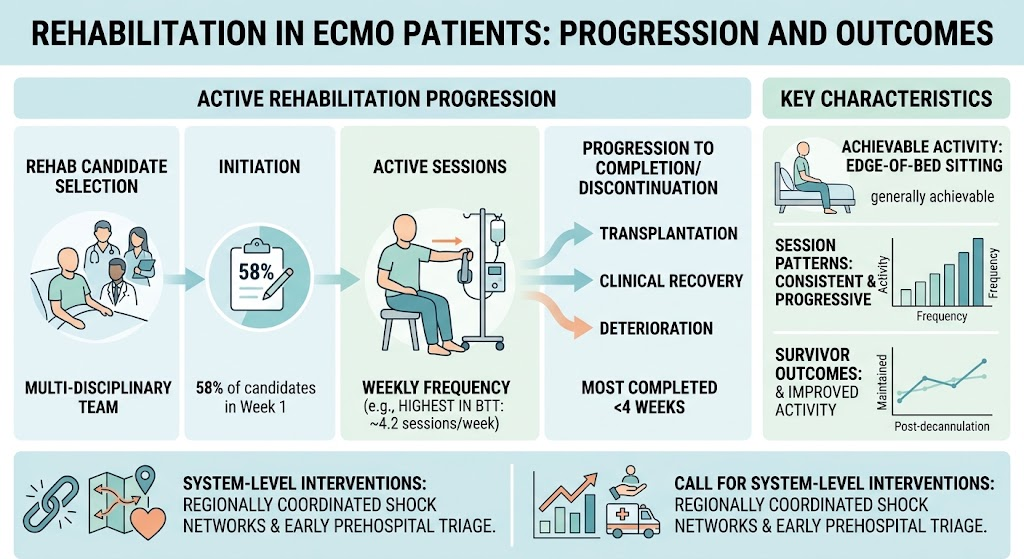
Navigating Rehabilitation During ECMO Support: Insights from a Retrospective Cohort Study

By MedXY|Sep 5, 2026

This study explores rehabilitation initiation, progression, and physical activity levels in adult ECMO patients, highlighting early active rehabilitation feasibility and varied activity trajectories based on clinical goals.

Exercise May Be a Disease-Modifying Strategy in Chronic Pancreatitis
Gastroenterologychronic pancreatitisextracellular vesicles

Exercise May Be a Disease-Modifying Strategy in Chronic Pancreatitis

By MedXY|Jun 1, 2026

A new multimodal study links regular physical activity to lower chronic pancreatitis risk and identifies muscle-derived extracellular vesicles as a plausible mechanism limiting pancreatic inflammation, fibrosis, and ferroptosis.

Therapeutic Mobilization: How Physical Activity Reprograms the Pancreatic Immune Microenvironment to Combat Chronic Pancreatitis
Clinical Updateschronic pancreatitisextracellular vesicles

Therapeutic Mobilization: How Physical Activity Reprograms the Pancreatic Immune Microenvironment to Combat Chronic Pancreatitis

By MedXY|Jun 1, 2026

This review synthesizes recent evidence from the UK Biobank and molecular studies demonstrating that physical activity, particularly resistance exercise, restrains chronic pancreatitis by delivering muscle-derived extracellular vesicles tha

Intermittent Lifestyle Physical Activity: A Promising Strategy for Type 2 Diabetes Prevention
Diabetes & EndocrinologylifestylePhysical Activity

Intermittent Lifestyle Physical Activity: A Promising Strategy for Type 2 Diabetes Prevention

By MedXY|Apr 29, 2026

Brief, intermittent bouts of moderate- to vigorous-intensity physical activity during daily routines may significantly reduce the risk of type 2 diabetes in adults who do not engage in leisure-time exercise.

Lifestyle Determinants and Metabolic Compensation in Pregnancies Complicated by Type 1 Diabetes: A Synthesis of the ENDIA Study and Recent Evidence
Clinical UpdatesIslet Autoimmunitynutrition

Lifestyle Determinants and Metabolic Compensation in Pregnancies Complicated by Type 1 Diabetes: A Synthesis of the ENDIA Study and Recent Evidence

By MedXY|Mar 13, 2026

This review analyzes the lifestyle patterns of pregnant women with type 1 diabetes, synthesizing findings from the ENDIA study with recent evidence on nutritional adequacy, islet autoimmunity, and the molecular mechanisms of metabolic compe

Guideline‑Level Moderate–Vigorous Physical Activity Appears Safe and Beneficial for Phenotype‑Negative Car cardiomyopathy Variant Carriers
Cardiologyaccelerometercardiomyopathy

Guideline‑Level Moderate–Vigorous Physical Activity Appears Safe and Beneficial for Phenotype‑Negative Car cardiomyopathy Variant Carriers

By MedXY|Nov 25, 2025

In a large UK Biobank cohort, accelerometer-measured moderate‑to‑vigorous physical activity (100–400 min/week) was associated with lower cardiovascular risk and no excess arrhythmic or cardiomyopathy onset among genotype‑positive phenotype‑

The Power of Persistence: How Consistent Moderate Exercise Significantly Lowers Digestive Cancer Risk
newscancer preventiondigestive system cancer

The Power of Persistence: How Consistent Moderate Exercise Significantly Lowers Digestive Cancer Risk

By MedXY|Nov 17, 2025

A Harvard study following 230,000 people over 32 years shows that regular, moderate exercise sustained over time is more effective at preventing digestive system cancers than sporadic high-intensity workouts.

Tracking Steps to Slow Alzheimer’s: Physical Activity Linked to Reduced Tau Accumulation and Slower Decline in Preclinical AD
NeurologyAlzheimer's diseasePhysical Activity

Tracking Steps to Slow Alzheimer’s: Physical Activity Linked to Reduced Tau Accumulation and Slower Decline in Preclinical AD

By MedXY|Nov 13, 2025

In cognitively unimpaired older adults with elevated amyloid, higher daily step counts were associated with slower inferior-temporal tau accumulation and attenuated cognitive and functional decline, with benefit plateauing around 5,000–7,50

Consistency Over Excess: Long-term Adherence to Physical Activity Guidelines Reduces Digestive System Cancer Risk
Gastroenterologydigestive system cancerepidemiology

Consistency Over Excess: Long-term Adherence to Physical Activity Guidelines Reduces Digestive System Cancer Risk

By MedXY|Nov 12, 2025

A pooled analysis of three US cohorts shows that maintaining guideline-level activity (~17 MET‑hours/week) consistently over decades is associated with substantial reductions in digestive system cancer incidence and mortality—comparable to

Less Sitting, More Sleep and MVPA Linked to Better Glycaemic Stability in Children with Type 1 Diabetes: A 2‑Year Compositional Analysis
Diabetes & EndocrinologyPhysical Activitysleep

Less Sitting, More Sleep and MVPA Linked to Better Glycaemic Stability in Children with Type 1 Diabetes: A 2‑Year Compositional Analysis

By MedXY|Nov 8, 2025

A longitudinal compositional analysis of 83 children with type 1 diabetes found that reallocating daily time away from sedentary behaviour toward sleep or moderate‑to‑vigorous physical activity (MVPA) was associated with lower HbA1c and int

Balance, Not Bedrest: Daily Movement Patterns Linked to Faster Symptom Recovery After Pediatric Concussion
NeurologyPediatricsPhysical Activity

Balance, Not Bedrest: Daily Movement Patterns Linked to Faster Symptom Recovery After Pediatric Concussion

By MedXY|Nov 8, 2025

Compositional analysis of the PedCARE cohort suggests that an early period of relative rest combined with above-average light and moderate-to-vigorous activity over the first two weeks is associated with lower postconcussion symptom burden

Wearable Monitoring Shows Sustained Increases in Daily Activity After Total Knee Arthroplasty, with a 6‑Month Recovery Window
AIPhysical Activitypostoperative recovery

Wearable Monitoring Shows Sustained Increases in Daily Activity After Total Knee Arthroplasty, with a 6‑Month Recovery Window

By MedXY|Nov 5, 2025

A prospective cohort using Apple Watch data demonstrated meaningful increases in step count, standing time and gait speed after unilateral total knee arthroplasty, peaking at 6 months and persisting at 12 months.

Even a Few Days of 4,000+ Steps Lowers Mortality and CVD Risk in Older Women — More Steps Still Better
Cardiologycardiovascular riskolder women

Even a Few Days of 4,000+ Steps Lowers Mortality and CVD Risk in Older Women — More Steps Still Better

By MedXY|Nov 3, 2025

In >13,000 older women followed ≈11 years, achieving ≥4,000 steps on as little as 1–2 days/week was linked to lower all‑cause mortality and CVD; higher daily step thresholds produced additional benefit, but associations were driven large

Wearables and Behaviour Change Work Best: Physical Activity Interventions After Hip and Knee Arthroplasty Improve Steps but Not Sedentary Time
newsbehaviour changePhysical Activity

Wearables and Behaviour Change Work Best: Physical Activity Interventions After Hip and Knee Arthroplasty Improve Steps but Not Sedentary Time

By MedXY|Nov 2, 2025

A meta-analysis of 23 RCTs (n≈1,265) found small but reliable increases in physical activity after hip or knee arthroplasty, driven by step-count gains and greater effects when interventions used wearable activity trackers, behaviour-change

Physical Activity and Risk of Knee Replacement in Radiographic Osteoarthritis
newsknee osteoarthritisPhysical Activity

Physical Activity and Risk of Knee Replacement in Radiographic Osteoarthritis

By MedXY|Nov 1, 2025

In a 9-year OAI cohort analysis, baseline self-reported moderate physical activity was linked to lower knee replacement risk in KL grade 2 but to higher risk in KL >2; high activity showed no clear effect. Results support severity-tailor

Bridging the Gap after Pulmonary Rehabilitation: Evaluating the PICk UP Programme in COPD Management
Rehabilitation MedicineCOPDPhysical Activity

Bridging the Gap after Pulmonary Rehabilitation: Evaluating the PICk UP Programme in COPD Management

By MedXY|Oct 23, 2025

A randomized trial shows that a six-month personalised community-based physical activity programme sustains physical activity improvements and functional performance post-pulmonary rehabilitation in COPD patients, though other health benefi

Lifetime Walking Intensity and Duration Reduce Amyloid-β Accumulation in Alzheimer’s Disease: Insights from a Korean Longitudinal Cohort
Family Medicine & NutritionAlzheimer's diseaseAmyloid-β

Lifetime Walking Intensity and Duration Reduce Amyloid-β Accumulation in Alzheimer’s Disease: Insights from a Korean Longitudinal Cohort

By MedXY|Oct 20, 2025

A 4-year longitudinal study reveals that long-duration, high-intensity lifetime walking is associated with reduced amyloid-β accumulation in older adults, suggesting a neuroprotective effect when initiated early in life.

Moderate-to-Vigorous Physical Activity, p-tau181, and Cognition in Older Adults with Memory Complaints: Insights from the MAPT Study
NeurologyagingAlzheimer's disease

Moderate-to-Vigorous Physical Activity, p-tau181, and Cognition in Older Adults with Memory Complaints: Insights from the MAPT Study

By MedXY|Oct 20, 2025

Higher moderate-to-vigorous physical activity slows p-tau181 increase, a marker of Alzheimer’s pathology, but elevated p-tau181 diminishes exercise-related cognitive benefits in older adults.

Optimizing Healthy Ageing: The Impact of Physical Activity and Sedentary Behavior on Intrinsic Capacity in Older Adults
Internal MedicineHealthy AgeingIntrinsic Capacity

Optimizing Healthy Ageing: The Impact of Physical Activity and Sedentary Behavior on Intrinsic Capacity in Older Adults

By MedXY|Oct 20, 2025

This prospective Spanish cohort study reveals that moderate-to-vigorous physical activity enhances intrinsic capacity in older adults, while sedentary behavior impairs it, underscoring the role of active lifestyles in promoting healthy agei

1 / 2
12
Next
Ask MedXY AI

Most popular

Intimate Health
Five Benefits for Women Continuing Sexual Activity After Menopause
Intimate Health
Why Some Women Have a Strong Sex Drive—And Why Men Shouldn't Worry About It
Nursing & care
How often should a couple have sex?
Intimate Health
Classic Intimacy Recommendations: How to Help Women Reach Orgasm and Enjoy Mutual Pleasure
Intimate Health
What Makes a Woman "Physiologically Addicted" Is Never Money, But These Two Relationship Qualities