Physical Activity and Motor and Cognitive Progression in Parkinson Disease: A Longitudinal Cohort Study
Background and Objectives
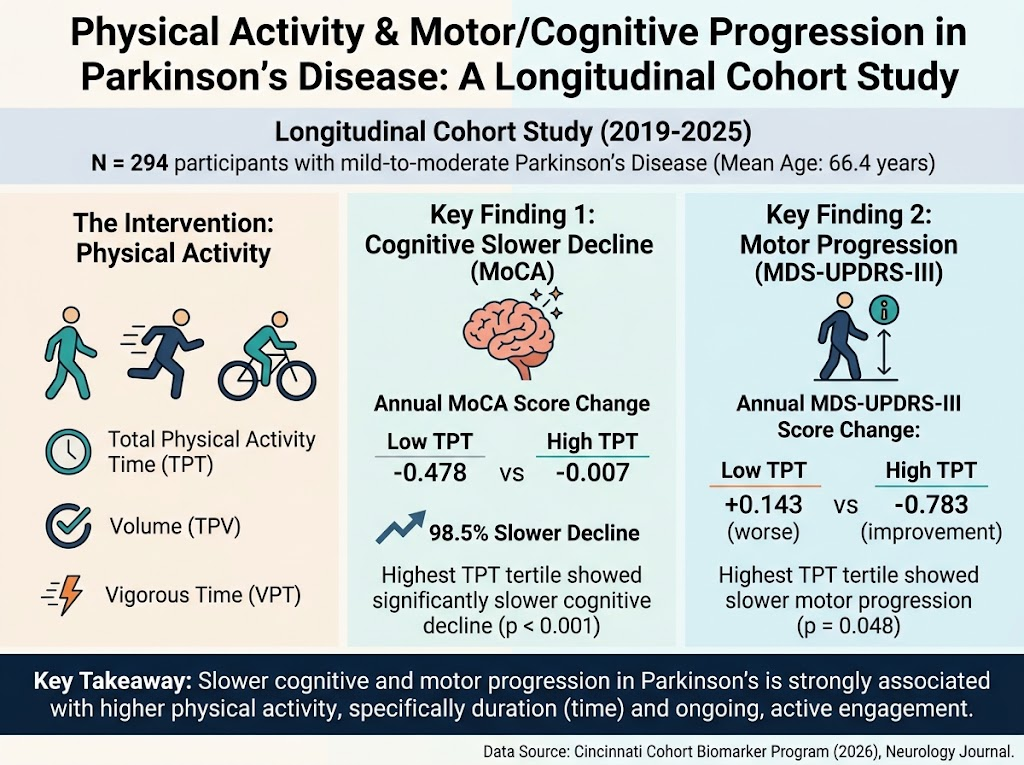
Parkinson disease (PD) is a progressive neurodegenerative disorder characterized by motor symptoms such as tremor, rigidity, and bradykinesia, as well as non-motor manifestations including cognitive decline. Slowing the progression of both motor and cognitive symptoms remains a critical therapeutic goal. While physical activity is widely regarded as beneficial for general health and some neurological diseases, evidence for its direct effect on the progression of PD symptoms has been limited and inconsistent. This longitudinal cohort study aimed to rigorously examine whether physical activity correlates with the rate of motor and cognitive decline in patients with mild-to-moderate PD. Additionally, it sought to identify which aspects of physical activity—such as duration, volume, and intensity—contribute most to these associations.
Methods
Sign in free to continue reading
Create or use your MedXY account to unlock the complete article.
This article was created using several editorial tools, including AI, as part of the process. Human editors reviewed this content before publication.