Risk Stratification Models in Blood or Marrow Transplant Recipients for Predicting Cutaneous Malignant Neoplasms
Introduction and Clinical Background
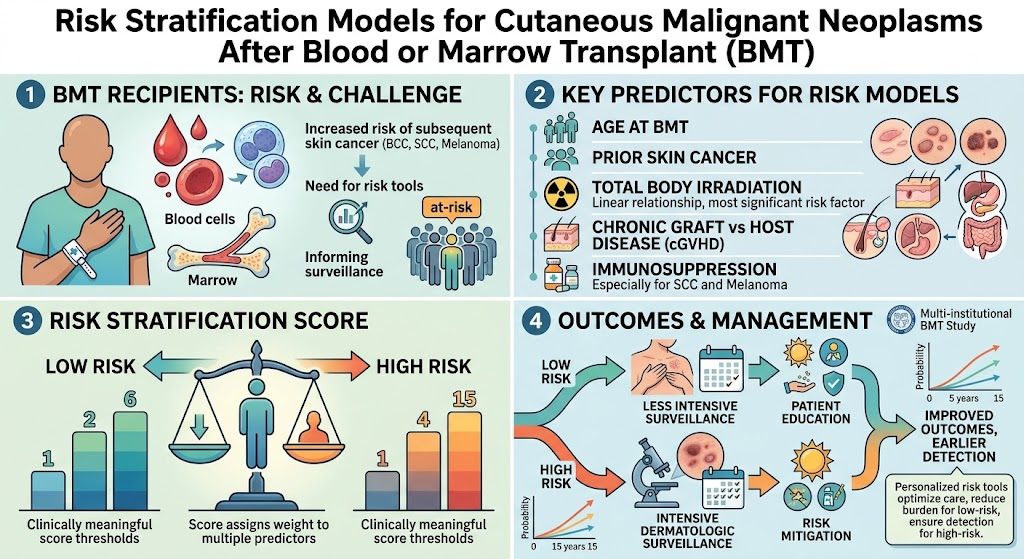
Recipients of blood or marrow transplants (BMT), encompassing both autologous and allogeneic procedures, are at a recognized increased risk of developing subsequent cutaneous malignant neoplasms (CMNs), including basal cell carcinoma (BCC), squamous cell carcinoma (SCC), and melanoma. This elevated risk derives from multiple factors such as prior cancer therapies including total body irradiation, immunosuppressive regimens post-transplant, chronic graft versus host disease (GVHD), and the underlying immunocompromised state associated with transplantation. Given the considerable morbidity and mortality burden posed by skin cancers, identifying transplant survivors at greatest risk for CMNs is critically important for guiding dermatologic surveillance, counseling, and potentially implementing tailored preventive measures.
Previous efforts to characterize risk among BMT survivors have lacked comprehensive, validated tools that integrate patient-specific and treatment-related factors. This gap undermines the ability to efficiently target high-risk individuals for early detection and risk mitigation strategies, which could improve long-term outcomes.
Sign in free to continue reading
Create or use your MedXY account to unlock the complete article.
This article was created using several editorial tools, including AI, as part of the process. Human editors reviewed this content before publication.