Quality indicators for lupus nephritis care: implementing the 2025 EULAR recommendations — development, adherence, and impact on outcomes
Introduction and Context
Systemic lupus erythematosus (SLE) commonly involves the kidneys as lupus nephritis (LN), a major driver of morbidity, progression to chronic kidney disease, and long-term damage. In response to evolving evidence and new therapeutic options, the European Alliance of Associations for Rheumatology (EULAR) published updated recommendations for SLE with kidney involvement in 2025. Translating recommendations into consistent, measurable clinical practice is critical to improving outcomes. Quality indicators (QIs) — measurable elements of care that can be used to assess and improve quality — bridge the gap between guideline statements and real-world delivery.
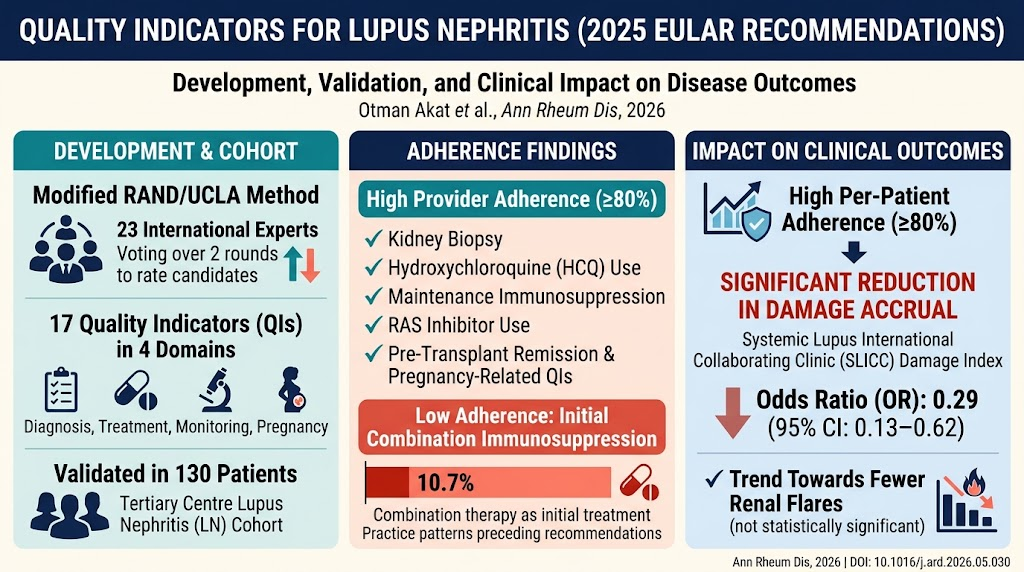
Akat and colleagues (Annals of the Rheumatic Diseases, 2026) used a formal consensus method to develop and validate a set of QIs based on the 2025 EULAR recommendations and evaluated adherence and outcomes in a contemporary tertiary-center cohort of 130 patients with LN. This article summarizes the QI development, the core recommendations embedded in the QIs, real-world adherence trends, the observed association with clinical outcomes, and implications for practice and quality-improvement efforts.
Sign in free to continue reading
Create or use your MedXY account to unlock the complete article.
This article was created using several editorial tools, including AI, as part of the process. Human editors reviewed this content before publication.