Liver Transplantation for Hepatocellular Carcinoma: Prognostic Impact of Complete Pathologic Response and Influence of Treatment Modality—A US National Database Study
complete pathologic responsehepatocellular carcinomaliver transplantationlocoregional therapyyttrium-90
Highlights
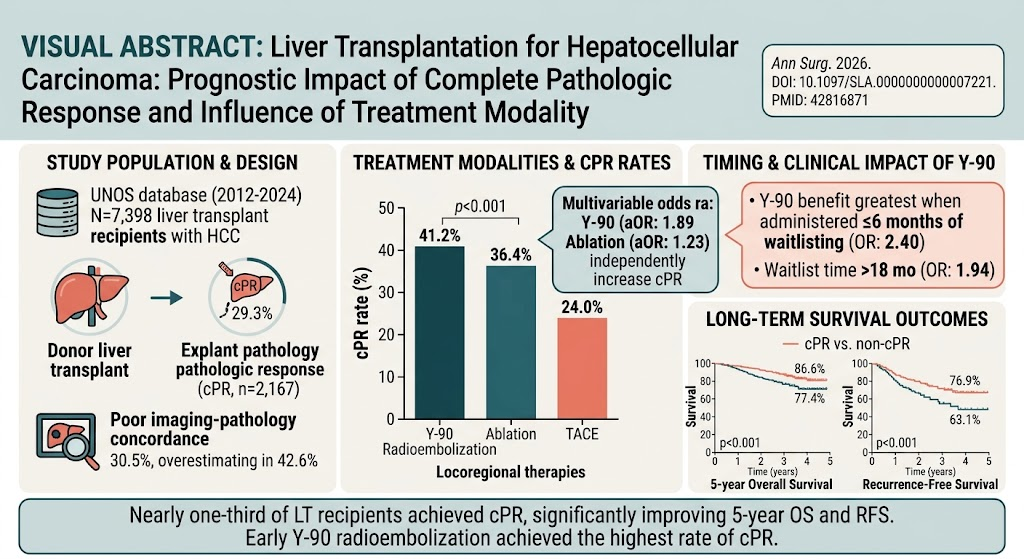
- Complete pathologic response (cPR) occurs in approximately one-third of HCC patients undergoing liver transplantation and is strongly associated with improved overall and recurrence-free survival.
- Yttrium-90 (Y-90) radioembolization and ablation therapies independently increase cPR rates compared to transarterial chemoembolization (TACE), with Y-90 showing the greatest efficacy especially when administered early within six months of waitlisting.
- Imaging-based assessments frequently overestimate treatment response, highlighting the importance of pathological evaluation for accurate prognosis.
- Predictors of cPR include lower tumor burden, normal or moderately elevated alpha-fetoprotein (AFP) levels, longer waitlist times, and specific locoregional treatment choice.
Background
MedXY registered readers
Sign in free to continue reading
Create or use your MedXY account to unlock the complete article.
This article was created using several editorial tools, including AI, as part of the process. Human editors reviewed this content before publication.