Ciliogenic Pancreatopathy: A Novel Link Between Ciliopathies and Exocrine Pancreatic Disease
Highlight
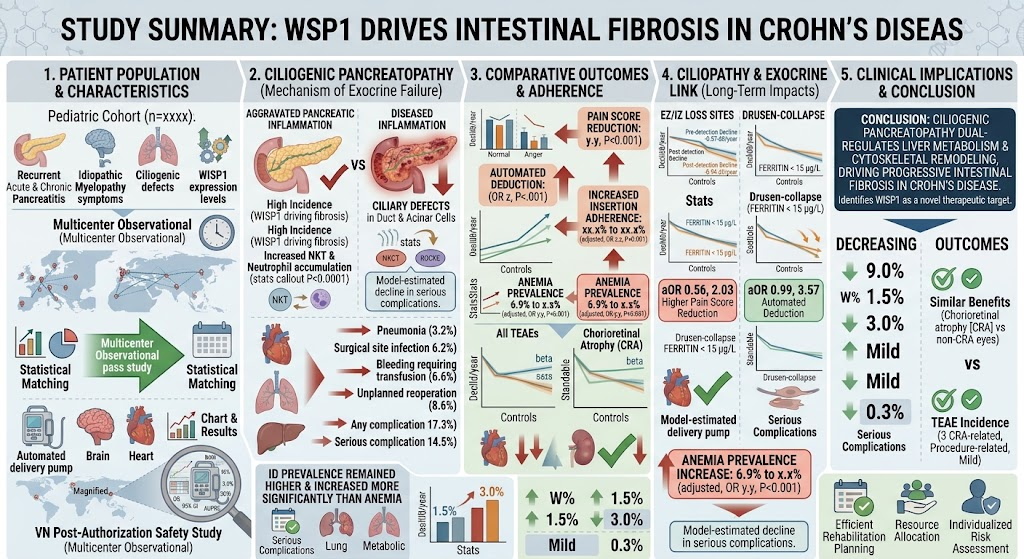
Identification of a novel pancreatic disease, named ciliogenic pancreatopathy, linked to ciliary gene mutations including NPHP3 and HNF1B.
The discovery integrates pancreatic exocrine dysfunction into the spectrum of ciliopathies, traditionally associated with renal and hepatic manifestations.
Mouse models with Nphp3 mutations develop characteristic pancreatic acinar atrophy, adipocyte infiltration, and microcystic changes in secretory canaliculi, mirroring human disease phenotypes.
Advanced imaging techniques, such as Dixon-MRI, reveal increased pancreatic fat content in affected patients, suggesting potential diagnostic biomarkers and therapeutic monitoring tools.
Study Background
The pancreas is not commonly recognized as a primary target organ in ciliopathies, a group of inherited disorders caused by dysfunctional cilia. These disorders often manifest with renal cystic disease, hepatic fibrosis, and other systemic complications. However, emerging evidence from ciliary gene knockout mouse models reveals pancreatic manifestations characterized by acinar atrophy and fatty infiltration, coined adipopancreatosis. This suggests an underappreciated link between ciliary dysfunction and exocrine pancreatic disease. Understanding this relationship is critical for comprehensive clinical assessment, particularly in pediatric populations with syndromic features encompassing renal and pancreatic anomalies.
Study Design
This investigation encompassed a multi-tiered approach integrating clinical genetic analysis, advanced imaging, and animal modeling. The researchers analyzed a cohort of 341 patients presenting with pediatric-onset pancreatic anomalies, screening for mutations in cilia-associated genes such as HNF1B and NPHP3. In parallel, novel mouse models were generated, including conditional Nphp3 inactivation and models harboring mutations paralleling identified human variants. Pancreatic fat content in patients was quantified using Dixon-MRI, a magnetic resonance imaging technique that differentiates fat and water signals, offering a non-invasive means to assess adipose infiltration within the pancreas.
Key Findings
The study identified mutations in cilia-related genes HNF1B and NPHP3 in patients manifesting combined renal dysfunction and pancreatic anomalies. These mutations correlated with increased pancreatic fat accumulation and structural changes. Mouse models with Nphp3 deficiency recapitulated these findings, developing pronounced acinar atrophy and adipocyte accumulation within the pancreas, a phenomenon termed adipopancreatosis. Notably, adipocytes within the pancreas displayed a white adipocyte-like phenotype and likely originated from mesothelial-derived fibroblasts, suggesting a novel cellular pathway for fat infiltration.
Further characterization of pancreatic ductal cilia revealed reduced numbers and altered ciliary length in mutant mice, underscoring the direct impact of ciliary dysfunction on pancreatic architecture. Remarkably, secretory canaliculi—previously underrecognized microstructures between and within acinar cells—showed microcystic morphologies. This suggests a novel morphological hallmark associated with ciliary gene mutations.
Dixon-MRI in affected patients showed significantly elevated pancreatic fat content compared to controls, reinforcing the translational relevance of the mouse model findings. These features appeared consistently in patients harboring HNF1B and NPHP3 mutations, signifying a distinct ciliogenic pancreatic phenotype.
Expert Commentary
This groundbreaking study expands the phenotypic spectrum of ciliopathies by delineating the pancreas as a previously overlooked target organ. The identification of adipopancreatosis and microcystic secretory canaliculi is intriguing, suggesting ciliary defects disrupt pancreatic exocrine homeostasis via mechanisms involving altered ductal cilia and aberrant mesothelial-to-adipocyte differentiation.
Clinicians and researchers must recognize that patients with known ciliopathy mutations, particularly those affecting HNF1B and NPHP3, may be at risk of exocrine pancreatic insufficiency. This has important clinical ramifications, especially in individuals with concurrent renal disease or those undergoing renal transplantation, where pancreatic insufficiency might exacerbate morbidity or complicate post-transplant outcomes.
While the study robustly uses both human clinical data and sophisticated mouse models, limitations include the rarity of identified mutations and the need for larger longitudinal cohorts to assess progression and therapeutic interventions. Additionally, mechanistic studies to dissect detailed molecular pathways linking ciliary dysfunction to fibroblast transformation and pancreatic adipogenesis are warranted.
Conclusion
The identification of ciliogenic pancreatopathy broadens our understanding of ciliopathies as multisystem disorders encompassing the exocrine pancreas. Clinicians managing patients with ciliopathy-associated mutations, especially in the setting of kidney disease, should proactively evaluate pancreatic function to identify coexisting exocrine insufficiency. Early recognition and management could improve patient outcomes through tailored pancreatic enzyme replacement and monitoring.
Future research should aim to elucidate the precise molecular mechanisms underpinning this novel pancreatic phenotype, explore potential therapeutic targets, and establish standardized diagnostic criteria. This discovery underscores the importance of integrated multidisciplinary care spanning nephrology, gastroenterology, and genetics for patients harboring ciliopathy-related gene defects.
Funding and ClinicalTrials.gov
Funding sources and clinical trial registry information were not specified in the referenced article.
References
Rajput M, Flasse L, Porée E, et al. Ciliogenic pancreatopathy reveals a link between ciliopathies and exocrine pancreatic disease. Gut. 2026 Aug 18. PMID: 42613169. Available at: https://pubmed.ncbi.nlm.nih.gov/42613169/
Additional relevant literature can be accessed via PubMed for in-depth exploration of ciliopathies and pancreatic pathology.
This article was created using several editorial tools, including AI, as part of the process. Human editors reviewed this content before publication.