MMedXYNews
HomeVideos
MedXY AI/MedXY News/Section: news

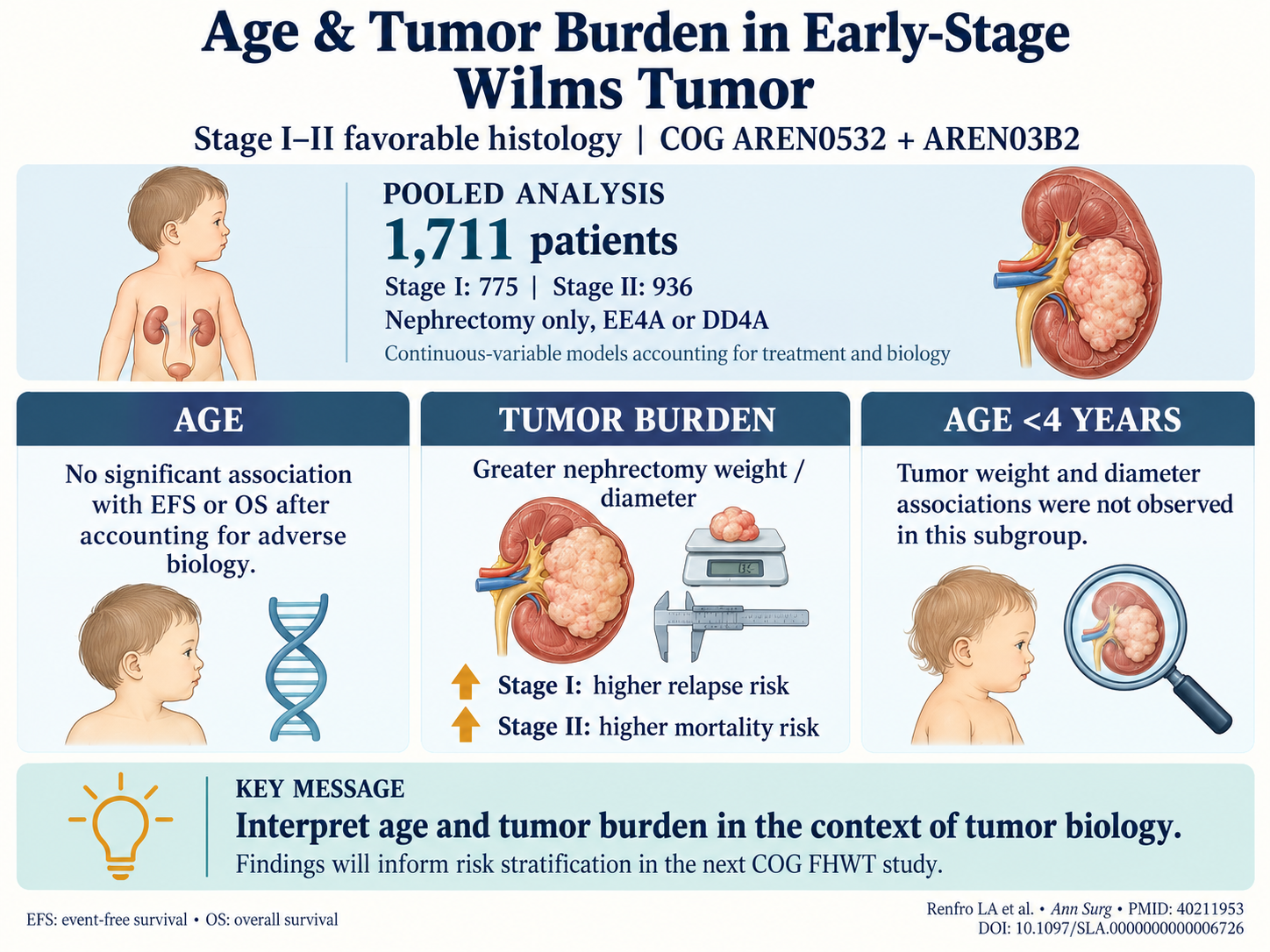
Age, Tumor Size, and Weight in Early-Stage Favorable Histology Wilms Tumor: Reevaluating Prognostic Indicators with COG Data
MedXY Editorial Team•Oct 9, 2026•news
bệnh Wilmspediatric oncologyprognostic factorstumor diametertumor nephrectomy weight

Highlight

  • Age, tumor nephrectomy weight (TNW), and tumor diameter (TD) have historically been used to risk-stratify children with stage I favorable histology Wilms tumor (FHWT) for treatment decisions.
  • Pooled analysis of 1,711 patients from Children’s Oncology Group (COG) studies shows no independent prognostic significance of these variables after adjusting for adverse tumor biology.
  • Adverse biology, more prevalent in older children, confounds associations previously attributed to age and tumor size.
  • Findings suggest refinements in risk stratification models and support individualized treatment approaches in early-stage FHWT.

Study Background

MedXY registered readers

Sign in free to continue reading

Create or use your MedXY account to unlock the complete article.

This article was created using several editorial tools, including AI, as part of the process. Human editors reviewed this content before publication.

Related articles

Open language-specific specialty feeds and department pages.

Predicting Short-Term Outcomes in Pemphigus Patients Treated with Rituximab and Glucocorticoids: Insights from a Multicenter Chinese CohortThis multicenter retrospective study identifies key baseline predictors influencing short-term remission and relapse in pemphigus patients treated with rituximab plus glucocorticoids, guiding personalized treatment strategies.Oct 2, 2026Transforming Care in Follicular Lymphoma: Outcomes and Prognostic Insights in the Rituximab EraThis study analyzes treatment patterns, outcomes, and prognostic factors in 344 patients with transformed follicular lymphoma in the rituximab era, revealing poor event-free survival but moderate overall survival and high relapse rates, guiSep 30, 2026Lymph Node Assessment and Survival Outcomes in Favorable Histology Wilms Tumor: Insights from a Large COG Renal Tumor StudyThis study evaluates how the number and positivity of lymph nodes affect survival outcomes in over 2,000 patients with stage I–III favorable histology Wilms tumor, underscoring the need for standardized lymph node sampling in surgical stagiSep 13, 2026
Loading comments...
MedXY briefing

Get the free newsletter

Evidence-led clinical news, trends, and analysis—delivered to your inbox.

Ask MedXY AI

Most popular

Intimate Health
Five Benefits for Women Continuing Sexual Activity After Menopause
Intimate Health
Why Some Women Have a Strong Sex Drive—And Why Men Shouldn't Worry About It
Nursing & care
How often should a couple have sex?
Cardiology
Precision Medicine for Long QT Syndrome Type 2: Lumacaftor Corrects Trafficking Defects and Shortens QT Interval
General Surgery
Optimizing Postoperative Opioid Prescriptions After Intra-Abdominal Cancer Surgery: Comparing the 5x-Multiplier and 3-Tier Models
© 2026 MedXY
Contact usAbout usPrivacy PolicyMedXY story
Bicistronic CD19/CD22 CAR T-Cell Therapy: A Breakthrough for Pediatric Relapsed/Refractory B-Cell Acute Lymphoblastic Leukemia
A phase 2 trial shows bicistronic CD19/CD22 CAR T-cell therapy yields high remission rates with durable event-free survival in pediatric relapsed/refractory B-ALL, reducing antigen-negative relapse risks and improving outcomes.
Sep 6, 2026
Septic Shock in Allogeneic Hematopoietic Stem-Cell Transplant Recipients: Outcomes, Prognostic Factors, and Clinical Implications from a Multicenter ICU CohortSeptic shock following allogeneic hematopoietic stem-cell transplantation has a high 90-day mortality rate of 63%, strongly influenced by illness severity, fungal infection, and neutropenia. Early aminoglycoside use shows complex associatioSep 2, 2026
Tumor Size as a Prognostic Marker in Thymic Epithelial Tumors: Insights from a Large European CohortAn analysis of 2,556 thymic tumor cases highlights tumor size as a significant predictor of survival outcomes across thymoma, thymic carcinoma, and neuroendocrine thymic tumors.Aug 27, 2026