We use cookies

Our website uses essential cookies and, with your consent, additional cookies to measure performance and improve our services. Cookie Policy.

You can change your choice at any time.

MMedXYNews
HomeVideos
MedXY AI/MedXY News/Section: Critical Care

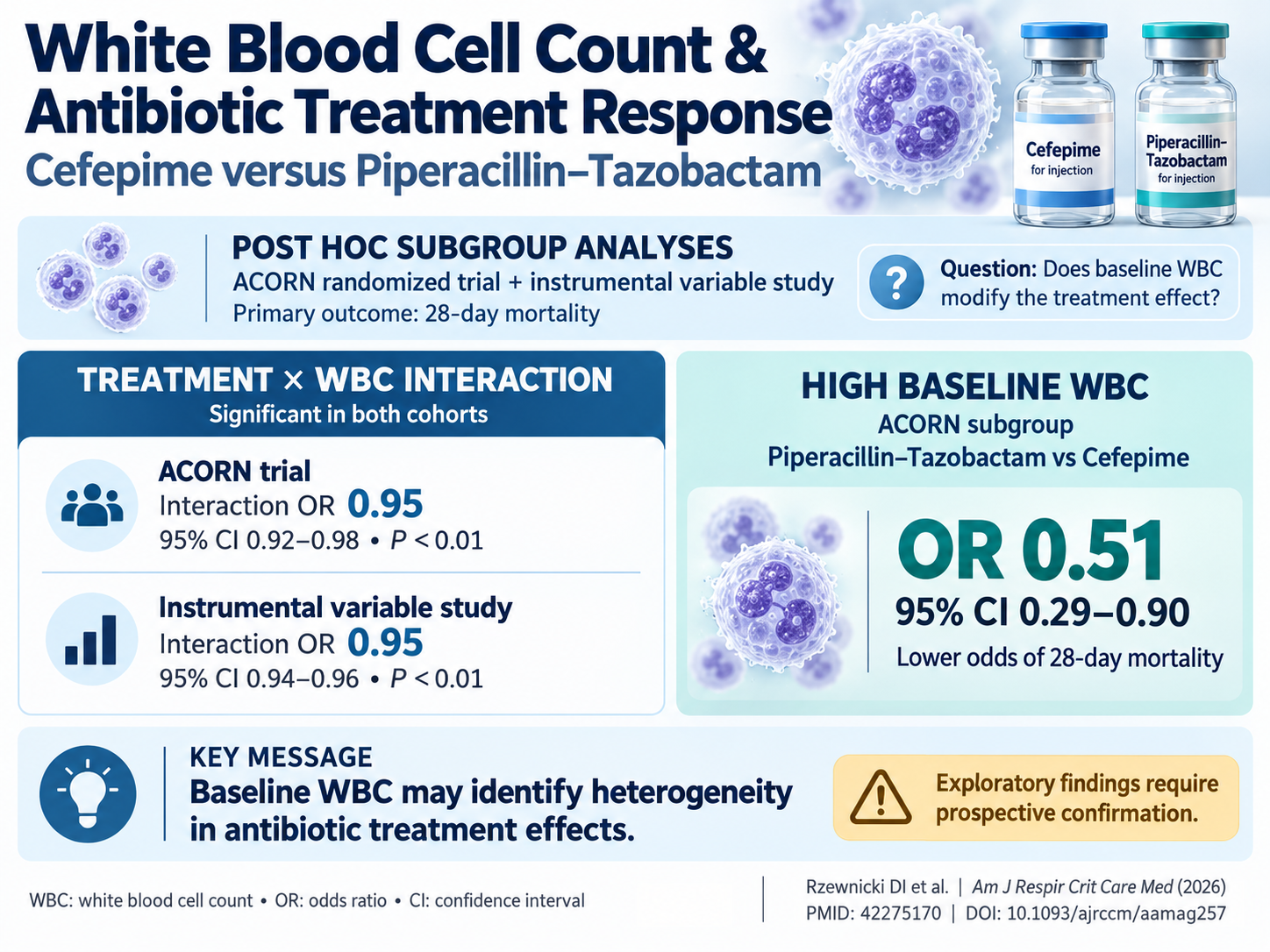
White Blood Cell Count as a Predictor of Antibiotic Efficacy in Sepsis: Insights from Comparative Studies of Cefepime and Piperacillin-Tazobactam
MedXY Editorial Team•Oct 9, 2026•Critical Care
antibiotic choicecefepimeMortalityPiperacillin-tazobactamsepsiswhite blood cell count

Highlight

This analysis reveals that baseline white blood cell (WBC) count significantly modifies the impact of anti-pseudomonal antibiotic choice on 28-day mortality in sepsis. Notably, patients with a WBC count ≥16 showed improved survival with piperacillin-tazobactam compared to cefepime. These findings emerged consistently across two large clinical datasets, underscoring the potential of WBC as a biomarker for antibiotic selection and predictive enrichment in future trials.

Study Background

MedXY registered readers

Sign in free to continue reading

Create or use your MedXY account to unlock the complete article.

This article was created using several editorial tools, including AI, as part of the process. Human editors reviewed this content before publication.

Related articles

Open language-specific specialty feeds and department pages.

Reevaluating Oliguria Thresholds in Critical Care: Implications for AKI, CKD, and Mortality RiskNew evidence suggests lower urine output thresholds than current standards better predict acute kidney injury, chronic kidney disease, and mortality in critically ill patients, urging redefinition of oliguria parameters in AKI diagnostics.Oct 19, 2026Optimizing Step Counts and Intensity to Reduce Mortality Risk: Insights from UK Biobank Accelerometer DataThis study reveals that various combinations of daily step counts and stepping intensity independently reduce all-cause and cardiovascular mortality, highlighting the importance of personalized physical activity strategies.Oct 17, 2026Impact of Time-Varying Social Integration on Mortality Following Traumatic Spinal Cord Injury: Insights from the SCIMS Longitudinal StudyThis study reveals that lower and declining social integration significantly increase long-term mortality risk after traumatic spinal cord injury, highlighting critical social determinants alongside clinical factors.Oct 17, 2026
Loading comments...
MedXY briefing

Get the free newsletter

Evidence-led clinical news, trends, and analysis—delivered to your inbox.

Ask MedXY AI

Most popular

Intimate Health
Five Benefits for Women Continuing Sexual Activity After Menopause
Intimate Health
Why Some Women Have a Strong Sex Drive—And Why Men Shouldn't Worry About It
Nursing & care
How often should a couple have sex?
Cardiology
Precision Medicine for Long QT Syndrome Type 2: Lumacaftor Corrects Trafficking Defects and Shortens QT Interval
General Surgery
Optimizing Postoperative Opioid Prescriptions After Intra-Abdominal Cancer Surgery: Comparing the 5x-Multiplier and 3-Tier Models
© 2026 MedXY
Contact usAbout usPrivacy PolicyMedXY story
Impact of Diabetes and Atherosclerotic Cardiovascular Disease on the Prognostic Role of sTNFR1 in Sepsis Mortality
This study reveals how diabetes and ASCVD alter the link between soluble TNF receptor 1 levels and 90-day sepsis mortality, informing biomarker-guided risk assessment and understanding of sepsis pathobiology.
Oct 16, 2026
Individualized Treatment Effects of Cefepime vs Piperacillin-Tazobactam in Adults Hospitalized with Acute Infection: A Review of Evidence and Clinical ImplicationsThis review synthesizes evidence on how individual patient characteristics modify the comparative effects of cefepime versus piperacillin-tazobactam on acute kidney injury and neurologic outcomes in adults hospitalized with acute infection.Oct 13, 2026
Rare But Risky: Clinical Implications of Pneumothorax Following Thyroidectomy and ParathyroidectomyPostoperative pneumothorax after thyroid or parathyroid surgery is uncommon but linked with significantly increased mortality and complications, underscoring the need for vigilance and prompt management.Oct 10, 2026