Highlight
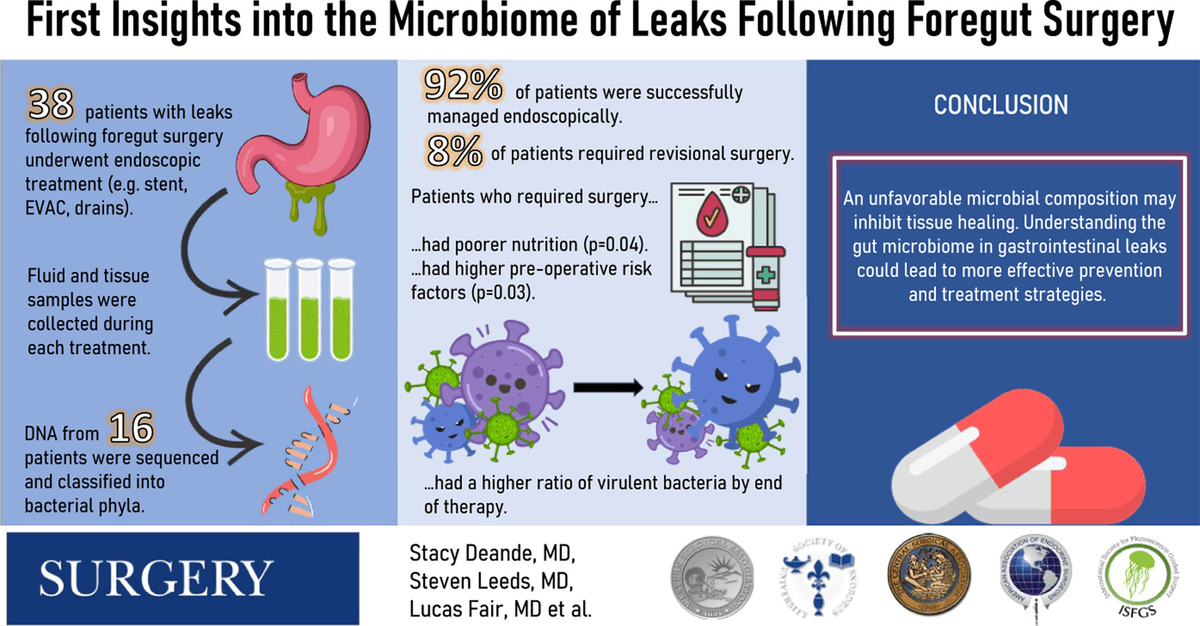
Anastomotic leaks occurred in foregut surgery patients were predominantly managed with endoscopic approaches, primarily involving vacuum therapy, stents, and drains.
Patients requiring surgical intervention showed poorer nutritional status and increased preoperative risk factors compared to those managed endoscopically.
The microbiome composition at leak sites varies with treatment modality; endoscopic success associates with a predominance of Bacteroides and Firmicutes, whereas Proteobacteria enrichment correlates with surgical failure.
Understanding bacterial profiles in gastrointestinal leaks suggests nutrition and microbial environment significantly impact wound healing and could guide future therapeutic strategies.
Study Background
Foregut surgery, encompassing operations on the esophagus, stomach, and proximal small intestine, carries a known risk of anastomotic leak – a serious postoperative complication with high morbidity and mortality. Such leaks disrupt normal gastrointestinal continuity resulting in infection, sepsis, and prolonged hospitalization. Despite advances in surgical techniques and postoperative care, managing anastomotic leaks remains challenging. Currently, treatment options include surgical re-exploration or less invasive endoscopic methods such as stenting, vacuum therapy, and drainage. Emerging evidence implicates the gut microbiome—comprising a complex community of microorganisms—in influencing anastomotic healing and leak pathophysiology. Understanding how microbial populations relate to clinical outcomes may enable personalized interventions, improving patient recovery and reducing complications.
Study Design
This investigation was a retrospective review of a prospectively maintained institutional database, approved by the local institutional review board. It included patients with clinically confirmed foregut anastomotic leaks from 2021 to 2024. Patients were stratified based on the primary management approach: endoscopic-only treatment or surgical intervention. Data collected encompassed demographic details, clinical risk scores (including the American College of Surgeons surgical risk calculator), nutritional status indicators such as serum albumin, length of preoperative hospitalization, readmissions, and subsequent interventions.
During therapeutic procedures, microbial and host tissue samples were systematically collected to analyze bacterial populations involved in the leaks. Bacterial DNA extraction, amplification, and sequencing were performed on 16 patients, clustering sequences into operational taxonomic units for microbiome profiling. The primary endpoint was the success of endoscopic therapy versus the necessity for surgical management. Secondary outcomes included healing rates, interventions applied, and correlations with microbiome composition.
Key Findings
A total of 38 patients with foregut anastomotic leaks were analyzed. Notably, 92% were successfully managed with endoscopic therapy, whereas 8% required surgical intervention. Within the endoscopically treated group, healing modalities included endoluminal vacuum therapy (26%), stents (9%), endoluminal drains (23%), or combinations thereof (42%).
Comparative analysis revealed that patients who required surgery had significantly lower serum albumin levels (P = .04), indicating poorer nutritional status, and a longer predicted length of stay preoperatively (P = .03), reflecting higher baseline risk profiles.
Microbial profiling demonstrated dynamic shifts in bacterial communities depending on therapeutic interventions. Four predominant bacterial phyla were identified across samples: Firmicutes, Bacteroidetes, Actinobacteria, and Proteobacteria. Successful endoscopic management correlated with a microbiome dominated by Bacteroides (Bacteroidetes) and Firmicutes, which are generally considered beneficial or commensal gut bacteria. Conversely, the single surgical patient sample exhibited a higher relative abundance of Proteobacteria, a phylum often implicated in dysbiosis and pathogenicity.
These findings suggest that an unfavorable microbial milieu, compounded by poor nutrition and increased surgical risk, may hinder wound healing and predispose patients to endoscopic treatment failure and require surgery.
Expert Commentary
This study contributes critical insight into the microbiological environment of foregut anastomotic leaks, linking bacterial taxa composition with clinical outcomes. The predominance of Bacteroides and Firmicutes in successfully treated patients aligns with their known roles in maintaining gut mucosal integrity and immune homeostasis. Conversely, the enrichment of Proteobacteria—a phylum encompassing many opportunistic pathogens—may signify a state of dysbiosis that impairs tissue repair.
Notably, the association between lower albumin and higher preoperative risk scores with surgical failure emphasizes the interplay between host factors and microbial ecology. Nutritional optimization may thus represent an actionable strategy to promote favorable microbiome profiles and enhance healing. However, the sample size, particularly in microbiome sequencing, limits broad generalization. Further multicentric prospective studies are essential to validate these microbial signatures and explore causality.
Additionally, integrating microbiome profiling into clinical workflows could enable prognostic stratification and novel therapeutic approaches such as targeted probiotics, selective antibiotics, or microbiome transplantation to prevent or treat leaks.
Conclusion
Anastomotic leaks after foregut surgery remain a complex clinical challenge. This study highlights the significance of both patient-related factors—namely, nutritional status and surgical risk—and localized microbiome composition in influencing management outcomes. Endoscopic interventions are effective in most cases where Bacteroides- and Firmicutes-rich microbiomes predominate, whereas a shift towards Proteobacteria corresponds with poor healing requiring surgery. These preliminary findings underscore the potential of microbiome-informed personalized care pathways to improve foregut leak prevention and therapeutic success.
Funding and Clinical Trials Registration
The study was conducted under institutional support with no external funding reported. No clinical trial registration was indicated.
References
1. Deande ST, Leeds SG, Fair L, et al. First insights into the microbiome of leaks following foregut surgery. Surgery. 2026 Jul 6;198:110428. doi:10.1016/j.surg.2026.110428.
2. Shogan BD, Belogortseva N, Luong PM, et al. Collagen degradation and MMP9 activation by Enterococcus faecalis contribute to intestinal anastomotic leak. Sci Transl Med. 2015;7(286):286ra68.
3. van Praagh JB, Kaoutzanis C, Datta J, et al. The role of the microbiome in anastomotic leak after gastrointestinal surgery: a systematic review. J Gastrointest Surg. 2023;27(3):521-532.
4. Hoyo-Vadillo C, Maldonado-Barragán A, Olivares M, Plaza-Díaz J. Role of bacteria in surgical wound healing and anastomotic leaks. J Clin Med. 2021;10(6):1288.
5. Choi B, Kim ES, Kim MJ, Park SJ. Impact of nutritional status on the clinical outcomes in surgical patients with gastrointestinal anastomotic leaks. Nutr Clin Pract. 2020;35(6):1130-1137.
6. American College of Surgeons National Surgical Quality Improvement Program (ACS NSQIP). User Guide for the Surgical Risk Calculator. 2024 Edition.