Highlight
This phase 1b clinical trial evaluated the oral nonsteroidal selective glucocorticoid receptor modulator, miricorilant, across multiple dosing regimens in patients with presumed metabolic dysfunction-associated steatohepatitis (MASH). Miricorilant demonstrated dose-dependent reductions in relative liver fat content (10.1% to 76.6%), improvements in liver function biomarkers, and fibrosis scores. The intermediate intermittent dosing schedule—100 mg twice weekly—offered the most favorable benefit-risk profile, achieving meaningful liver fat reduction and improved metabolic markers with enhanced tolerability.
Study Background
Metabolic dysfunction-associated steatohepatitis (MASH) is a progressive liver disease characterized by hepatic steatosis with inflammation and fibrosis, linked closely to metabolic syndrome components such as obesity, type 2 diabetes, and dyslipidemia. As a subset of nonalcoholic steatohepatitis (NASH), MASH represents a growing global health burden with current therapeutic options limited to lifestyle modification and off-label use of agents targeting metabolic pathways. Emerging data implicate hepatic cortisol metabolism dysregulation in MASH pathogenesis, offering a novel therapeutic target.
Miricorilant, a selective glucocorticoid receptor modulator, aims to modulate hepatic cortisol activity nonsteroidally, potentially reducing hepatic inflammation and fibrosis through improved metabolic and endocrine regulation. This phase 1b study investigates miricorilant’s efficacy and safety to inform the dosing strategy for subsequent advanced trials.
Study Design
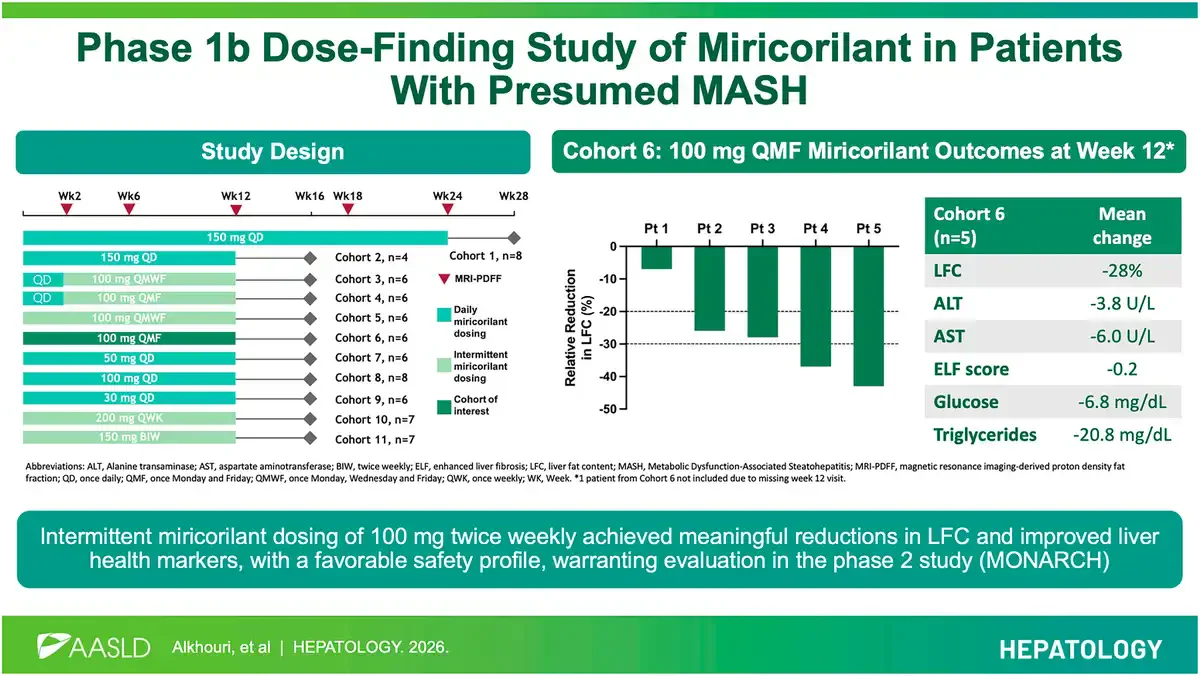
This open-label, dose-ranging phase 1b trial enrolled 70 patients with presumed MASH based on clinical and biochemical criteria. Participants received oral miricorilant either daily (30-150 mg) or intermittently (100-200 mg once, twice, or thrice weekly) for durations of 12 to 24 weeks. The primary endpoints included relative reduction in liver fat content (LFC) as measured by imaging and changes in liver biochemical markers. Secondary endpoints assessed fibrosis biomarkers including the enhanced liver fibrosis (ELF) score, and safety outcomes focusing on treatment-emergent adverse events (TEAEs), especially liver aminotransferase elevations.
Key Findings
Miricorilant administration led to significant relative reductions in liver fat content across all dosing regimens, ranging from 10.1% to 76.6%. Notably, rapid and substantial liver fat reductions (up to 70.2% at week 6) in daily dosing cohorts were associated with treatment interruptions due to transient aminotransferase elevations, possibly reflecting hepatocellular stress from rapid fat mobilization.
Intermittent dosing schedules mitigated such adverse events, enabling more patients to complete the treatment period without discontinuation. Among these regimens, the 100 mg twice-weekly dosing showed the optimal benefit-risk balance: a mean LFC reduction of 28.2% at 12 weeks, accompanied by modest but clinically relevant decreases in alanine aminotransferase (ALT) by 3.8 U/L and aspartate aminotransferase (AST) by 6.0 U/L, indicative of hepatic improvement.
Additionally, this dosing cohort exhibited numerical improvements in lipid profiles, glycemic control markers, and biomarkers of fibrosis, suggesting a broader metabolic benefit. TEAEs leading to drug interruption or discontinuation occurred in 12.9% of patients, predominantly in daily dosing arms, emphasizing the safety advantage of intermittent regimens.
Expert Commentary
The results underscore miricorilant’s potential as a novel therapeutic agent targeting glucocorticoid receptor-mediated pathways in MASH. The observed hepatic fat reductions and biomarker improvements align mechanistically with cortisol modulation and downstream metabolic effects. The transient transaminase elevations seen with daily dosing plausibly reflect rapid lipid turnover and warrant careful monitoring and dosing adjustments.
Intermittent dosing may offer an improved therapeutic window, balancing efficacy with safety, which is essential for chronic liver disease management. While encouraging, the study’s limitations include the relatively small sample size, open-label design, and reliance on presumed MASH diagnosis, which may impact generalizability. Further phase 2b data from the ongoing MONARCH study (NCT06108219) will be critical to consolidate these findings and define miricorilant’s role in clinical practice.
Conclusion
Miricorilant shows promising safety and efficacy signals in reducing liver fat and improving liver health markers in patients with presumed MASH. Intermittent dosing, particularly 100 mg twice weekly, balances meaningful therapeutic benefit with tolerability, supporting progression to phase 2b trials. Given the unmet need in metabolic liver disease, miricorilant represents a novel pharmacologic strategy that could complement existing lifestyle and metabolic therapies.
Funding and Clinical Trials Registration
The study was conducted by Alkhouri et al., with details registered under ClinicalTrials.gov identifier NCT06108219 for the ongoing phase 2b MONARCH study evaluating miricorilant in MASH patients.
References
1. Alkhouri N et al. Phase 1b study of miricorilant in patients with presumed metabolic dysfunction-associated steatohepatitis (MASH). Hepatology. 2026 Oct 26. PMID: 42929711.
2. Younossi Z et al. Global epidemiology of nonalcoholic fatty liver disease—Meta‐analytic assessment of prevalence, incidence, and outcomes. Hepatology. 2016 Jul;64(1):73-84.
3. Angeli P et al. Hepatic cortisol metabolism and pathogenesis of nonalcoholic steatohepatitis: implications for novel therapeutic strategies. Hepatology. 2020;72(5):1827-1837.
4. Friedman SL et al. Mechanisms of NAFLD development and therapeutic strategies. Nat Med. 2018 Jul;24(7):908-922.