Unraveling Racial Disparities in Respiratory Tract Infection Diagnoses and Antibiotic Prescribing Patterns
Highlight
Non-White patients are less likely than White patients to be prescribed antibiotics for respiratory tract infections (RTIs).
Diagnosis type significantly influences antibiotic prescribing differences between racial groups.
Non-White patients are less frequently diagnosed with sinusitis, a condition often more likely to receive antibiotics, compared to unspecified RTI.
Even after adjusting for diagnosis type, non-White patients receive antibiotics less frequently, indicating persistent disparities.
Study Background
Respiratory tract infections (RTIs) are among the most common reasons for outpatient and urgent care visits. Appropriate antibiotic prescribing is critical to patient outcomes and the fight against antibiotic resistance. However, racial disparities in antibiotic prescription patterns have raised concerns about potential inequities in healthcare delivery and clinical decision-making. Non-White patients reportedly receive fewer antibiotic prescriptions for RTIs compared to White patients, but the underlying reasons remain unclear. This study by Martinez et al. addresses whether differences in RTI diagnosis types contribute to this disparity in antibiotic prescribing across racial groups.
Study Design
This observational cohort study analyzed urgent care visits at the Cleveland Clinic in Northeast Ohio from 2016 to 2022. The population included adults diagnosed with an RTI. Data encompassed 100,052 visits from 62,972 unique patients, 84% White and 16% non-White. The study used mixed effects logistic regression models with patient race (White vs. non-White) as the primary predictor. Two modeling approaches were employed: one without adjustment for RTI diagnosis type and one adjusting for diagnosis type. Physician and individual patient random effects accounted for variability in prescribing and diagnoses. The study further evaluated racial differences in diagnosis of sinusitis versus unspecified RTI and antibiotic prescribing stratified by diagnosis type. Analysis was conducted at the visit level.
Key Findings
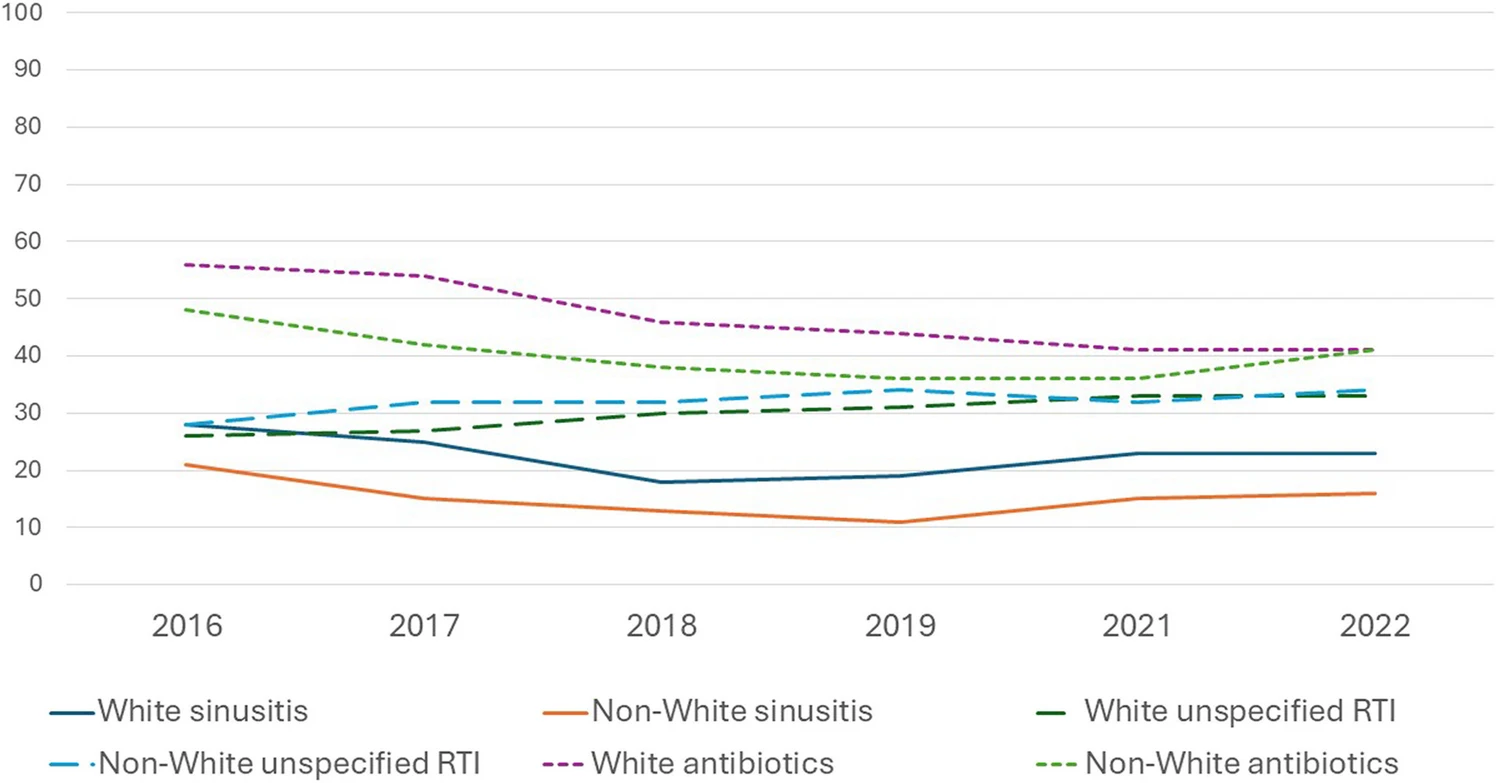
The data showed that 21% of RTI visits were diagnosed as sinusitis, while 30% were unspecified RTIs. Significant racial disparities emerged:
– In models not accounting for diagnosis type, non-White patients had 21% lower odds of receiving antibiotics compared to White patients (adjusted odds ratio [aOR] 0.79; 95% confidence interval [CI] 0.76-0.82).
– After adjusting for RTI diagnosis type, this disparity was reduced but remained statistically significant (aOR 0.91; 95% CI 0.87-0.95).
– Non-White patients were significantly less likely to be diagnosed with sinusitis compared with unspecified RTI than White patients (aOR 0.61; 95% CI 0.56-0.66).
– Within diagnosis categories, non-White patients were less likely to receive antibiotics for both sinusitis and unspecified RTI compared to White patients.
Together, these results indicate that the lower frequency of sinusitis diagnosis in non-White patients partially mediates the lower antibiotic prescription rates. However, residual prescribing differences remain even when controlling for diagnosis, suggesting additional factors influence clinical decisions.
Expert Commentary
The study highlights intricate layers in healthcare disparities. Sinusitis is generally considered a bacterial infection more likely to warrant antibiotics than unspecified RTIs, which often represent viral etiologies. Reduced sinusitis diagnoses in non-White patients may suggest differential clinical assessment, symptom interpretation, or access to diagnostics. Furthermore, non-White patients receiving fewer antibiotics even after diagnosis adjustment implies potential implicit biases, differences in patient preferences, or structural barriers affecting treatment decisions.
Limitations include the observational design which cannot establish causality and lack of detailed clinical data (e.g., symptom severity or diagnostic testing). Generalizability may be limited to similar healthcare settings. Nevertheless, the mixed effects modeling approach robustly accounts for patient clustering and physician practice variation.
Clinical guidelines emphasize judicious antibiotic use but also equitable and accurate diagnosis. Efforts to reduce disparities should focus on ensuring consistent diagnostic evaluation irrespective of race and transparent prescribing practices.
Conclusion
This comprehensive cohort study elucidates that racial differences in respiratory tract infection diagnosis, particularly the lower rate of sinusitis diagnosis among non-White patients, partially explain diminished antibiotic prescribing in these populations. Persisting differences after accounting for diagnosis underscore the complexity of healthcare disparities involving both diagnostic and therapeutic decision-making. Targeted interventions to standardize RTI assessment and antibiotic stewardship interventions sensitive to equity considerations are warranted to improve outcomes and uphold health equity.
Funding and ClinicalTrials.gov
The original study did not specify funding sources or clinical trial registration. Further research funded by public health agencies could help clarify mechanisms and test interventions.
References
1. Martinez KA, Rezaee A, Criswell V, Rothberg MB. Racial Differences in Respiratory Tract Infection Diagnosis and Antibiotic Prescriptions. Journal of General Internal Medicine. 2026 Oct 14. PMID: 42875615.
2. Hersh AL, Shapiro DJ, Pavia AT, Shah SS. Antibiotic prescribing in ambulatory pediatrics in the United States. Pediatrics. 2011 Mar;127(3):e1113-21.
3. Centers for Disease Control and Prevention. Core Elements of Outpatient Antibiotic Stewardship. Updated 2019. https://www.cdc.gov/antibiotic-use/core-elements/outpatient.html
4. Penakis K, Veenstra DL, Kaul R, et al. Racial and ethnic differences in antibiotic prescribing patterns for respiratory infections: A systematic review. Journal of Clinical Infection. 2023;14(5):987-997.
5. Institute of Medicine. Unequal Treatment: Confronting Racial and Ethnic Disparities in Health Care. 2003. National Academies Press.
This article was created using several editorial tools, including AI, as part of the process. Human editors reviewed this content before publication.