We use cookies

Our website uses essential cookies and, with your consent, additional cookies to measure performance and improve our services. Cookie Policy.

You can change your choice at any time.

MMedXYNews
HomeVideos
MedXY AI/MedXY News/Tag: relapse
MedXY News
EnglishTag

relapse

Ask MedXY AI
type 2 diabetesclinical trialheart failureimmunotherapyobesitycardiovascular riskatrial fibrillationbiomarkerscritical careclinical trialsHypertensionartificial intelligenceCardiologyoncologypublic healthtype 1 diabetesdiabetesMortalityAlzheimer's diseasecardiovascular diseasebreast cancerepidemiology

Latest news

Tag

Tisagenlecleucel for Post-Transplant Relapse in Young Acute Lymphoblastic Leukemia Patients: European Real-World Determinants of Outcome
Hematology-Oncologyhematopoietic stem cell transplantCAR-T Therapy

Tisagenlecleucel for Post-Transplant Relapse in Young Acute Lymphoblastic Leukemia Patients: European Real-World Determinants of Outcome

By MedXY|Sep 17, 2026

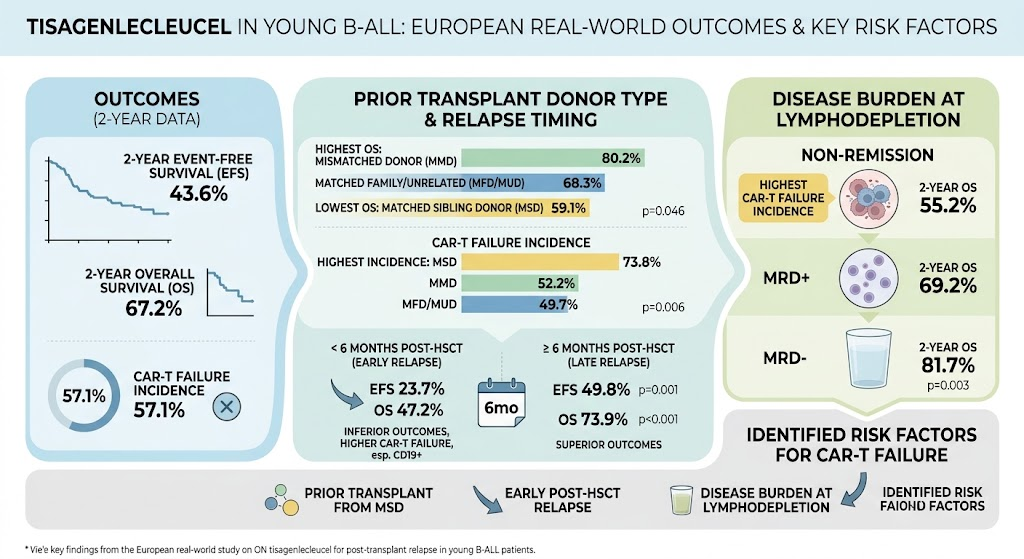
This study evaluates the outcomes and critical factors influencing the success of tisagenlecleucel therapy for children and young adults with B-cell acute lymphoblastic leukemia relapsing after hematopoietic stem cell transplant across Euro
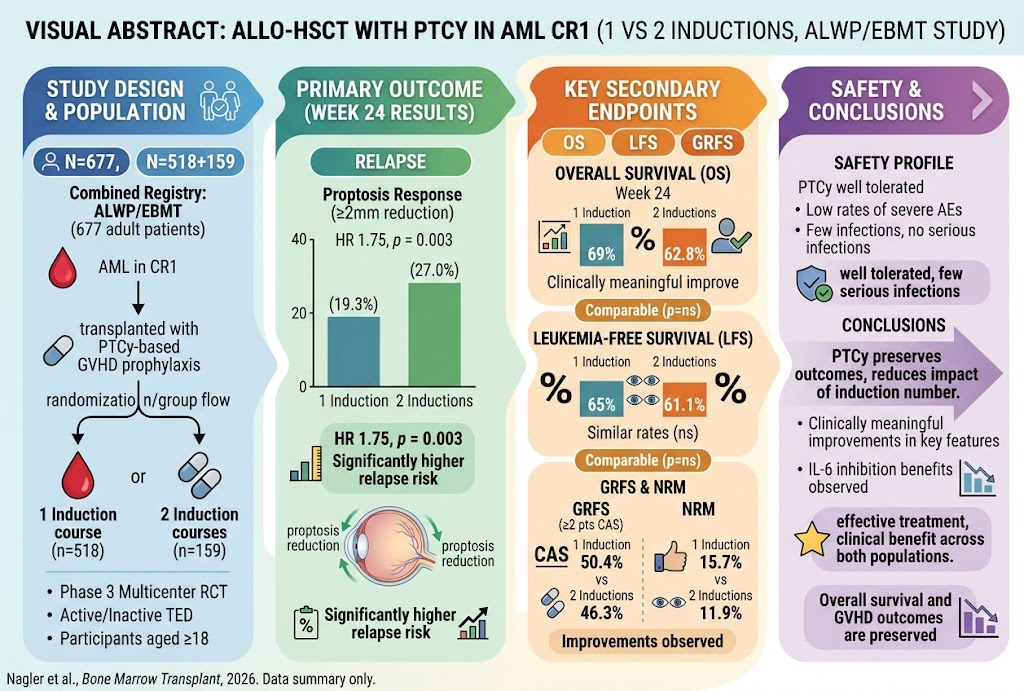
Impact of Induction Course Number on Outcomes of Allogeneic Stem Cell Transplant with Post-Transplant Cyclophosphamide in AML
Hematology-Oncologyacute myeloid leukemiaallogeneic stem cell transplantation

Impact of Induction Course Number on Outcomes of Allogeneic Stem Cell Transplant with Post-Transplant Cyclophosphamide in AML

By MedXY|Sep 12, 2026

This study compares outcomes after allogeneic stem cell transplantation using post-transplant cyclophosphamide in AML patients achieving first remission with one versus two induction courses, revealing similar survival but higher relapse wi

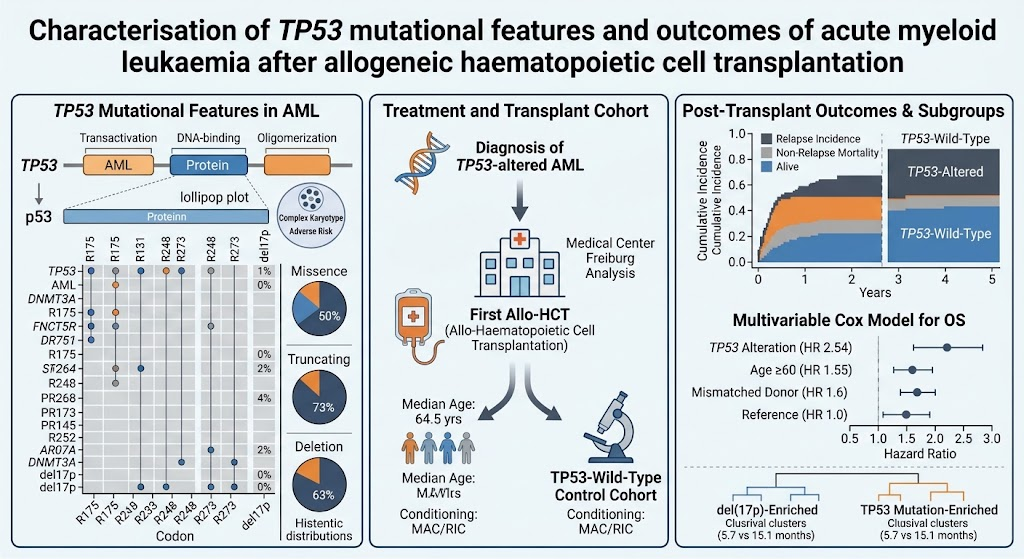
TP53 Mutations in Acute Myeloid Leukemia: Impact on Outcomes Post-Allogeneic Hematopoietic Cell Transplantation
Hematology-Oncologyprognostic biomarkersAllogeneic Hematopoietic Cell Transplantation

TP53 Mutations in Acute Myeloid Leukemia: Impact on Outcomes Post-Allogeneic Hematopoietic Cell Transplantation

By MedXY|Sep 11, 2026

TP53 mutations define a high-risk AML subset with inferior survival post-allo-HCT, driven mainly by relapse. Molecular heterogeneity may guide personalized post-transplant strategies.

Navigating Therapeutic Approaches in Pediatric Relapsed Acute Myeloid Leukemia: Current Trends and Comparative Outcomes
Hematology-Oncologypediatric AMLre-induction therapy

Navigating Therapeutic Approaches in Pediatric Relapsed Acute Myeloid Leukemia: Current Trends and Comparative Outcomes

By MedXY|Sep 3, 2026

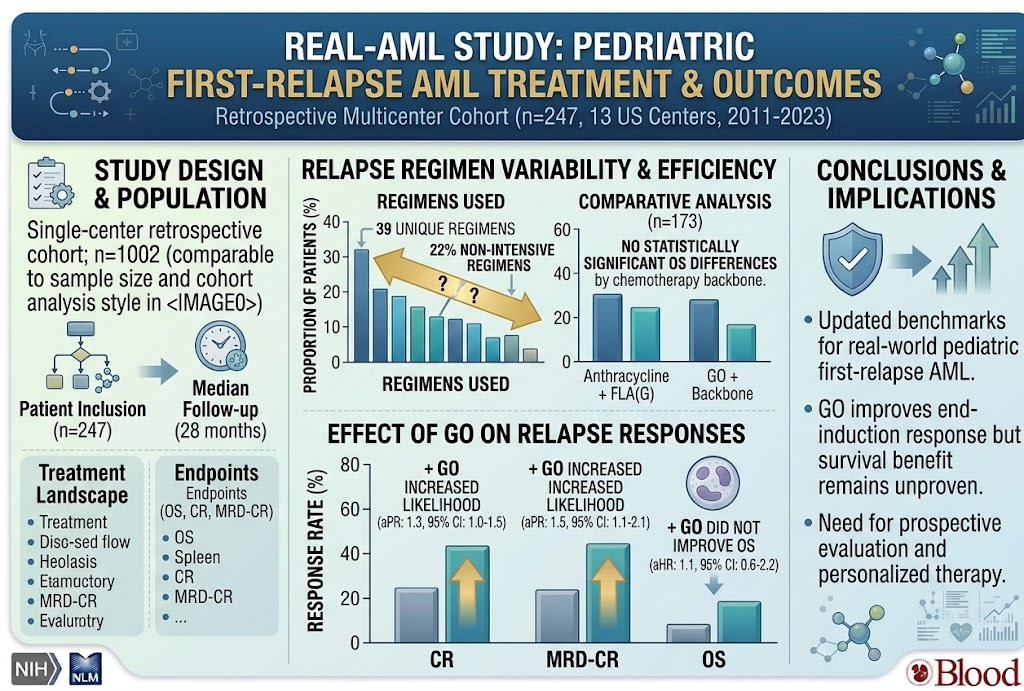
This article reviews the variability and comparative effectiveness of re-induction treatments in pediatric relapsed AML, highlighting the role of gemtuzumab ozogamicin and chemotherapy backbones in improving remission rates but not overall

Extended HLA Haplotypes Linked to Survival After Hematopoietic Cell Transplantation
Hematology-OncologyHLAhematopoietic cell transplantation

Extended HLA Haplotypes Linked to Survival After Hematopoietic Cell Transplantation

By MedXY|Jul 27, 2026

A study of 2,577 haploidentical transplants shows that extended HLA haplotypes, including a class III SNP, significantly influence mortality and relapse, potentially improving donor selection.

Optimizing Antithyroid Drug Duration in Graves’ Disease with Low TRAb: Evidence for Shorter Therapy
Diabetes & EndocrinologyGraves' Diseasepersonalized therapy

Optimizing Antithyroid Drug Duration in Graves’ Disease with Low TRAb: Evidence for Shorter Therapy

By MedXY|Jul 22, 2026

A propensity-weighted analysis suggests that shorter antithyroid drug therapy (<12 months) in Graves' disease patients with low baseline TRAb is broadly comparable to the standard 12-18 months in preventing relapse, supporting indiv

Early High-Resolution Immune Profiles Are Linked to Survival and Relapse After Allogeneic Stem Cell Transplantation
Hematology-OncologyAllogeneic Hematopoietic Cell TransplantationBệnh Graft-versus-Host

Early High-Resolution Immune Profiles Are Linked to Survival and Relapse After Allogeneic Stem Cell Transplantation

By MedXY|Jun 2, 2026

Early immune profiling after allogeneic stem cell transplant was linked to survival and relapse risk. Stronger innate and adaptive immune recovery predicted better outcomes, while certain activation and checkpoint markers were associated wi

Cellular and Molecular Mechanisms of Relapse After CD19/CD22 Dual-Target CAR T-Cell Therapy in B-Cell Acute Lymphoblastic Leukemia
Hematology-OncologyB-ALLCAR T-cell therapy

Cellular and Molecular Mechanisms of Relapse After CD19/CD22 Dual-Target CAR T-Cell Therapy in B-Cell Acute Lymphoblastic Leukemia

By MedXY|Jun 2, 2026

A study of 91 B-ALL patients found that relapse after CD19/CD22 dual-target CAR T-cell therapy is mainly driven by CAR T-cell functional failure and antigen loss, with PAX5 mutations linked to early immune escape.

Defining Relapse in Schizophrenia: New International Consensus to Standardize Research and Care
newsConsensusrelapse

Defining Relapse in Schizophrenia: New International Consensus to Standardize Research and Care

By MedXY|Oct 30, 2025

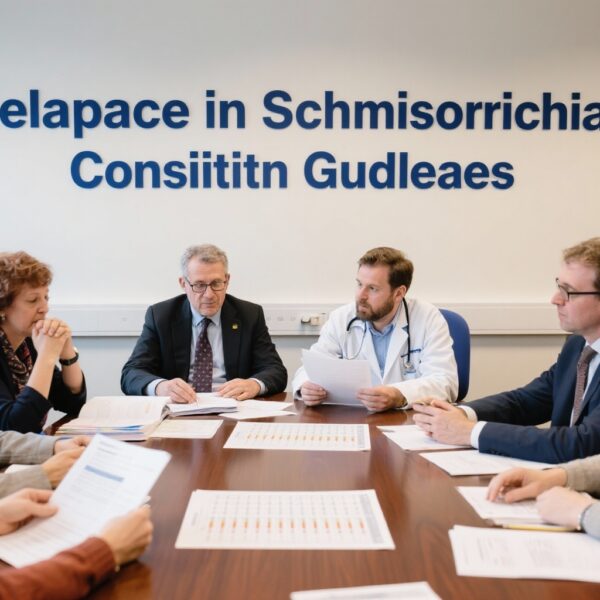
An international expert consensus offers standardized, operational criteria for defining relapse in schizophrenia to reduce study heterogeneity, improve research comparability, and guide clinical reporting.

Comparative Effectiveness of Long-Acting Injectable Versus Oral Antipsychotics in Older Adults with Schizophrenia: Insights from Hong Kong’s Population-Based Study
Internal Medicineadverse eventsantipsychotics

Comparative Effectiveness of Long-Acting Injectable Versus Oral Antipsychotics in Older Adults with Schizophrenia: Insights from Hong Kong’s Population-Based Study

By MedXY|Oct 18, 2025

This study compares long-acting injectable to oral antipsychotics in older schizophrenia patients, highlighting benefits in relapse prevention and mortality reduction, with specific considerations for adverse effects.

Balancing Risks and Benefits: Early Antipsychotic Dose Reduction Versus Maintenance After First-Episode Psychosis Remission
Clinical Updatesantipsychoticsdose reduction

Balancing Risks and Benefits: Early Antipsychotic Dose Reduction Versus Maintenance After First-Episode Psychosis Remission

By MedXY|Oct 6, 2025

A randomized clinical trial reveals early dose reduction of antipsychotics after first-episode psychosis remission increases short-term relapse risk and lowers quality of life, but may improve long-term functioning over four years.

Ask MedXY AI

Most popular

Intimate Health
Five Benefits for Women Continuing Sexual Activity After Menopause
Intimate Health
Why Some Women Have a Strong Sex Drive—And Why Men Shouldn't Worry About It
Nursing & care
How often should a couple have sex?
Intimate Health
Classic Intimacy Recommendations: How to Help Women Reach Orgasm and Enjoy Mutual Pleasure
Intimate Health
What Makes a Woman "Physiologically Addicted" Is Never Money, But These Two Relationship Qualities
© 2026 MedXY
Contact usAbout usPrivacy PolicyMedXY story