Pancreatic Cancer
34 all articles · 20 / page
Latest news
Tag

Targeting the IL-17/NGAL/NETs/ITGA5 Axis: A Novel Strategy to Overcome Immunosuppression and Fibroblast Reprogramming in Pancreatic Cancer
This study unravels how tumour-derived NGAL induces NETs that reprogram fibroblast subtypes via ITGA5, promoting immunosuppression and tumour progression in pancreatic ductal adenocarcinoma, suggesting combinatorial therapies to enhance imm

Multimodal C9-66 CAR-T Cell Therapy: A Promising Advance in Pancreatic Cancer Treatment
This article reviews the development and preclinical evaluation of C9-66 CAR-T cell therapy targeting oncofetal chondroitin sulfate in pancreatic cancer, highlighting metabolic and microenvironmental optimizations that improve efficacy and

Fibrosis-Driven Activation of Schwann Cells in Pancreatic Cancer: Unraveling the Nuclear Mechanosensing Pathway
Pancreatic fibrosis activates Schwann cells via nuclear mechanosensing, promoting a protumorigenic environment that enhances pancreatic cancer progression, offering novel microenvironment-targeted therapeutic insights.

Pancreatic Cancer Risk During IPMN Surveillance: A SEER-Based Comparison
A SEER-based study found IPMN surveillance patients have about 10 times higher pancreatic cancer risk than the general population, with highest risk in those with main duct dilation or obesity.

Targeting Oncomucin-Driven Immunosuppression Improves KRAS G12D Inhibition in Pancreatic Cancer
Oncomucins such as MUC4 and MUC16 help pancreatic cancer evade immunity through EGFR/UNC5B signaling. Targeting these mucins may enhance KRAS G12D inhibitor efficacy and reduce tumor burden.

KRAS-Driven CLDN18.2 O-GlcNAcylation Promotes Pancreatic Cancer Progression and Therapy Resistance
KRAS mutation and high glucose promote O-GlcNAcylation of CLDN18.2 in pancreatic cancer, pushing the protein off the cell membrane, boosting metastasis, and weakening CLDN18.2-targeted therapy. Low-dose MRTX1133 may restore sensitivity.

Age-Dependent Interplay of Modifiable Risk Factors and Genetic Risk in Pancreatic Cancer
A UK Biobank study found that lifestyle-related pancreatic cancer risks were strongest in younger adults, especially those with high genetic risk, supporting early prevention efforts.

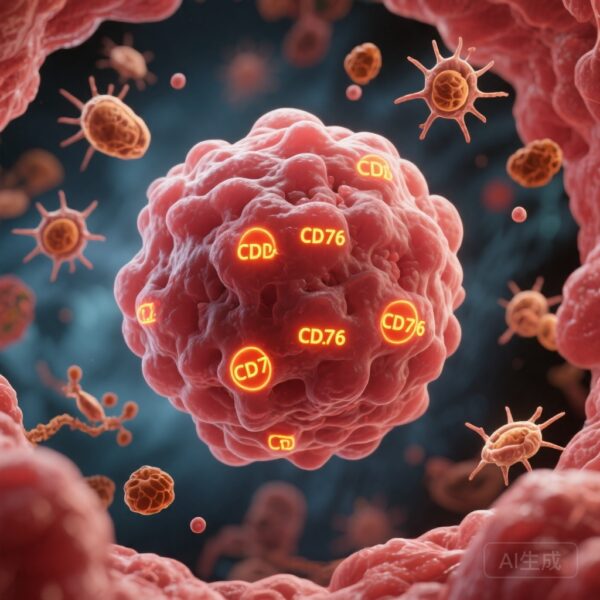
CD276 Identified as Key Driver of Chemoresistance in Advanced Pancreatic Cancer
Single-cell analysis reveals CD276/B7-H3 as a critical regulator of chemoresistance in pancreatic ductal adenocarcinoma, highlighting its dual role in promoting basal-like tumor states and immune evasion.

New EHR-Based Model PRIME Achieves 0.75 AUC in Predicting Pancreatic Cancer Risk Across 11 Million Patients
Researchers developed PRIME, a parsimonious risk stratification model for pancreatic ductal adenocarcinoma using electronic health record data. Validated across US health systems and the UK Biobank, PRIME retained 19 predictors and achieved

Beyond Pathology: DNA/RNA Sequencing Achieves Near-Double Sensitivity in Detecting Bile Duct Cancer
A landmark six-year study involving over 2,000 patients at 28 institutions demonstrates that next-generation sequencing of ERCP-obtained specimens achieves 82% sensitivity for neoplastic bile duct strictures, nearly doubling traditional pat

Redefining Success in Neoadjuvant Therapy for Pancreatic Cancer: The Prognostic Significance of Major Pathologic Response
This review evaluates the prognostic value of Major Pathologic Response (MPR) in pancreatic ductal adenocarcinoma, analyzing its impact on survival and its potential to guide personalized adjuvant treatment strategies.

Precision Nutrition, Neoadjuvant Oncology, and Prehospital Analgesia: Key Clinical Milestones from the 2025 Lancet Series
This review synthesizes landmark clinical evidence regarding the nutritional adequacy of the EAT-Lancet diet, the superiority of PAXG chemotherapy in pancreatic cancer, and the efficacy of methoxyflurane for prehospital acute pain managemen

The Socio-Clinical Impact of Medicaid Expansion on Pancreatic Cancer Survival: Evidence from a Multi-State Longitudinal Analysis
This review synthesizes findings on how Medicaid expansion timing influenced surgical resection rates and 2-year mortality for pancreatic cancer, revealing significant survival benefits alongside persistent socioeconomic disparities.

PAXG Challenges mFOLFIRINOX as the New Standard for Preoperative Pancreatic Cancer Care: Insights from the CASSANDRA Trial
The Phase 3 CASSANDRA trial reveals that the four-drug PAXG regimen significantly improves event-free survival compared to mFOLFIRINOX in patients with resectable or borderline resectable pancreatic ductal adenocarcinoma, potentially redefi

New-Onset Diabetes as a Sentinel for Pancreatic Cancer: Racial Disparities and the Critical Three-Year Window
A prospective study of 18,838 adults reveals that glycemically defined new-onset diabetes (GNOD) significantly increases the 3-year risk of pancreatic cancer, with notable racial variations and a critical 8-month diagnostic window.

THAG Regimen Shows High Efficacy as Conversion Therapy for Pancreatic Cancer: New Phase II Trial Results
A Phase II trial demonstrates that the THAG regimen—combining immunotherapy, radiotherapy, and chemotherapy—significantly improves R0 resection rates and survival in patients with BRPC and LAPC, supported by IL-6 and ctDNA biomarker insight

HSP90 Inhibition with XL888 Fails to Sensitize Metastatic Pancreatic Cancer to PD-1 Blockade Despite Systemic Immune Activation
A Phase Ib/II trial evaluating the combination of XL888 (an HSP90 inhibitor) and pembrolizumab in metastatic pancreatic adenocarcinoma found that while the regimen was safe and induced systemic immune modulation, it failed to alter the tumo

Dual-Action ICyM2 Nano-Platform Dismantles Pancreatic Cancer Stromal Barriers and Ignites STING-Mediated Immunity
Researchers have developed ICyM2, a carrier-free nanoaggregate that combines mitochondrial phototherapy with STING activation. This platform effectively remodels the dense pancreatic cancer stroma, triggers immunogenic cell death, and syner

Multiantigen-Targeted T Cell Therapy Shows Durable Persistence and Clinical Activity in Advanced Pancreatic Cancer
A phase 1/2 trial demonstrates the safety and clinical potential of nonengineered, multiantigen-targeted T cell therapy for pancreatic ductal adenocarcinoma, highlighting durable T cell persistence and antigen spreading as key correlates of

Peg-GCSF Primary Prophylaxis Effectively Mitigates Severe Neutropenia and Enhances Quality of Life in mFOLFIRINOX-Treated Pancreatic Cancer
A randomized phase 2 trial demonstrates that primary prophylaxis with peg-GCSF significantly reduces grade 3-4 and febrile neutropenia in patients with unresectable pancreatic cancer receiving mFOLFIRINOX, while improving patient-reported q