We use cookies

Our website uses essential cookies and, with your consent, additional cookies to measure performance and improve our services. Cookie Policy.

You can change your choice at any time.

MMedXYNews
HomeVideos
MedXY AI/MedXY News/Tag: critical care
MedXY News
EnglishTag

critical care

Ask MedXY AI
type 2 diabetesclinical trialheart failureimmunotherapyobesitycardiovascular riskatrial fibrillationcritical carebiomarkersclinical trialsartificial intelligenceHypertensionCardiologyoncologytype 1 diabetespublic healthMortalitydiabetesAlzheimer's diseasecardiovascular diseasebreast cancerepidemiology

Latest news

Tag

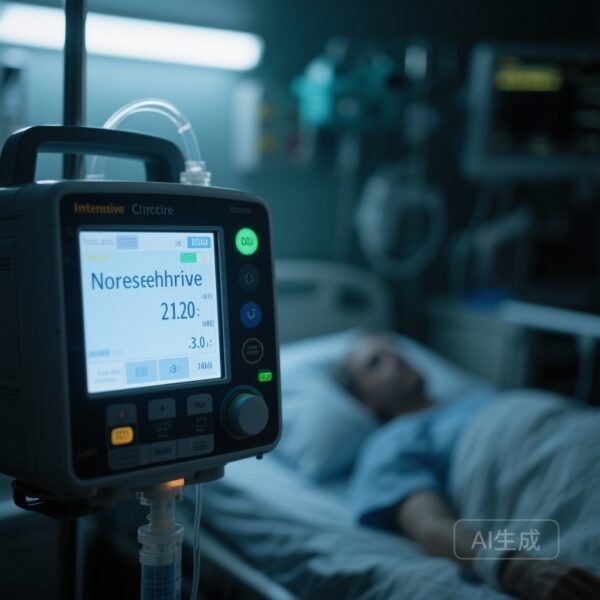
Higher Blood Pressure Targets in Septic Shock: When More Vasopressors Do More Harm than Good
Critical Carecritical carehemodynamics

Higher Blood Pressure Targets in Septic Shock: When More Vasopressors Do More Harm than Good

By MedXY|Dec 27, 2025

A post-hoc analysis of the SEPSIS-PAM trial reveals that while high MAP targets do not provide a universal survival benefit, they significantly increase mortality risk when requiring high norepinephrine doses or failing to resolve microcirc


Survival in Cancer Patients with ARDS: The YELENNA Study Challenges ECMO Utility in Severe Cases
Critical CareARDScritical care

Survival in Cancer Patients with ARDS: The YELENNA Study Challenges ECMO Utility in Severe Cases

By MedXY|Dec 27, 2025

The YELENNA prospective study reveals a 73.2% 90-day mortality rate for cancer patients with ARDS. Crucially, venovenous ECMO provided no survival benefit in severe cases, prompting a re-evaluation of current clinical guidelines and goals-o

Sepsis Survival in Australia and New Zealand: Analyzing Two Decades of Progress and the Recent Mortality Rebound
Critical Carecritical caremortality trends

Sepsis Survival in Australia and New Zealand: Analyzing Two Decades of Progress and the Recent Mortality Rebound

By MedXY|Dec 26, 2025

A large-scale study of over 300,000 ANZ ICU patients reveals that sepsis mortality plummeted from 28% to 11% between 2000 and 2020, followed by a concerning 0.9% annual increase through 2023, highlighting both clinical triumphs and emerging

Navigating the Long Road: Prolonged Ventilator Weaning and High Reintubation Risk in GBS and Myasthenia Gravis
Critical Carecritical careGuillain-Barré syndrome

Navigating the Long Road: Prolonged Ventilator Weaning and High Reintubation Risk in GBS and Myasthenia Gravis

By MedXY|Dec 26, 2025

A large-scale multicenter study reveals that while patients with Guillain-Barré syndrome face significantly longer weaning times and higher tracheostomy rates than those with myasthenia gravis, both groups experience alarmingly high reintub

The Long Shadow of the ICU: Identifying High-Risk Functional Trajectories in Older Survivors
Critical Carecritical carefunctional recovery

The Long Shadow of the ICU: Identifying High-Risk Functional Trajectories in Older Survivors

By MedXY|Dec 26, 2025

A large-scale longitudinal study reveals that ICU survivors aged 60–79 face significantly higher 5-year excess mortality and functional decline compared to the general population, whereas outcomes for nonagenarians converge with their peers

Precision Rehabilitation: Machine Learning Reveals Why ‘Early Mobilization’ Fails Some ICU Patients While Saving Others
AIcritical careearly mobilization

Precision Rehabilitation: Machine Learning Reveals Why ‘Early Mobilization’ Fails Some ICU Patients While Saving Others

By MedXY|Dec 26, 2025

A secondary analysis of the TEAM trial using machine learning demonstrates that enhanced early mobilization in mechanically ventilated patients has highly individualized effects, ranging from a 34% mortality reduction to a 39% increase in r

Safe Stewardship: Antibiotic De-escalation by Day 4 Reduces Hospitalization Length Without Increasing Mortality in Community-Onset Sepsis
Critical Careantibiotic stewardshipcritical care

Safe Stewardship: Antibiotic De-escalation by Day 4 Reduces Hospitalization Length Without Increasing Mortality in Community-Onset Sepsis

By MedXY|Dec 24, 2025

A large-scale target trial emulation demonstrates that de-escalating anti-MRSA and anti-pseudomonal therapy on day 4 of sepsis treatment is safe, associated with fewer antibiotic days, and leads to shorter hospital stays compared to continu

Critical Carecritical caremortality trends

Rising Hospital Mortality and Escalating Rates of Life-Sustaining Therapy Withdrawal in Critically Ill TBI Patients: A 15-Year Analysis

By MedXY|Dec 19, 2025

A 15-year observational study of over 45,000 TBI patients reveals a significant increase in hospital mortality and a tripling of life-sustaining therapy withdrawal, alongside rising rates of hypoxaemia, raising urgent questions about ethica

Ketamine or Etomidate for Tracheal Intubation? Unpacking the RSI Trial Findings on Mortality and Hemodynamics
Anesthesiologycritical careEtomidate

Ketamine or Etomidate for Tracheal Intubation? Unpacking the RSI Trial Findings on Mortality and Hemodynamics

By MedXY|Dec 18, 2025

The large-scale RSI randomized trial found no significant difference in 28-day mortality between ketamine and etomidate for intubating critically ill adults, though ketamine was associated with a higher risk of cardiovascular collapse.

High-frequency Oscillatory Ventilation in Near‑Term and Term Infants: Inconclusive Benefit and Possible Increased Mortality — What the 2025 Cochrane Update Tells Clinicians
newscritical caremechanical ventilation

High-frequency Oscillatory Ventilation in Near‑Term and Term Infants: Inconclusive Benefit and Possible Increased Mortality — What the 2025 Cochrane Update Tells Clinicians

By MedXY|Dec 19, 2025

A 2025 Cochrane update (3 RCTs, 368 infants) finds very low- to low-certainty evidence that HFOV neither clearly reduces treatment failure nor pulmonary air leak and may increase mortality versus conventional ventilation in term/near‑term i

Bridging the Gap: Improving Agreement Between Nurse-Documented ICDSC and Researcher CAM-ICU Delirium Assessments in the ICU
Critical Carecritical caredelirium

Bridging the Gap: Improving Agreement Between Nurse-Documented ICDSC and Researcher CAM-ICU Delirium Assessments in the ICU

By MedXY|Dec 14, 2025

A predictive model combining bedside nurse ICDSC items and clinical variables (ventilation, SOFA) substantially improves agreement with researcher CAM-ICU assessments, enabling more accurate, scalable delirium ascertainment in ICU research

Effectiveness of Automated Closed-Loop Ventilation versus Protocolized Conventional Ventilation in Critically Ill Adults: A Comprehensive Evidence Review
Clinical Updatescritical caremechanical ventilation

Effectiveness of Automated Closed-Loop Ventilation versus Protocolized Conventional Ventilation in Critically Ill Adults: A Comprehensive Evidence Review

By MedXY|Dec 12, 2025

Automated closed-loop ventilation improves ventilation quality but does not increase ventilator-free days at day 28 compared to protocolized conventional ventilation in critically ill adults, with benefits in safety profiles and caregiver w

Platelet Transfusion in the ICU: Rare But Variable — A 30-Country Prospective Cohort Reveals Wide Practice Differences
Critical Carecritical careplatelet transfusion

Platelet Transfusion in the ICU: Rare But Variable — A 30-Country Prospective Cohort Reveals Wide Practice Differences

By MedXY|Dec 11, 2025

An international prospective cohort found platelet transfusions were used in 6% of ICU patients, mostly for bleeding or prophylaxis, with wide variation in thresholds and adherence across geo-economic regions, highlighting need for stewards

Hemoglobin Rules in European PICUs: 12.8% of Children Received RBCs in 2023 — Many Transfused Above the 7 g/dL Threshold
Critical Carecritical carered blood cells

Hemoglobin Rules in European PICUs: 12.8% of Children Received RBCs in 2023 — Many Transfused Above the 7 g/dL Threshold

By MedXY|Dec 11, 2025

A 28‑day point‑prevalence study across 44 European PICUs found 12.8% of children received red‑cell transfusions; hemoglobin was the dominant trigger, often above the recommended 7.0 g/dL threshold, and transfusion exposure correlated with 2

RBC Transfusions in Early Sepsis Resuscitation: Common, Complex, and Potentially Harmful Above a 10 g/dL Threshold
Anesthesiologycritical caresepsis

RBC Transfusions in Early Sepsis Resuscitation: Common, Complex, and Potentially Harmful Above a 10 g/dL Threshold

By MedXY|Dec 11, 2025

In a multicenter Korean sepsis cohort, early RBC transfusions were frequent and driven by illness severity. No overall 60‑day mortality difference was seen after propensity matching, but transfusion was associated with harm at hemoglobin ≥1

Five-Year Survival and Quality of Life After ECMO: Good Long-Term Outcomes but Persistent Functional Burden
Critical Carecritical careECMO

Five-Year Survival and Quality of Life After ECMO: Good Long-Term Outcomes but Persistent Functional Burden

By MedXY|Dec 11, 2025

A large prospective Dutch cohort reports 36% five-year survival after ECMO with generally satisfactory health-related quality of life (median EQ-5D 0.82) but ongoing problems with pain, mobility, activities, and work capacity.

Frailty Amplifies Mortality Risk Across the PaO2/FiO2 Spectrum: Insights from a 497,185‑Patient ANZICS Cohort
Critical Carecritical careFrailty

Frailty Amplifies Mortality Risk Across the PaO2/FiO2 Spectrum: Insights from a 497,185‑Patient ANZICS Cohort

By MedXY|Dec 10, 2025

In a 497,185‑patient registry study, frailty (CFS ≥5) was common and associated with substantially higher in‑hospital mortality across all severities of acute hypoxemic respiratory failure (AHRF). The relationship between PaO2/FiO2 and deat

Why Emergency Medicine Residents Rarely Choose Surgical Critical Care — A Nationwide Survey and a Roadmap to Increase EM-SCC Matriculation
Critical Carecritical careemergency medicine

Why Emergency Medicine Residents Rarely Choose Surgical Critical Care — A Nationwide Survey and a Roadmap to Increase EM-SCC Matriculation

By MedXY|Dec 10, 2025

A national survey of 111 emergency medicine trainees identifies limited exposure to surgical critical care, institutional and geographic factors, and program characteristics (ECMO, multidisciplinary teams) as key modifiable drivers of low E

Paracetamol Lowers Cerebral Temperature Modestly but Meaningfully in Febrile Brain‑Injured Patients: Results of the NEUROTHERM Randomized Pharmacodynamic Trial
Critical Carecritical carefever

Paracetamol Lowers Cerebral Temperature Modestly but Meaningfully in Febrile Brain‑Injured Patients: Results of the NEUROTHERM Randomized Pharmacodynamic Trial

By MedXY|Dec 9, 2025

In a double‑blind RCT of 99 febrile brain‑injured patients with intracerebral thermal probes, a single IV dose of paracetamol reduced mean cerebral temperature by 0.6°C versus placebo and kept cerebral temperature <38.5°C for a median 3.

Neurologic Complications on VA‑ECMO Are Linked to Higher 6‑Month Mortality: Insights from a Binational Prospective Cohort
Critical Carecritical careECMO

Neurologic Complications on VA‑ECMO Are Linked to Higher 6‑Month Mortality: Insights from a Binational Prospective Cohort

By MedXY|Dec 9, 2025

A prospective multicenter cohort of 704 adults on venoarterial ECMO found neurologic complications in 12% and that these events were associated with a 17% absolute increase in death or new disability at 6 months, driven mainly by higher mor

Prev
4 / 5
12345
Next
Ask MedXY AI

Most popular

Intimate Health
Five Benefits for Women Continuing Sexual Activity After Menopause
Intimate Health
Why Some Women Have a Strong Sex Drive—And Why Men Shouldn't Worry About It
Nursing & care
How often should a couple have sex?
General Surgery
Optimizing Postoperative Opioid Prescriptions After Intra-Abdominal Cancer Surgery: Comparing the 5x-Multiplier and 3-Tier Models
Intimate Health
Classic Intimacy Recommendations: How to Help Women Reach Orgasm and Enjoy Mutual Pleasure
© 2026 MedXY
Contact usAbout usPrivacy PolicyMedXY story