Stroke and Systemic Embolism Following Atrial Fibrillation Ablation: Insights from the EMBOL-AF Global Registry and Contemporary Evidence
radiofrequency ablationstrokePulsed-field ablationSystemic Embolismatrial fibrillationcatheter ablation
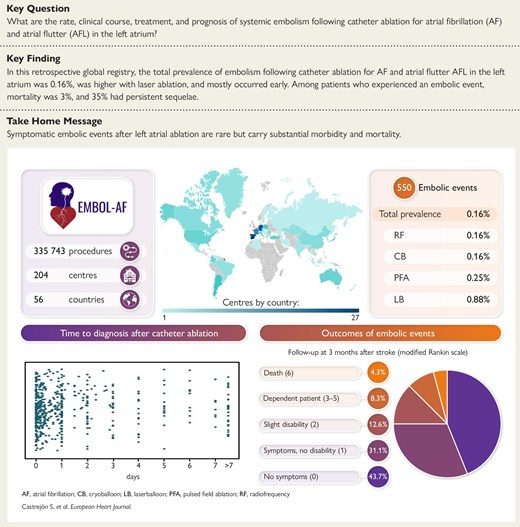
Highlights
- The EMBOL-AF Global Registry is the largest global dataset quantifying symptomatic embolic events post-atrial fibrillation (AF) and left atrial flutter (AFL) ablation, with an incidence of 0.16% across 335,743 procedures.
- Cerebral embolism predominates post-ablation events, with most occurring intraprocedurally or within 72 hours, but late events beyond 72 hours remain significant, underscoring the need for vigilant monitoring.
- Risk factors include nonparoxysmal AF, specific ablation energy sources—laserballoon and pulsed field ablation showing higher embolic rates—and lower center procedural experience, indicating procedural and institutional determinants.
- Catheter ablation offers superior long-term cardiovascular outcomes compared to medical therapy, yet procedural risks vary by technology; recent data illuminate PFA safety profiles differing from traditional radiofrequency ablation.
Background
MedXY registered readers
Sign in free to continue reading
Create or use your MedXY account to unlock the complete article.
This article was created using several editorial tools, including AI, as part of the process. Human editors reviewed this content before publication.