We use cookies

Our website uses essential cookies and, with your consent, additional cookies to measure performance and improve our services. Cookie Policy.

You can change your choice at any time.

MMedXYNews
HomeVideos
MedXY AI/MedXY News/Section: Cardiology

Proteomic and Metabolomic Insights into Cardiac Remodeling in Breast Cancer Patients Undergoing Cardiotoxic Therapy
MedXY Editorial Team•Sep 19, 2026•Cardiology
Cardiotoxicitymetabolomicsbreast cancerCardiac Remodelingproteomics

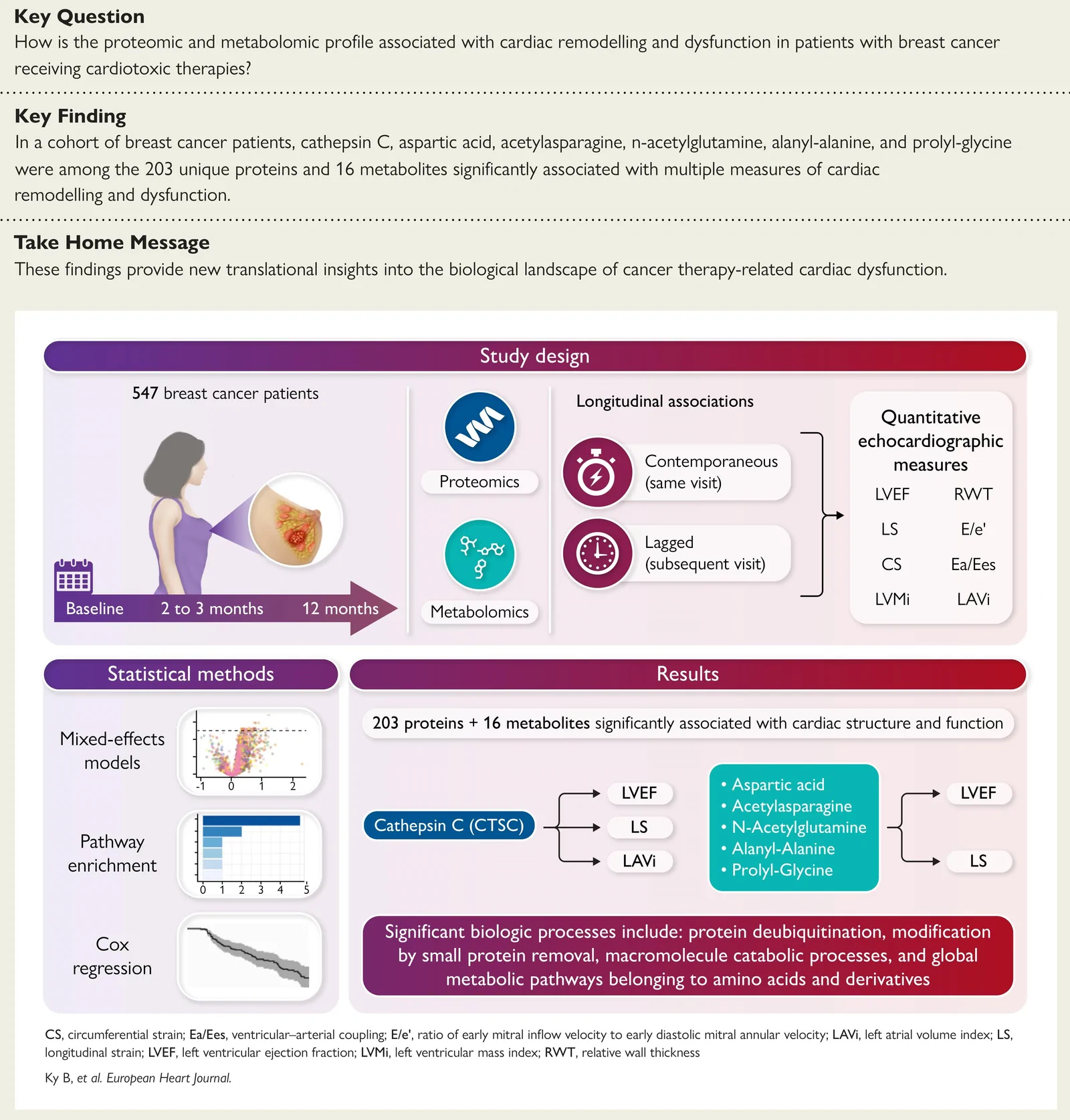
For image description, please refer to the figure legend and surrounding text.

Highlight

  • Comprehensive proteomic and metabolomic profiling reveals 203 proteins and 16 metabolites significantly associated with cardiac structure and function in breast cancer patients undergoing anthracycline and/or trastuzumab therapy.
  • Cathepsin C identified as a key protein linked to left ventricular ejection fraction (LVEF), longitudinal strain, left atrial volume index, and incident cardiac dysfunction.
  • Enriched pathways include protein deubiquitination, protein modification, macromolecule catabolic processes, and global metabolic pathways, underscoring complex biological mechanisms underlying cardiotoxicity.
  • Amino acid–related metabolites such as n-acetylglutamine and aspartic acid show strong associations with reductions in cardiac function metrics, pointing to metabolic alterations during cardiotoxic therapy.

Study Background

MedXY registered readers

Sign in free to continue reading

Create or use your MedXY account to unlock the complete article.

This article was created using several editorial tools, including AI, as part of the process. Human editors reviewed this content before publication.

Related articles

Open language-specific specialty feeds and department pages.

Targeting the CCND1-PDK4 Axis to Promote Reparative Macrophage Phenotype and Mitigate Post-Myocardial Infarction Cardiac RemodelingThis article discusses the role of cyclin D1 (CCND1) in promoting reparative macrophage transition post-myocardial infarction, highlighting its therapeutic potential in reducing adverse cardiac remodeling through metabolic reprogramming.Sep 19, 2026Metabolic Signatures and Causal Markers in MRI-Confirmed Lacunar Stroke: Insights from Observational and Mendelian Randomization AnalysesThis study identifies glycine and specific lipid cholesterol proportions as metabolomic markers causally linked to lacunar stroke subtypes, enhancing understanding of cerebral small vessel disease pathogenesis and potential biomarkers.Sep 15, 2026Cardiac Resynchronization Therapy: Metabolomic Insights into Heart Failure ImprovementThis study reveals how cardiac resynchronization therapy (CRT) improves left ventricular function in heart failure patients and modulates systemic metabolomic profiles, highlighting differences between ischemic and nonischemic cardiomyopathSep 15, 2026
Loading comments...
MedXY briefing

Get the free newsletter

Evidence-led clinical news, trends, and analysis—delivered to your inbox.

Ask MedXY AI

Most popular

Intimate Health
Five Benefits for Women Continuing Sexual Activity After Menopause
Intimate Health
Why Some Women Have a Strong Sex Drive—And Why Men Shouldn't Worry About It
Nursing & care
How often should a couple have sex?
Intimate Health
Classic Intimacy Recommendations: How to Help Women Reach Orgasm and Enjoy Mutual Pleasure
Intimate Health
What Makes a Woman "Physiologically Addicted" Is Never Money, But These Two Relationship Qualities
© 2026 MedXY
Contact usAbout usPrivacy PolicyMedXY story
Illuminating the Night: How Nighttime Light Exposure Impacts Cardiac Structure, Function, and Cardiovascular Risk
Nighttime light exposure over 3 lux is linked to adverse cardiac remodeling, subclinical functional decline, and increased cardiovascular events, partly mediated by shorter sleep duration, underscoring the importance of dark nights and slee
Sep 15, 2026
Circulating Metabolites as Emerging Biomarkers for Stroke Risk Prediction: Insights from the BiomarCaRE ProjectA large European cohort study identifies six circulating metabolites significantly associated with future stroke risk, highlighting their potential in improving early stroke risk prediction beyond classic risk factors.Sep 15, 2026
Distinct Lipid Metabolic Profiles Unveil Pathophysiological Differences Between Postcapillary and Combined Pre- and Postcapillary Pulmonary HypertensionThis study reveals unique fatty acid and oxylipin metabolic signatures that differentiate isolated postcapillary pulmonary hypertension from combined pre- and postcapillary PH, highlighting potential biomarkers and therapeutic targets.Sep 15, 2026